What does “6-7” mean? How Skrilla’s “Doot Doot (6 7)” turned two numbers into a TikTok slang and a Gen Z inside joke
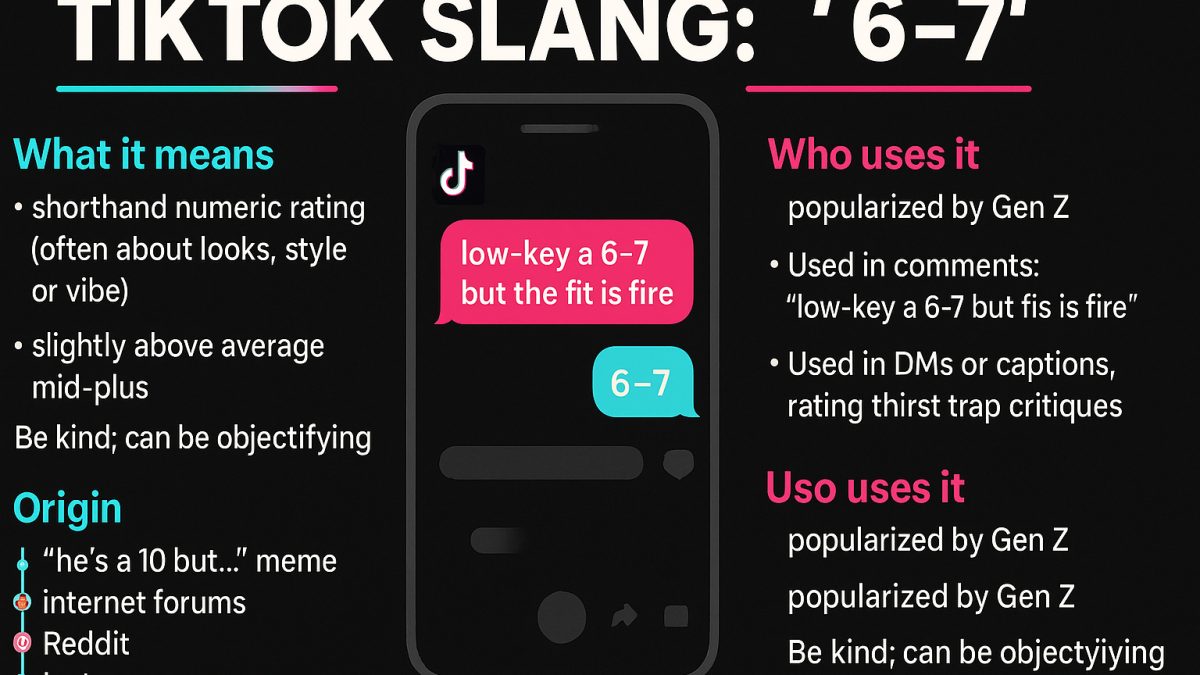
“6-7” exploded into social slang after Skrilla’s “Doot Doot (6 7)” in early 2025, becoming a playful, in-group tag used by Gen Z and Gen Alpha across TikTok, sports edits, and chats, often with no fixed meaning.
- Viral origin: The phrase rose after Skrilla’s song and looped TikTok edits made the chant instantly repeatable and memorable.
- Flexible meaning: Mostly a playful, in-group marker — sometimes a joking nod to a player who’s 6’7″.
- Platform spread: TikTok drove the trend; Instagram Reels, Snapchat, and Discord amplified it further.
- Local impact: In cities like Las Vegas the phrase appears in schools, youth sports, and social feeds as a cultural shorthand.
Origin and immediate spark
The meme began with a repeated lyric in Skrilla’s track “Doot Doot (6 7)”, released in late 2024 and picked up widely in early 2025. Creators looped the hook on TikTok, and the short, rhythmic shout of “6-7” was ideal for quick edits and captioned reaction clips.
“Something that can mean anything also fits many jokes — the vagueness helped it spread.”
How it spread on TikTok and beyond
TikTok’s looping format and remix culture made the chant easy to reuse: lip-syncs, quick edits, reaction videos, and challenges all amplified the line. Successful posts often paired the audio with surprising visual edits or sports highlight reels, then migrated to Instagram Reels, Snapchat, and community servers.
Who is using “6-7” — and how
Usage skews young: Gen Z and Gen Alpha commonly shout it on camera, add it as a caption, or drop it into group chats. It functions as a short, flexible expression — a cultural badge signaling familiarity with current short-form trends.
Examples and typical contexts
- Short meme edits set to the “Doot Doot (6 7)” audio with fast cuts and silly captions.
- Lip-sync and parody videos that emphasize the chant as a punchline.
- Sports highlights edited with the chant as a joking nod to players listed at 6’7″.
- Situational humor when 6 and 7 appear together in scores, dates, or other on-screen numbers.
Why it caught on: vibe and social signaling
Short, repeatable, and intentionally loose: The phrase acts as a social shortcut — using the sound signals that someone is plugged into youth culture. Its openness lets it migrate across contexts without losing momentum.
Comparison to other number memes
Like earlier numeric memes — for example “21” from a Vine clip or “1738” from a Fetty Wap lyric — “6-7” began tied to a single audio clip but evolved into a broader shorthand shared across platforms.
Parental and educator notes
Experts tracking youth slang consider “6-7” generally harmless. Still, context matters: trends can be repurposed in exclusionary or hurtful ways. Parents and teachers should use the moment to discuss context, intent, and media literacy.
Implications for Las Vegas, Nevada
Social life and youth culture: The phrase appears in TikTok posts, school hallways, and youth sports events across Las Vegas as online humor blends with local identity.
Sports and fandom: Local creators can splice the chant into highlight reels for Clark County high school players or college matchups, turning it into a playful local shorthand.
Schools and educators: Treat the trend like any other viral moment — mostly harmless but useful for lessons on digital context and respectful online behavior.
Local businesses: Brands targeting teens should collaborate with creators who use “6-7” authentically rather than attempting tone-deaf appropriations.
Sources and reporting notes
Key reporting and explainers drew on culture coverage and reference pages, including:
- Wikipedia — 6-7 (meme)
- Parade — What Does “6-7” Mean?
- FindMyKids explainer — What Does 6-7 Mean (slang)
- NorthJersey piece on 67 slang and TikTok
The central music track is Skrilla’s “Doot Doot (6 7)”, which is referenced across these sources and searchable on streaming platforms.