United makes headphones mandatory on flights — refuse to comply and you could be kicked off under new Contract of Carriage
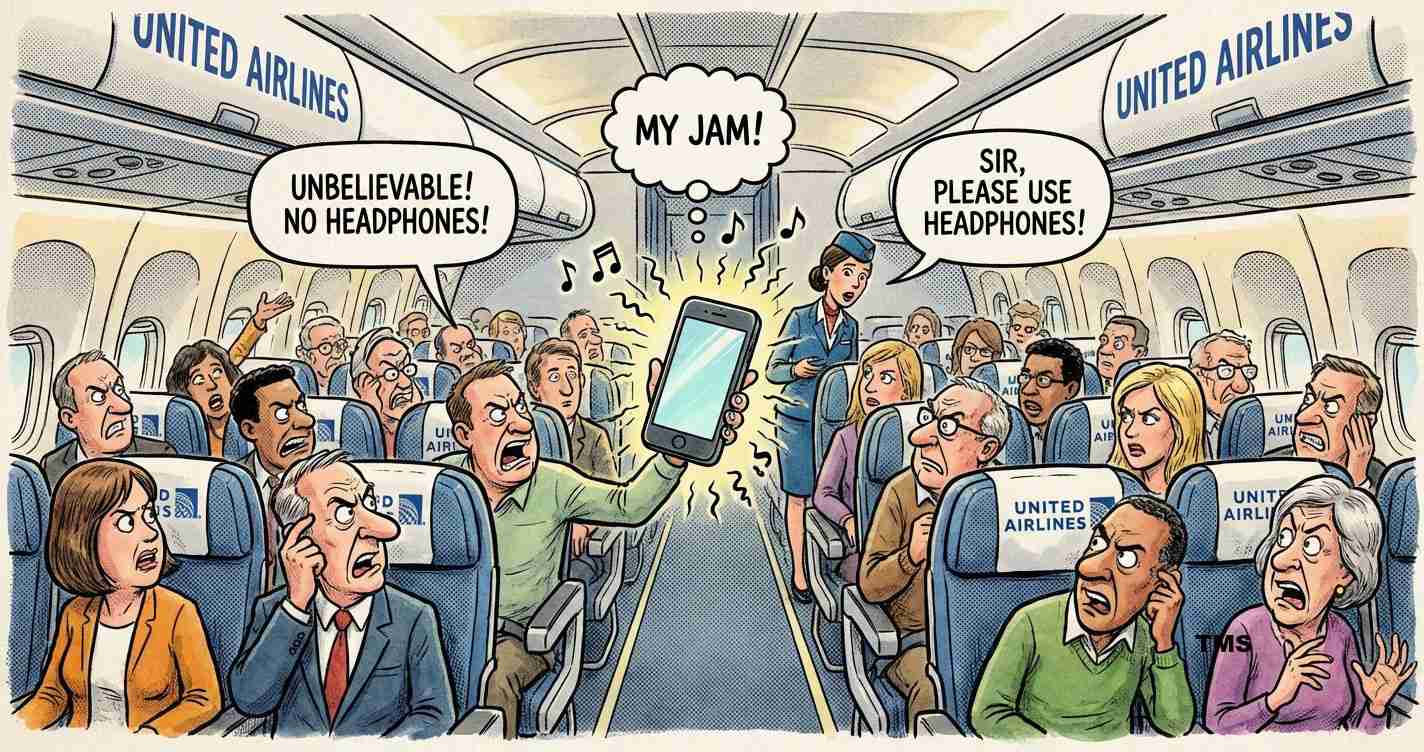
United Airlines updated its Contract of Carriage on Feb. 27, 2026, requiring passengers to wear headphones for audio or video from personal devices; refusal can result in denied boarding, removal, or permanent bans amid Starlink Wi‑Fi rollout.
Key takeaways
- New enforceable rule: Headphone use was added to Rule 21 (Refusal of Transport) on Feb. 27, 2026, making non‑compliance grounds for denial or removal — CBS News, Fox13 Seattle.
- Scope: Rule covers any audio/video from personal devices — music, streaming video, social media with sound — and crew have authority to enforce it (CBS News).
- Practical note: United says it will offer complimentary basic wired earbuds on request, subject to availability; passengers should bring their own backups.
Main content
What changed in United’s Contract of Carriage
United placed a headphone requirement under Rule 21 — Refusal of Transport, elevating long‑standing cabin courtesy into an enforceable contract term. The added text (Feb. 27, 2026) explicitly lists emitting sound from a personal device without headphones among behaviors that can justify refusal of transport, alongside refusing crew instructions or other disruptive conduct. Crew members are given authority to prevent boarding or remove passengers who fail to follow the rule. Reporting on the change is available from CBS News and Fox13 Seattle.
How enforcement could work
Enforcement rests with the carrier and flight crew. According to reporting, crew members may:
- Refuse transport at the gate;
- Order removal of a passenger already onboard;
- Seek permanent bans for repeat offenders and potentially seek reimbursement for airline costs tied to incidents.
“United says it will offer basic wired earbuds for passengers who forget their own, but supply is limited.” — CBS News
As of early March 2026 there were no widely reported cases of removals or permanent bans under the new headphone language, though the policy gives crews clearer contractual authority to act (CBS News, Fox13 Seattle).
Why now: Starlink, more streaming, more noise
United tied the update to increasing onboard device use as it rolls out Starlink satellite Wi‑Fi. Faster, more reliable internet typically increases streaming, social video use, and other audio activity that can disturb nearby passengers. United says the headphone language builds on existing Wi‑Fi reminders and aims to make expectations clearer as onboard internet expands (Fox13 Seattle; related pilot announcement video).
How United’s approach compares with other carriers
United appears to be the first major U.S. carrier to codify headphone use directly in a legally binding Contract of Carriage as grounds for removal. Other airlines generally frame headphone use as etiquette or guidance. For example, Delta’s public guidance urges passengers: “For the comfort of everyone around you, please use earbuds or headphones with any personal electronic device during your flight.” Carriers like Delta typically rely on crew discretion and courtesy messaging rather than a specific refusal clause (CBS News).
Reactions and public context
Reactions have been mixed. Travel expert Scott Keyes said the change matches what most passengers already do and targets a small number of noisy outliers: “Most people use headphones,” he told reporters. Etiquette experts note the rule formalizes polite behavior into a “condition of carriage.”
Viral social posts and a notable pilot announcement — captured in a widely viewed video — helped highlight the issue and shaped public debate about cabin courtesy. Consumer advocates have asked how the rule will be spaced and enforced and whether passengers will always understand when they’re in violation. United says clearer expectations should reduce noisy distractions as streaming grows at altitude (CBS News, Fox13 Seattle).
Practical passenger guidance
- Bring your own headphones or earbuds. Relying on complimentary earbuds may not be wise given limited supply (CBS News).
- If you forget them: Ask crew members — United says it offers basic wired earbuds when available.
- Comply if asked: If crew request you put on headphones, comply to avoid potential removal or action under Rule 21.
Implications for Las Vegas
Economic impact
Las Vegas draws millions of visitors for shows, conventions and events. Fewer noisy passengers could modestly improve the arrival experience for guests headed to casinos, theaters and meetings. If enforcement becomes routine, airports and airlines serving Las Vegas may see fewer in‑flight incidents that delay boarding or create customer service headaches.
Political consequences
Local leaders who promote Las Vegas as a tourism hub may frame a visibly enforced headphone policy as supporting consumer comfort and public order. Conversely, business groups or civil liberties advocates might press for clarity on exceptions and dispute resolution if passengers claim unfair treatment. Any notable enforcement action — such as denied boarding for a convention attendee — would likely attract local media and elected officials’ attention.
Social effects
Convention attendees and leisure travelers may see fewer disruptions, reducing travel stress. Entertainment workers and late‑night visitors may welcome quieter cabins. Some residents may worry about overreach if enforcement seems uneven.
Cultural relevance
Las Vegas relies on shared spaces where courtesy matters; the headphone policy aligns with expectations that patrons respect communal environments. Hotels, casinos and event operators may welcome a travel policy that reduces friction getting guests from plane to venue.
Practical applications for travelers to and from Las Vegas
- Convention planners and travel managers should add headphone reminders to itineraries; including disposable earbuds in welcome packets is a low‑cost courtesy.
- Frequent business flyers should pack backup earbuds to avoid disputes that could lead to denied boarding or bans.
- Watch for updates from United and gate announcements when checking in at McCarran/ Harry Reid International (LAS).
Sources and further reading
- CBS News: United Airlines could remove passengers who don’t wear headphones.
- Fox13 Seattle: Refusing to wear headphones could get you kicked off United flights.
- Viral pilot announcement video: pilot telling passengers speakerphone videos are over (YouTube).
Bottom line: United’s change shifts headphone use from etiquette to enforceable contract language. For Las Vegas travelers and the travel industry that serves them, the move means clearer expectations — and one more reason to pack earbuds on your next flight.