Tiny, glowing “American pocket shark” found in Gulf of Mexico is a new species — only the second pocket shark ever recorded
NOAA and Tulane researchers have officially identified Mollisquama mississippiensis, the American pocket shark — a tiny, bioluminescent deep‑sea species found in the Gulf of Mexico, marking only the second pocket shark ever recorded by science.
- New species: Mollisquama mississippiensis (American pocket shark) officially described in 2019.
- Where & when: Collected in the Gulf of Mexico off Louisiana in February 2010; examined later with modern imaging.
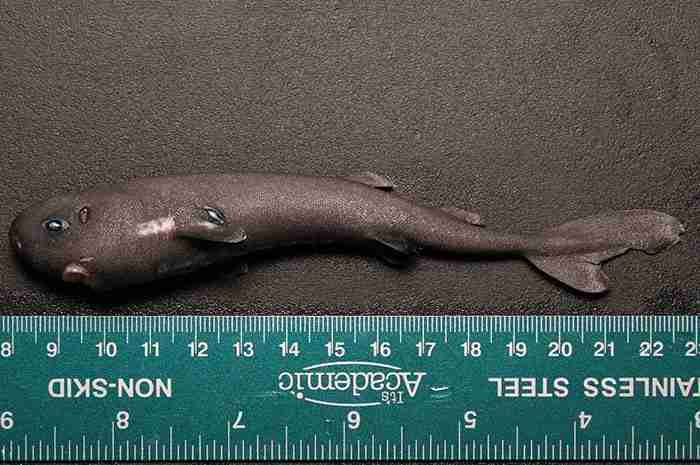
- Distinctive traits: ~14 cm long, two luminous “pockets” near the gills and skin covered with photophores.
- Rarity: Only one specimen known; only one other pocket shark species (M. parini) recorded previously.
How scientists found and identified the tiny shark
Background: During a February 2010 research expedition focused on sperm whale ecology, scientists recovered a small, unusual shark from the deep Gulf of Mexico. The specimen sat in a NOAA collection in Pascagoula, Mississippi, until detailed study years later revealed its uniqueness.
Researchers from NOAA and Tulane used non‑destructive, high‑resolution imaging — including x‑rays and CT scanning — to examine vertebrae counts, tooth arrangement and the pattern of light‑producing organs. Those anatomical markers did not match known species and led to the formal description in 2019 (Researchers identify new species of pocket shark).
What makes the American pocket shark unusual
Mollisquama mississippiensis is tiny for a shark — about 14 centimeters (roughly 5.5 inches), or roughly the length of a human hand. It belongs to the kitefin shark family, Dalatiidae, which includes small deep‑sea species such as the cookiecutter shark.
The shark’s most striking features are two pockets near the gill slits that can secrete a luminous fluid. Its skin also bears clusters of photophores that produce bioluminescence. Scientists hypothesize these features may help attract prey or confuse predators in the deep, dark ocean (Wikipedia: Mollisquama mississippiensis).
Only two pocket sharks known to science
Prior to this identification, the only known pocket shark species was Mollisquama parini, collected in 1979 in the Southeast Pacific and held in a museum collection in St. Petersburg, Russia. The Tulane–NOAA specimen is the second described pocket shark and the first recorded in the Atlantic basin, underscoring how sparsely sampled deep waters remain (IFLScience overview).
Rarity, deep‑sea life and unanswered questions
Very few encounters: Both known pocket shark specimens were caught incidentally during broader research missions rather than targeted sampling. That scarcity leaves major knowledge gaps about life history, diet, reproduction and distribution.
“Are pocket sharks widespread but rarely captured, or do they inhabit very specific deep‑water niches?” — a central unanswered question.
Other open questions include the precise function of the luminous pockets, the species’ population size, and how environmental pressures such as fishing and climate change might affect them.
Advanced imaging and collaboration
The formal description benefited from modern, non‑destructive imaging and international collaboration. Researchers used high‑resolution CT scanning and other imaging facilities — including the European Synchrotron Radiation Facility — to reveal fine anatomical details without damaging the rare specimen. The specimen now resides at the Royal D. Suttkus Fish Collection at Tulane University’s Biodiversity Research Institute for future study (Tulane University news release).
Why the Gulf of Mexico discovery matters
Scientific significance: The find shows that even relatively well‑studied regions can yield surprising discoveries. Cataloging new species improves understanding of food webs, biodiversity patterns and potential ecosystem responses to human pressures.
The discovery also demonstrates how modern methods and cross‑institutional collaboration can unlock hidden diversity in deep water — important for conservation and resource management decisions.
Implications for Las Vegas, Nevada
Although landlocked, Las Vegas can still benefit culturally, educationally and economically from this discovery. Below are practical pathways and likely impacts:
Economic impact
Tourism and attractions such as the Shark Reef Aquarium at Mandalay Bay might feature the American pocket shark in exhibits or programs, drawing curiosity‑driven visitors and enhancing off‑Strip cultural offerings.
Political consequences
The NOAA–Tulane discovery can inform discussions about research funding and environmental policy. Nevada leaders and members of Congress could cite the find when advocating federal support for ocean science, remote sensing and biodiversity research.
Social effects
Educators and community groups in Las Vegas can use the pocket shark as an accessible science story to promote STEM, highlight modern imaging methods like CT scanning, and engage students with real‑world discovery narratives.
Cultural relevance
The tiny, glowing shark resonates with Las Vegas’ appetite for spectacle and novelty while offering a conservation message. Artists, aquarium designers and event planners could incorporate the shark into displays that blend entertainment with stewardship themes.
Practical applications for residents
Local institutions such as UNLV and museums can host visiting scientists, pursue collaborative grants, and develop curriculum or virtual experiences (VR tours, talks, exhibits) that translate the discovery into public programming.
Sources and further reading
- Researchers identify new species of pocket shark — Tulane University news release
- Mollisquama mississippiensis — Wikipedia entry
- Meet the pocket sharks — IFLScience overview
- A new species of glowing pocket shark — Sophie Maycock (SharkSpeak)
Note: For additional context about specimen holdings and imaging resources, consult the linked Tulane news release and the Wikipedia summary above.