Tiny blue octopus from Galápagos deep sea named Microeledone galapagensis after micro‑CT scans reveal a new species
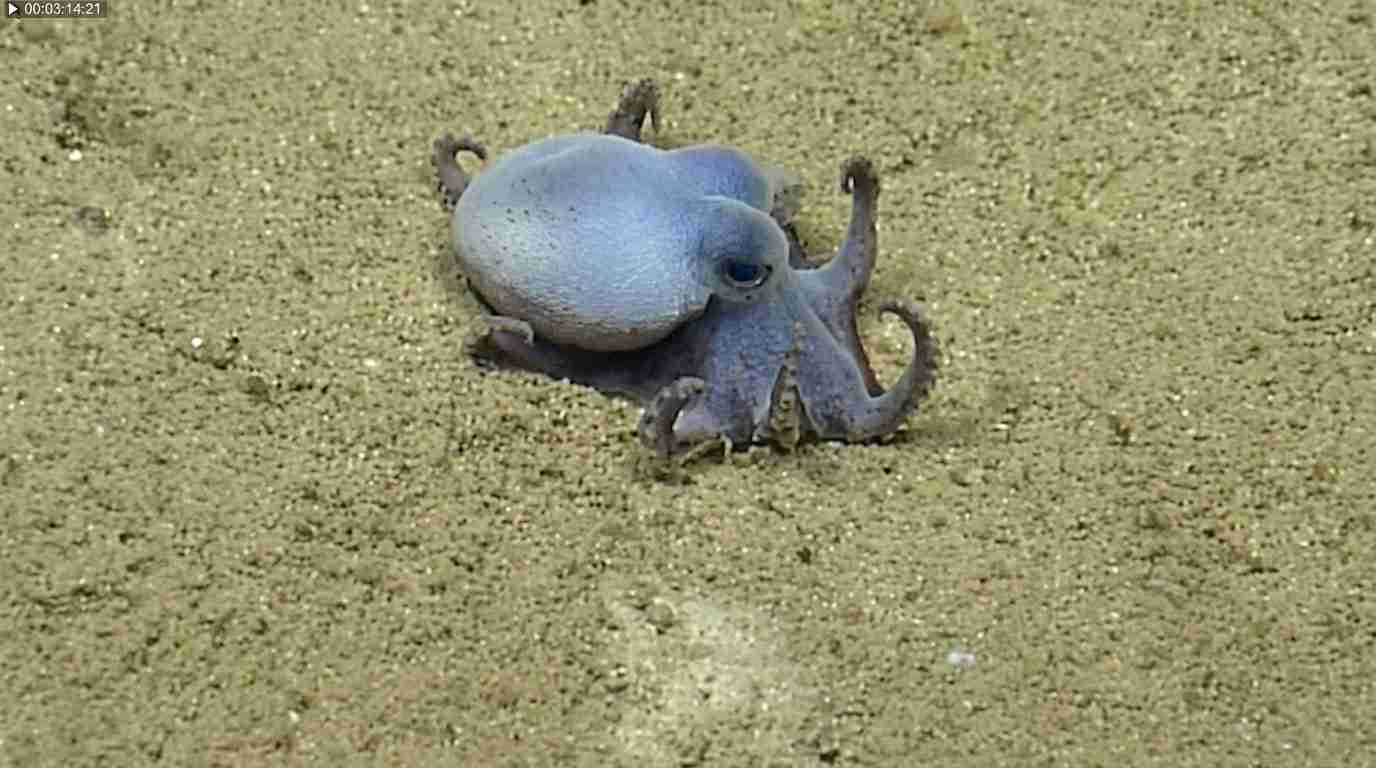
Researchers have described a new tiny, bright‑blue deep‑sea octopus, Microeledone galapagensis, found on the abyssal seafloor near the Galápagos at about 1,750–1,800 meters during a 2015 ROV expedition.
- New species: Microeledone galapagensis — a very small, blue, abyssal octopus.
- Location & depth: Abyssal seafloor near the Galápagos Islands, ~5,800 ft (~1,750–1,800 m).
- Key method: High‑resolution micro‑CT imaging provided non‑destructive internal anatomy needed for formal description.
- Lead author & institutions: Dr. Janet Voight (Field Museum) with specimens curated at the Charles Darwin Research Station.
Discovery context and location
During a 2015 deep‑sea expedition off the Galápagos Islands, a remotely operated vehicle (ROV) filmed a small, bright‑blue animal traversing a sandy abyssal plain. The team recovered dozens of individuals from roughly 5,800 feet and preserved them at the Charles Darwin Research Station for study. Early field notes and video indicated the animal did not match known regional octopus species, triggering a detailed taxonomic investigation.
Taxonomic identification and naming
Specimens were examined by Dr. Janet Voight of the Field Museum. External morphology alone was insufficient to place the animals in an existing species. Using meticulous morphological study complemented by internal imaging from micro‑CT, the team determined the octopuses represent a previously undescribed species. The name Microeledone galapagensis denotes a very small Eledone‑like octopus from the Galápagos. The formal description was published in a peer‑reviewed journal and summarized in a public release on EurekAlert.
Use of micro‑CT scanning and why it matters
A defining aspect of the study was the Field Museum’s micro‑computed tomography (micro‑CT) work. Micro‑CT produces three‑dimensional X‑ray images that reveal fine internal structures — including organs, beak and mouthparts, arm musculature and reproductive anatomy — without physically dissecting fragile specimens. These internal characters were decisive in distinguishing Microeledone galapagensis from other small deep‑sea octopuses, while preserving specimens for future research.
“Micro‑CT allowed us to see diagnostic features that would otherwise require destructive dissection, changing how we can study rare, delicate deep‑sea animals.”
Appearance and morphology
ROV video and preserved material show a small-bodied octopus with a striking blue coloration that contrasts sharply with pale sandy substrate. Diagnostic morphological features cited in the formal description include:
- Arrangement and form of suckers across the arms
- Proportions of mantle, head and arms
- Internal anatomical characters visible in micro‑CT scans (beak, musculature, reproductive structures)
Ecology and habitat
Observed on soft sediments in the upper abyssal zone, Microeledone galapagensis appears to be a benthic, active predator likely feeding on small invertebrates within the sediment. Because observations come from a limited set of dives, the species’ full geographic and vertical distribution, population size and ecological role remain unclear.
Scientific and broader significance
This discovery underscores two broader trends:
- Undiscovered diversity: Even well‑studied regions such as the Galápagos yield new species in deep waters.
- Technical advances: ROV exploration and micro‑CT imaging accelerate discovery and strengthen taxonomic rigor, offering non‑destructive methods for fragile specimens.
The finding also has conservation implications: improved baseline knowledge of deep‑sea biodiversity can inform management as human pressures — including deep‑sea mining and climate impacts — grow.
Institutions and people involved
Key participants and institutions include:
- Charles Darwin Research Station — specimen curation and local support
- Field Museum of Natural History — micro‑CT imaging and taxonomic description
- Dr. Janet Voight — lead cephalopod taxonomist
- Peer‑reviewed journal article and public summary via EurekAlert
Remaining unknowns and next steps
Researchers highlight several gaps that invite further study:
- Geographic range: Is the species restricted to the Galápagos or more widespread across the eastern tropical Pacific?
- Population status & threats: No population assessments exist yet to determine conservation status.
- Life history: Reproduction, lifespan and juvenile stages remain unknown.
- Diet & ecology: Direct stomach analyses and stable‑isotope or eDNA studies would clarify trophic role.
Future efforts — additional ROV surveys, targeted sampling, genetic sequencing and environmental DNA (eDNA) work — are expected to address these questions.
Implications for Las Vegas, Nevada
Although geographically distant, the discovery has relevance for Las Vegas through multiple channels:
- Economic: Demand for ROVs, imaging systems and data analytics can create opportunities for Nevada tech firms and university labs to supply hardware, software and services.
- Political: The finding underscores the role of federal and international funding for research cruises and biodiversity surveys — information local policymakers can cite when advocating for science investment.
- Social & cultural: Museums, aquariums and schools in Las Vegas can leverage the story to boost public engagement with STEM and to showcase modern imaging methods like micro‑CT.
- Practical applications: Methods developed for non‑destructive imaging have cross‑sector uses in paleontology, medical device testing and 3D visualization — areas where Las Vegas startups and research groups may collaborate.
Sources and further reading
Primary public summaries and institutional resources:
- EurekAlert — summary and media materials
- Field Museum — research and collections information
- Charles Darwin Research Station — Galápagos conservation and curation
For detailed technical information, consult the peer‑reviewed article that formally describes Microeledone galapagensis (see the journal link provided in the EurekAlert release).