Humans return to deep space: NASA’s Artemis II launches crewed lunar flyby from Kennedy Space Center
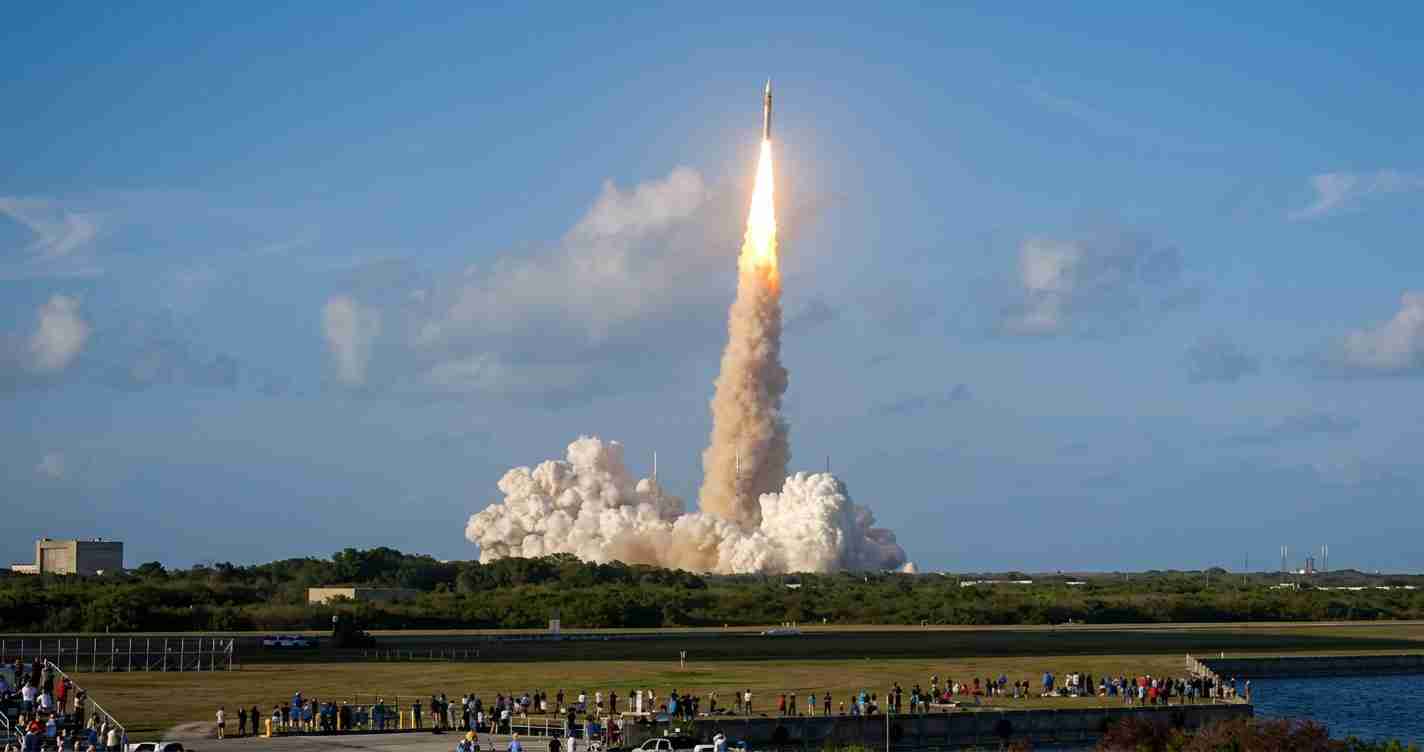
NASA’s Artemis II launched April 1, 2026, from Kennedy Space Center, Florida, beginning a historic 10-day crewed lunar flyby — the first deep-space human mission since Apollo 17 — to validate the SLS rocket and Orion systems for future landings.
- Historic deep-space return: Artemis II is the first crewed mission beyond low Earth orbit since 1972.
- Test objectives: Validate the SLS rocket and Orion life‑support, propulsion and navigation for future lunar landings.
- Crew & international ties: Reid Wiseman, Victor Glover, Christina Koch (NASA) and Jeremy Hansen (Canadian Space Agency) make a four‑person multinational team.
- Follow live: NASA provided real‑time updates and tracking throughout the roughly 10‑day free‑return flight.
Main content
Launch and ascent: what happened
Launch time and site: The Space Launch System lifted off at 6:35 p.m. EDT, April 1, 2026 from Launch Complex 39B at Kennedy Space Center event page.
During ascent the rocket passed through supersonic speeds. About eight minutes after liftoff the core stage separated (mission elapsed time +00:08:14), and the interim cryogenic propulsion stage propelled Orion into a high Earth orbit for crew systems checks. Orion then deployed its solar array wings to provide power — early updates reported the crew and spacecraft in good condition. For live mission updates see the NASA live updates.
“We have a beautiful moonrise, we’re headed right at it.” — Commander Reid Wiseman, speaking to reporters minutes after liftoff.
Mission profile and key moments to watch
Artemis II follows a free‑return trajectory. The crew spends roughly one day in high Earth orbit running life‑support, communications and navigation checks; if nominal, Orion performs translunar injection on flight day two and heads toward the Moon.
Planned milestones include a closest approach of about 8,000 kilometers above the lunar surface and the mission’s farthest distance from Earth near flight day six. The spacecraft will swing around the lunar far side (potentially producing a brief solar eclipse) and then return for splashdown at the end of the ~10‑day mission. See the Artemis II mission page for trajectory details and timeline.
Why Artemis II matters now
Artemis II is explicitly not a landing mission. Its prime purpose is to prove the heavy‑lift SLS and Orion’s deep‑space systems under crewed conditions so NASA and partners can proceed to crewed lunar landings on later flights — including missions planned with landing objectives around 2028.
Where Artemis I tested hardware uncrewed, Artemis II places people aboard to confirm life‑support, propulsion and navigation performance before committing crews to surface operations.
Crew milestones and symbolism
The four‑person crew—Commander Reid Wiseman, Pilot Victor Glover, Mission Specialist Christina Koch (all NASA), and Mission Specialist Jeremy Hansen (Canadian Space Agency)—represents both shifts in NASA’s astronaut corps and international cooperation.
Notable firsts: Victor Glover is the first person of color and Christina Koch the first woman on a mission beyond low Earth orbit on Artemis II. Canadian participation through Jeremy Hansen underscores the multinational effort.
Planetary Society commentary highlighted teamwork across differences: “the four have really bonded into a spectacular team … differences like gender, race, background, nationality fade into the background when you become a great team.” (See the Planetary Society overview.)
Public reaction and near‑field perspectives
Observers near the Cape reported strong emotions. Paul Byrne, a planetary scientist who watched from about 17 kilometers away, told Science News he was still shaking from the adrenaline 15 minutes after lift‑off and called the launch “historic,” expressing hope this would begin sustained human presence on the Moon.
Technical context and recent delays
Artemis II follows years of development and several schedule slips caused by hydrogen fuel leaks and a helium flow problem in the rocket’s upper stage. Teams repaired the issues and completed a March flight readiness review that opened launch opportunities starting April 1; launch teams confirmed “GO” after final polls, weather checks and battery reviews.
How to follow the flight
NASA provided real‑time tracking via the Artemis Real‑time Orbit Website and periodic status updates through the NASA mobile app and live blog. For live logs and telemetry see the NASA live updates and the Artemis II mission page.
Implications for Las Vegas, Nevada
Economic and tourism ties: Though far from Florida, Nevada companies in aerospace, defense, electronics and software may benefit from Artemis‑related contracts and supply‑chain opportunities. Tourism groups can leverage public interest in space to promote science‑themed attractions.
Education and workforce: Southern Nevada schools, community colleges and UNLV can use Artemis II to boost STEM interest and expand training in engineering, robotics and mission operations.
Political and civic engagement: The national spotlight gives Nevada leaders scope to press for federal investments, workforce grants and NASA partnerships.
Community and culture: Local museums, planetariums and public watch parties can turn excitement into exhibits and programs tied to lunar science and international cooperation.
Practical note for residents: Watch NASA’s live coverage online via the NASA live updates or the Artemis II mission page, and look for local STEM events and watch parties.
Sources and further reading
- NASA Artemis II mission page
- NASA live launch updates (April 1, 2026)
- Kennedy Space Center event page
- Artemis II overview (Planetary Society)
- Artemis II — Wikipedia (overview and timeline)
Reporting from Kennedy Space Center, Florida. Times Media Service