Echinus Geyser erupts again: Yellowstone’s largest acidic geyser wakes after nearly six years
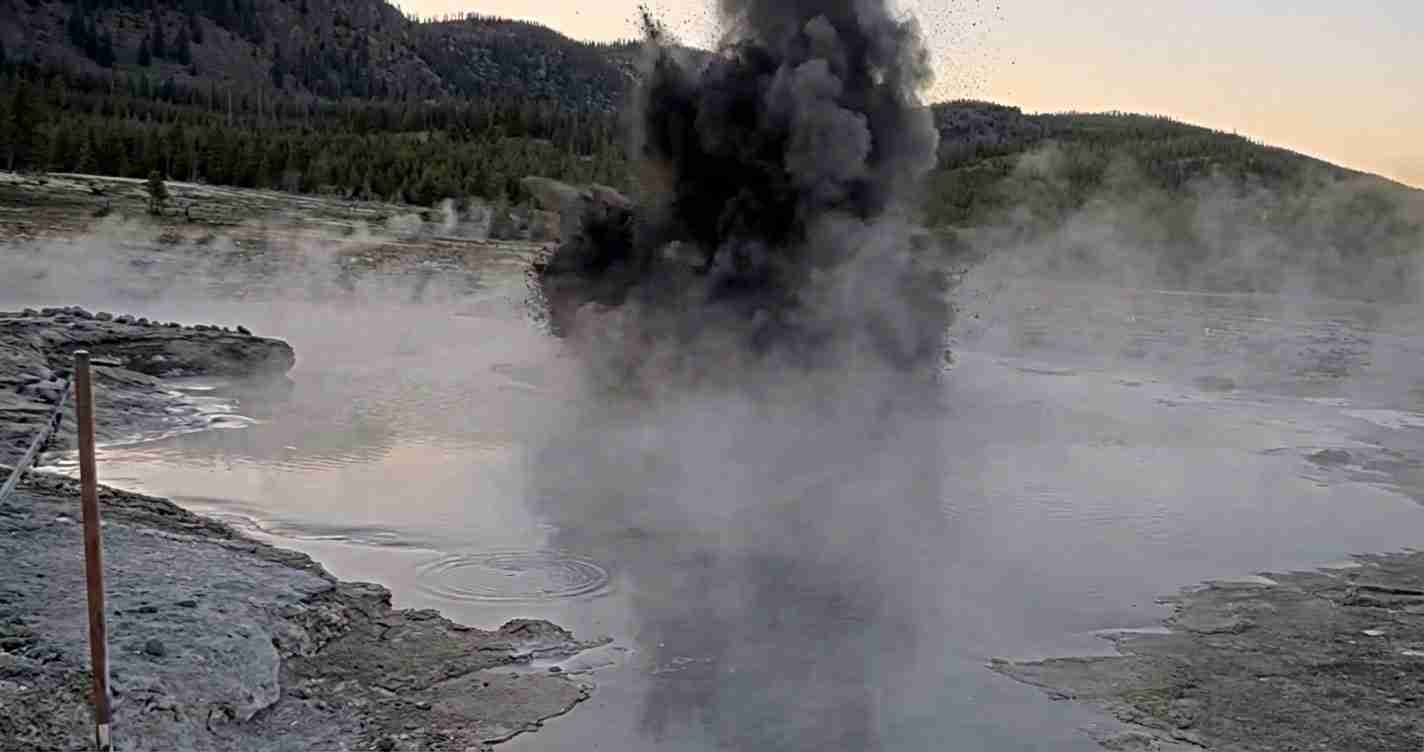
Echinus Geyser in Yellowstone’s Norris Basin began erupting again on Feb. 7, 2026, after nearly six years dormant, producing dozens of short, acidic bursts through February as scientists monitor the reactivation and rule out volcanic unrest.
Key takeaways
- Reactivation: Echinus resumed eruptions Feb. 7, 2026, with repeated bursts through mid-February, according to the U.S. Geological Survey (USGS).
- Scale and style: About 40 eruptions in February, many 20–30 feet tall, typically lasting two to three minutes (NDTV; KTVQ).
- Chemistry and danger: Water is strongly acidic (pH ≈ 3.3–3.6) and near-boiling (up to 176.5°F / 80.3°C); boardwalks are the only safe viewing areas.
- No volcanic alarm: Scientists attribute the restart to plumbing changes, not magma; ongoing monitoring continues (USGS; YouTube).
What happened in February
Timeline: Beginning Feb. 7, park observers and instruments recorded Echinus returning to life. Short bursts occurred Feb. 9, 12 and 15, with activity intensifying from Feb. 16 into the following week when eruptions happened about every two to five hours. Park monitors counted roughly 40 events before activity tapered by Feb. 24. The overview and monitoring notes are summarized by the USGS, and regional footage/discussion is posted on YouTube.
How the geyser works — and why this is unusual
Echinus is chemically distinct among Yellowstone geysers because its water is acidic (pH about 3.3–3.6), the acidity coming from a mix of acidic gases and neutral waters that create a vinegar-like pool chemistry. High temperatures (up to 176.5°F / 80.3°C) add energy for dramatic, short eruptions. The acidity often damages rock in other systems, but at Echinus the conduit persists due to the local mix of waters and chemistry.
Its physical character — a roughly 66-foot-wide pool rimmed in red deposits of iron, aluminum and arsenic, with spiny silica-coated blocks that give a sea-urchin look — is why mineralogist Albert Charles Peale named it Echinus in the late 1800s. Recent descriptions and measurements are reported by outlets including NDTV and KTVQ.
History of highs and lows
Echinus was more reliable in the 1970s–1990s, with documented eruptions every 40–90 minutes and occasional heights up to 75 feet. After 1998 the geyser lost a secondary water source and became unpredictable; it had active phases in 2010–2011 and 2017–2019. Those historical patterns suggest short active windows like February 2026 are part of Echinus’s natural cycle (GeyserTimes; KTVQ).
Why scientists think it restarted
Researchers with the Yellowstone Volcano Observatory and park staff point to mechanical hydrothermal changes rather than volcanic activity. Over time, mineral deposition or sediment can “clog” a geyser’s plumbing; natural clearing from pressure shifts, changing flows, or small hydrothermal explosions can reopen pathways. The USGS emphasizes that such reopenings are common and do not indicate magma movement. February seismicity included dozens of small earthquakes (about 74 events, max ≈ 2.4 magnitude), consistent with background activity (USGS; YouTube).
Monitoring and public safety
Park and USGS teams continue to monitor Echinus and nearby features. The park’s boardwalks and official viewing platforms are the only safe, legal places to observe hydrothermal activity.
Do not leave designated paths or approach hot springs — acidic water and high temperatures make direct contact dangerous.
Official monitoring updates and safety guidance are available from the USGS and Yellowstone National Park resources.
Scientific value and public interest
The February episode provides a live case study of an acidic geyser’s behavior and plumbing evolution. Scientists and citizen observers used temperature sensors and visual records to document timing and traits, enriching the dataset for future study. Echinus’s rarity, bright mineral colors and photogenic eruptions drew public attention and media coverage (NDTV).
Implications for Las Vegas, Nevada
Overview: Though geographically distant, Las Vegas may see short-lived ripple effects from renewed Yellowstone interest — increased travel inquiries, media coverage and local educational uses.
Economic impact
Las Vegas travel businesses — airlines, hotels, tour operators and outfitters — could see increased questions or bookings tied to renewed interest in Yellowstone. Scientists expect the active phase to be short, so any tourism boost specifically linked to Echinus’s February activity may be brief (USGS).
Political and funding considerations
High-profile hydrothermal changes often renew discussion about federal park funding, infrastructure and visitor-safety policies. Las Vegas-area stakeholders and officials who promote outdoor tourism may revisit priorities for funding visitor education, transportation links and emergency services (KTVQ).
Social and community effects
Echinus’s eruptions offer a local teaching moment for Las Vegas schools, outdoor clubs and families — topics include acid-water chemistry, geothermal energy and safe outdoor practices. Regional media and nature organizations may use the event for educational outreach (NDTV).
Cultural relevance
Stories from iconic parks shape regional culture and travel features. Echinus’s vivid colors and rare acidic plumes may appear in Las Vegas regional news, social media and travel guides, reinforcing interest in conservation and landscape science (GeyserTimes).
Practical travel advice
- Check official pages before traveling: USGS and Yellowstone National Park updates.
- Use boardwalks and designated viewpoints only; do not approach hot springs.
- Plan for weather and road conditions; arrange lodging and permits early.
- Local reporting on conditions and context is available from outlets such as KTVQ.
Reporting and source notes
This article draws on updates from the U.S. Geological Survey (USGS), on-the-ground reporting and historical geyser records. Local and national reporting includes KTVQ and compiled coverage by NDTV. Community and geyser-watch observations are archived at GeyserTimes. Video and regional discussion are posted on YouTube.