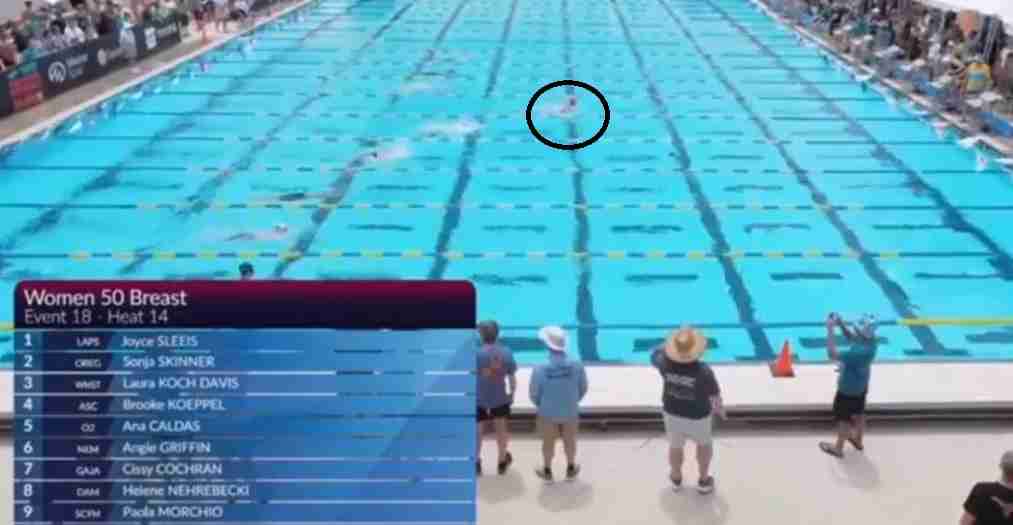
Ana Caldas banned by World Aquatics until 2030, stripped of results after refusing sex verification test
World Aquatics has banned transgender swimmer Ana Caldas through 2030 and annulled her competitive results from June 2022 to October 2024 after she refused a required sex verification test and was found to have violated gender eligibility rules.
Key takeaways
- Athlete: Ana Caldas.
- Governing body: World Aquatics (formerly FINA).
- Penalty: Banned from World Aquatics competitions until 2030; results invalidated from June 2022 through October 2024.
- Reason: Refusal to take a sex verification test and alleged provision of false information related to gender eligibility.
- Notable event: Five gold medals at a U.S. Masters Swimming meet in San Antonio (May 2024) in the women’s 45–49 age group.
What World Aquatics says and why Caldas was sanctioned
World Aquatics updated its gender eligibility rules in 2022, tightening the conditions under which transgender women may compete in the women’s category. The policy generally limits eligibility to those who transitioned before puberty — specifically before age 12 or before reaching Tanner Stage 2 — and places strict requirements on documented hormone suppression for eligible athletes. Enforcement is handled by the Aquatics Integrity Unit, which reviews alleged violations of the code and eligibility criteria.
According to media reports and the suspended-persons list published by the Aquatics Integrity Unit, Ana Caldas was placed on suspension after she refused a required sex verification test and was found to have provided false information related to competitive category criteria. As a result, World Aquatics announced a ban through 2030 and the invalidation of Caldas’s results from June 2022 to October 2024 (AOL; Fox News).
What happened at the U.S. Masters meet
The controversy intensified after Caldas dominated the U.S. Masters Swimming event in San Antonio in May 2024, winning five gold medals in the women’s 45–49 age group. That performance drew scrutiny from competitors and the public and led to questions about whether Caldas met World Aquatics’ gender eligibility policies.
Competitors at the meet publicly questioned transparency about athletes’ eligibility and about how events verify entry information, an issue reported in media coverage (AOL; Fox News).
Competitors’ reaction: feeling “betrayed”
“I felt betrayed,” said Wendy Enderle, a Louisiana swimmer who competed in the same age group and told media outlets she was upset that she and others were not informed before racing.
The comment highlights tensions among athletes in age-group meets, where policies from national and international federations can raise difficult questions about fairness, disclosure and competitive integrity (AOL; Fox News).
The wider debate and the Lia Thomas context
The Caldas case is part of a broader debate about transgender athletes’ participation in women’s sports. World Aquatics’ 2022 policy is among the strictest, requiring early transition or documented medical measures. The case intersects with the earlier, high-profile situation involving swimmer Lia Thomas, whose challenge to World Aquatics’ rules in the Court of Arbitration for Sport was dismissed on procedural standing grounds rather than on the merits.
That dismissal left the rule intact and illustrated how procedural and legal hurdles can shape challenges to sports governance. Reporting and analysis on the Lia Thomas matter and the CAS context are summarized by outlets and advocacy groups (CBS News; Athlete Ally).
Transparency, testing and privacy concerns
Sex verification tests and eligibility checks raise difficult questions. Supporters of strict verification say testing helps ensure fair competition for cisgender women. Critics argue such tests can be invasive, stigmatizing and medically questionable, especially when relying on binary or age-based cutoffs that may not account for varied medical histories.
In Caldas’s case, reports indicate that refusal to take the sex verification test — and allegations of providing false information — formed the central basis for the suspension. Details about the specific test requested, the circumstances of the refusal, or any appeals have not been publicly disclosed in full (AOL; Fox News).
Legal and procedural considerations
Sanctions by international federations can be appealed through established channels, including arbitration. The Lia Thomas case illustrated how procedural obstacles such as standing can block merits review. It is not publicly clear whether Caldas has filed an appeal or will pursue arbitration under World Aquatics’ dispute resolution processes. Any appeal could take months or years and would likely involve medical records, expert testimony and legal arguments over policy application and fair process (CBS News).
Implications for Las Vegas, Nevada
Economic impact: Las Vegas hosts many regional and national swimming meets and Masters events. A high-profile controversy could affect meet attendance and entries, potentially altering hotel, convention center and hospitality revenues if participation patterns shift.
Local athletic politics: Nevada’s mix of political views could prompt local swim clubs, schools and athletic associations to revisit registration language, verification processes and nondiscrimination policies. Parents and community members may seek clearer guidance on how gender identity is handled in youth and masters competitions.
Social effects: Masters and recreational swimmers in Las Vegas may feel the reverberations directly: some athletes will worry about fairness, while transgender athletes and allies will be concerned about exclusion and privacy. Clubs and organizers may need training on eligibility disputes and sensitive communications.
Practical steps: Meet directors may consider updating registration language, verification procedures and communication plans. Parents should ask local programs how gender identity and category placement are handled. Clubs should ensure any new measures align with sanctioning requirements and legal obligations.
Ongoing questions
Many questions remain: Has Caldas begun an appeal? What exact documentation or test was requested? How will U.S. Masters Swimming and local meet organizers respond to World Aquatics’ enforcement? Local athletes, meet directors and policymakers will be watching developments and weighing trade-offs between inclusivity and competitive integrity.
Sources and reporting
- AOL
- Fox News
- CBS News (Lia Thomas context)
- Athlete Ally (CAS decision summary)
Reporting compiled from Times Media Service review of public sources cited above.