World’s tallest teenager Olivier Rioux makes collegiate basketball history for Florida Gators
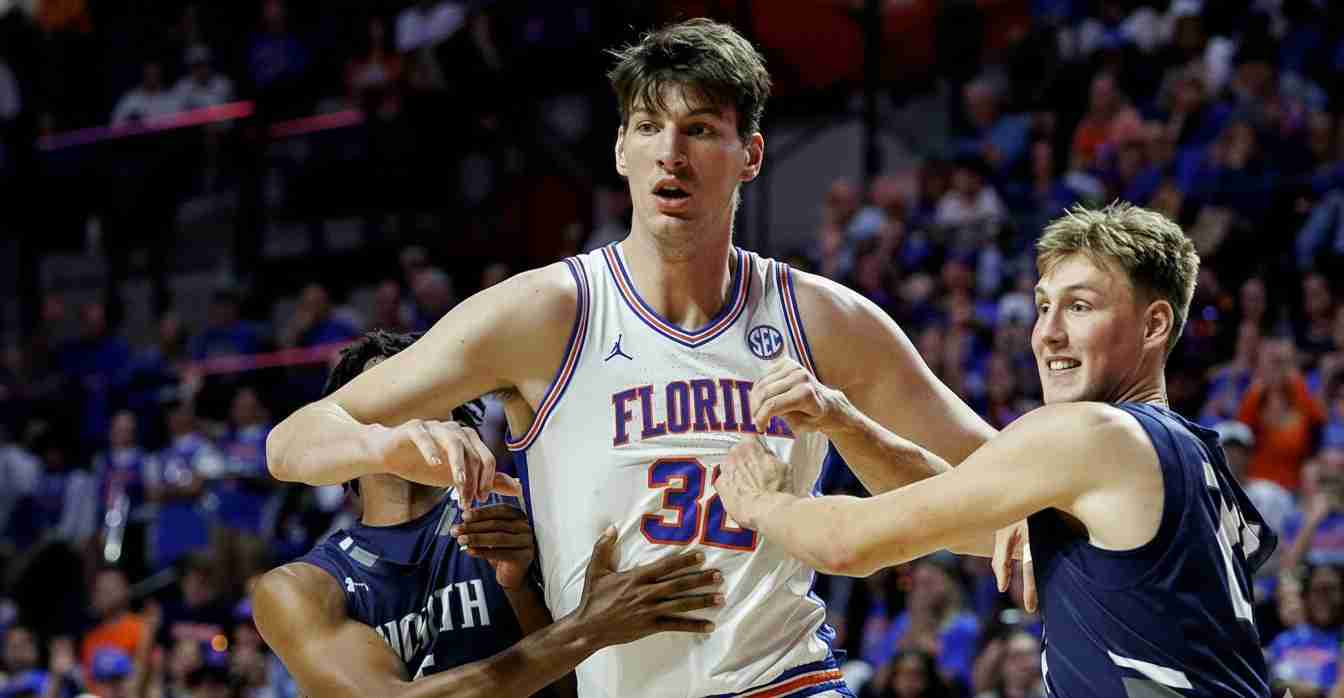
On November 6, 2025, Olivier Rioux — officially recognized as the world’s tallest teenager at 7-foot-9 (2.36 m) — made his collegiate debut for the Florida Gators, becoming the tallest player ever to appear in a college basketball game.
- Historic appearance: Olivier Rioux (7-foot-9 / 2.36 m) became the tallest player to appear in an NCAA game during Florida’s Nov. 6, 2025 win over North Florida.
- Development focus: Florida used a redshirt year to prioritize conditioning, mobility and injury prevention for the teenager.
- Wide media interest: The debut drew chants of “We want Ollie” and notable online video and profile coverage.
- Long-term potential: Scouts view Rioux as a high-ceiling, long-term project dependent on agility and consistency improvements.
Early life and path to Gainesville
Born Feb. 2, 2006, in Terrebonne, Quebec, Olivier Rioux drew attention early for his extraordinary growth: about 6-foot-1 by age eight and nearly 7 feet by the end of elementary school. His family background is tall—his father is listed at 6-foot-8 and his mother at 6-foot-1—which contributed to his early physical profile. He developed through elite programs, including the Florida Gators roster, the French Phenoms, Real Madrid’s youth setup, and IMG Academy before committing to the University of Florida.
Why Florida redshirted Rioux
Florida’s staff elected to redshirt Rioux during 2024–25 to emphasize strength, conditioning and learning the team system rather than immediate playing time. The program cited the need to develop mobility, agility and joint durability—areas critical for players of exceptional height. The redshirt year allowed Rioux to work with coaches and trainers on scout team duties and individualized training while preserving NCAA eligibility.
The debut: fans chant “We want Ollie”
Rioux’s official collegiate debut occurred on Nov. 6, 2025, when he entered with two minutes remaining in a 104–64 victory over North Florida. The crowd chanted “We want Ollie” as he stepped onto Ben Hill Griffin Court—an image captured in a widely viewed YouTube short showing “We want Ollie” chant. The outing was short and symbolic rather than stat-filled, but it secured Rioux’s place in the record books as the tallest player to appear in a college basketball game (per available public reporting).
International play and player profile
Rioux has represented Canada in youth FIBA events, contributing to two bronze-medal finishes and compiling solid rebounding and scoring at youth levels. His roster profile notes influences such as Giannis Antetokounmpo, Shaquille O’Neal and Boban Marjanovic; he wears No. 32 as a tribute to Magic Johnson and Shaq. Off the court, he enjoys drawing, swimming and reading The Maze Runner series, and counts poutine among his favorite foods. See the Wikipedia profile and the Florida Gators roster for additional background.
Athletic development and medical considerations
Extremely tall athletes require specialized training emphasizing joint health, flexibility, landing mechanics and balance. Florida’s approach prioritized long-term durability and gradual court conditioning. Coaches and trainers focus on:
- Strength and mobility programs tailored to reduce injury risk.
- Jump and landing mechanics to protect lower extremities and spine.
- Progressive court minutes to build stamina without overloading the musculoskeletal system.
What this means for scouting and the Gators
A 7-foot-9 player on an NCAA roster reshapes opponent planning: Rioux can be a rim protector and interior target, but his sustained impact depends on agility and conditioning. For Florida, he represents a long-term developmental investment; for scouts, he’s a high-ceiling comparison point when evaluating big men nationwide.
Sources and public records
- Florida Gators roster — official player profile and team materials.
- Olivier Rioux, Wikipedia — public biography and historic notes.
- YouTube short showing “We want Ollie” chant — video of crowd reaction and debut moments.
- ESPN player page — record of appearance and roster listing.
Implications for Las Vegas, Nevada
A nationally notable college player like Rioux can influence local sports economies, media attention and youth interest in places like Las Vegas. The effect spans practical event marketing to cultural storytelling:
Economic impact
- Tourism and sports travel: National interest may boost attendance at neutral-site games and tournaments hosted near Las Vegas.
- Sports betting and media: High-profile players attract viewership and wagering activity that benefit local sportsbooks and broadcasters.
Political consequences
State and municipal leaders may cite rising college basketball attention when advocating for facilities, partnerships or public/private investment tied to hosting major events.
Social effects
- Youth inspiration: Unique athletic stories can drive enrollment in local clubs and camps.
- Community engagement: Potential for clinics, appearances or outreach when high-profile programs visit or tour.
Cultural relevance
Las Vegas’ basketball culture—youth leagues, UNLV history and NBA Summer League visibility—makes it fertile ground for media storytelling that blends spectacle with substantive reporting on health and development.
Practical applications for residents
- Recruiting and camps: Local players and families may pursue more national showcases and recruiting events.
- Event hosting: Promoters can market the chance to see rare talents live at arenas and festivals.
Reporting note and record tracking
This report preserves public roster information, game video and widely available player profiles. At the time of Rioux’s Nov. 6 appearance, official box-score impact was limited; attention centers on his height, Guinness recognition as the world’s tallest teenager, and how Florida manages his development. For primary references see the roster profile on the Florida Gators roster, the Wikipedia entry, the YouTube short, and the ESPN player page.
“A symbolic moment for Florida and a record in college basketball history — now the focus turns to development and long-term health.”