California farmers push back on Prop 50 as Democrats seek new House map
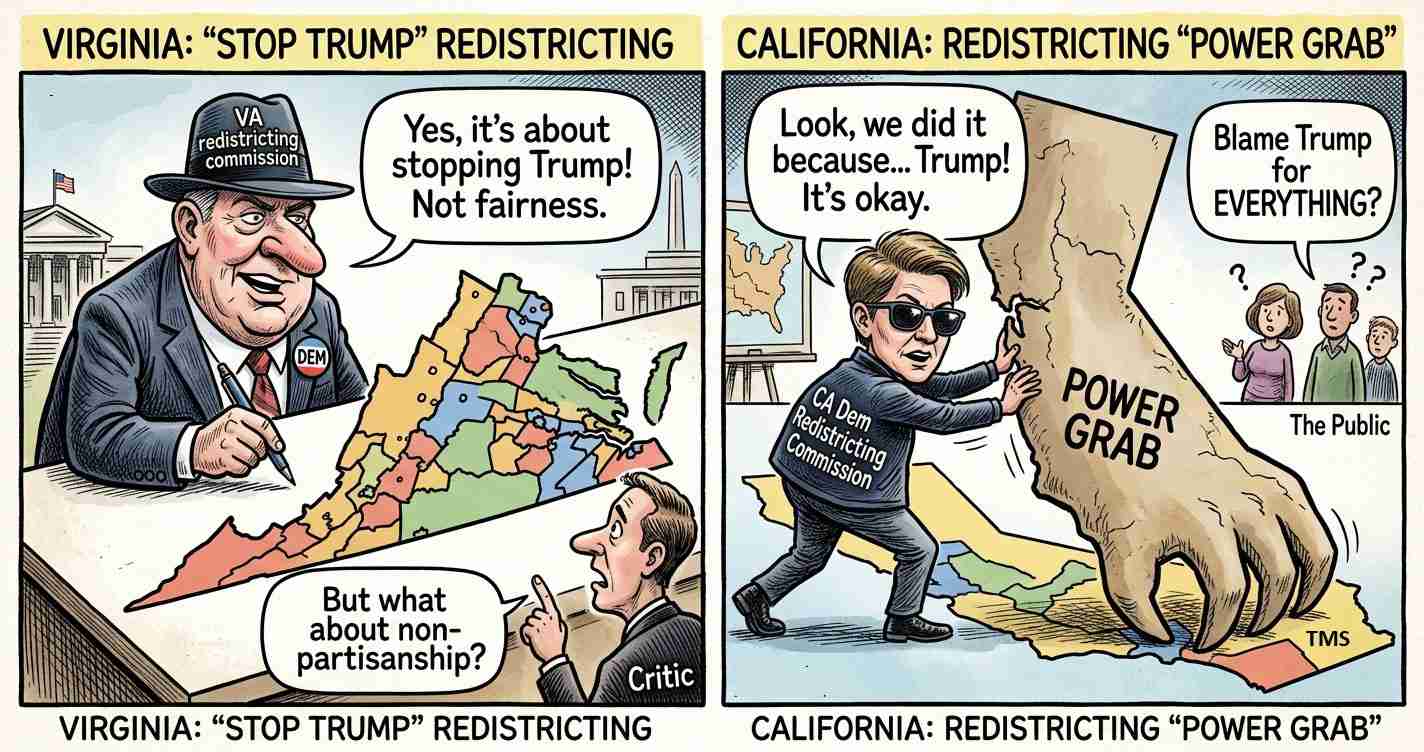
Proposition 50 would temporarily shift California’s congressional redistricting from the independent Citizens Redistricting Commission to the State Legislature for 2026–2030, sparking a fierce clash between rural farm leaders and Democratic organizers over representation and seats.
Key takeaways
- Prop 50 proposal: Temporarily gives the State Legislature control of congressional maps for 2026–2030, with the commission resuming after the 2030 Census (2025 California Proposition 50, CalMatters voter guide).
- Rural opposition: Farmers and county leaders warn it would dilute rural representation and stitch agricultural counties into sprawling, mixed districts (No on Prop 50, Siskiyou County opposition).
- Democratic rationale: Backers call it a temporary defensive tool to counter aggressive Republican gerrymanders nationally and potentially net several Democratic-favorable seats (Yes on Prop 50 FAQ, NPR/Iowa Public Radio coverage).
- Timing and cost: Ballots mailed Oct. 6, 2025; special election Nov. 4, 2025 — opponents cite about $250 million in election costs (No on Prop 50, CalMatters voter guide).
Main story
What Proposition 50 would change
Proposition 50 would pause California’s independent redistricting system for one decade, shifting authority to the State Legislature to draw congressional districts for elections from 2026 through 2030. Backers emphasize the change is temporary and that the independent 2025 California Proposition 50 mechanism would return after the 2030 Census. Supporters frame the move as a defensive response to nationwide Republican gerrymanders and say a Legislature-drawn map could produce several additional seats favorable to Democrats (Yes on Prop 50 FAQ).
Why farmers and rural leaders are mobilizing against Prop 50
Rural leaders — led in part by the California Farm Bureau’s No on Prop 50 campaign — argue the independent commission was created to respect communities of interest, including agricultural areas, and to avoid splitting counties into sprawling districts that mix rural and urban priorities.
“Legislature-drawn maps could pair remote inland counties with distant coastal or urban centers, making it harder for rural voters to elect representatives who understand water, land use and farm issues.”
County boards in rural areas have followed suit; for example, the Siskiyou County Board of Supervisors voted to oppose Prop 50, warning about distant, mixed districts that might deprioritize farming needs. Opponents cite draft maps and statements they say would reduce Republican-held seats in California and fold rural areas into urban-centered districts, weakening rural voices on drought response, farm labor policy and conservation programs (No on Prop 50; CapRadio reporting).
The Democratic case: balancing a national map
Democratic backers position Prop 50 as a temporary, strategic tool to offset what they describe as aggressive Republican gerrymanders in other states. Campaign materials argue that a Legislature-crafted map could make several currently-competitive seats more favorable to Democrats, strengthening California’s national influence on issues such as climate funding and immigration reform (Yes on Prop 50 FAQ; NPR/Iowa Public Radio coverage).
Costs, campaigns and the political landscape
The debate has produced a fast-moving, expensive campaign. Opponents highlight an estimated $250 million price tag for the special election as evidence the measure is a partisan maneuver paid for by taxpayers (No on Prop 50). The California Farm Bureau’s organizing effort has mobilized county farm bureaus and rural leaders, while Democratic-aligned groups emphasize the limited duration of the change and the broader national stakes (Yes on Prop 50 FAQ).
Examples and concrete impacts raised by opponents
Opponents point to draft maps that would pair counties such as Modoc or Siskiyou with distant coastal or urban areas, arguing such pairings would combine communities with different economies, services and priorities into single districts. They warn that this could shift federal resource allocation, affect water and infrastructure projects, and reduce congressional attention to rural emergencies and agricultural policy (No on Prop 50; Siskiyou County opposition).
Timeline to watch
- Oct. 6, 2025 — Ballots mailed to voters (No on Prop 50).
- Nov. 4, 2025 — Special Election Day when Prop 50 will appear on the ballot (CalMatters voter guide; No on Prop 50).
Reporting and source notes
This article draws on statements and materials from the California Farm Bureau’s opposition materials, county supervisor actions in Siskiyou County, public media and watchdog reporting (CapRadio; CalMatters), and materials from Proposition 50 backers (Yes on Prop 50 FAQ). Additional background is available at 2025 California Proposition 50 and coverage at NPR/Iowa Public Radio.
Implications for Las Vegas, Nevada
Although Prop 50 is a California measure, its effects could ripple into Nevada. Changes to California’s congressional delegation may shift federal spending priorities that affect the Southwest — from water projects and wildfire mitigation to transportation grants — with downstream effects on Las Vegas tourism and supply chains (Yes on Prop 50 FAQ).
Political consequences: A shifted California delegation could alter national party strategy, campaign spending, and messaging that matter in Nevada races. Urban moderates in Las Vegas will likely watch for national discourse shifts around environment, housing and immigration (CapRadio).
Social and cultural relevance: The debate highlights a broader rural–urban divide relevant to Nevada voters, many of whom have ties to California. Local civic groups may use California’s fight as a case study for voter education on redistricting and turnout in off-cycle elections (No on Prop 50; Yes on Prop 50 FAQ).
Sources and further reading
- California Farm Bureau — No on Prop 50
- Siskiyou County Board of Supervisors — Opposition statement
- California Democratic Party — Yes on Prop 50 FAQ
- CapRadio reporting on map impacts — CapRadio
- CalMatters voter guide — CalMatters
- NPR/Iowa Public Radio — Coverage of Democratic arguments
- Background on the measure — 2025 California Proposition 50
Reporting contributed by Times Media Service.