Tens of thousands switch parties in West Virginia ahead of closed primary, reshaping the electorate
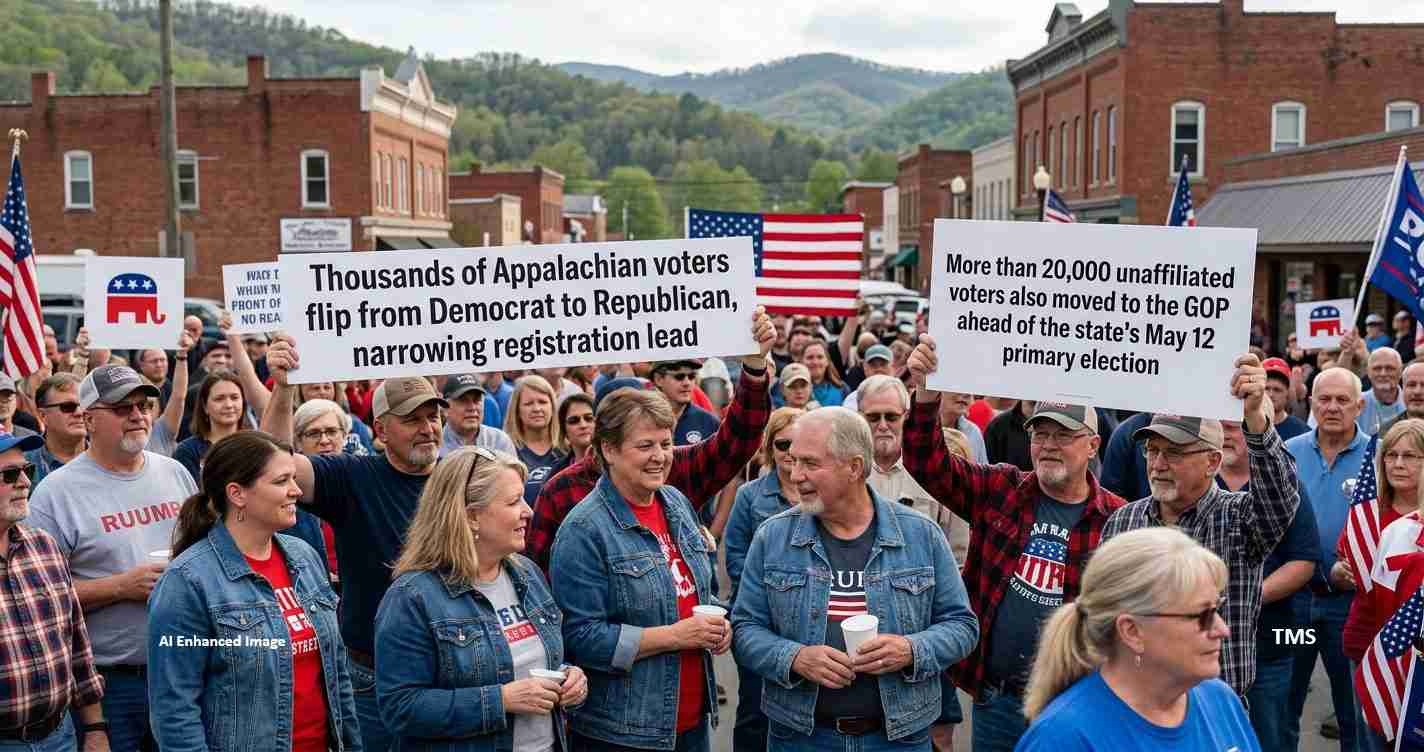
Appalachia, Virginia (Times Media Service) — West Virginia saw 68,235 party-affiliation changes between Jan. 31 and Apr. 23, 2024, as tens of thousands of Democrats and unaffiliated voters moved toward the GOP ahead of the closed May 12 primary, reshaping the roster of eligible voters.
Key takeaways
- 68,235 party-affiliation changes reported between Jan. 31 and Apr. 23, 2024, per Secretary of State Kris Warner.
- Major flows: 20,003 unaffiliated → Republican; 16,910 Democrat → Republican.
- Despite GOP gains, Democrats (327,089) + independents (301,933) still outnumber Republicans (519,756) as of April 23.
- Closed primary rules are cited by party leaders as a strong incentive for strategic switching before the May 12 primary.
What the data shows
State Secretary Kris Warner reported a rapid realignment on voter rolls between Jan. 31 and Apr. 23, 2024, totaling 68,235 formal party-affiliation changes. The largest single movement was unaffiliated to Republican (20,003), followed by Democrat to Republican (16,910).
Counterflows also appear in the data: 12,299 Democrats became unaffiliated; 7,559 Republicans dropped party affiliation; 5,211 unaffiliated joined Democrats; and 2,399 switched from Republican to Democrat. These shifts occurred as voter rolls were prepared for the closed primary on May 12.
Why voters are switching
Party leaders and election officials link much of the activity to West Virginia’s closed primary rules for 2024: only voters registered with a party may vote in that party’s primary contests. That creates a clear incentive for voters who want to influence a nomination to change registration before the deadline.
“This huge uptick in the last couple of months is certainly tied to the primary being closed,” said Del. Josh Holstein, chairman of the state Republican Party, as reported to the Herald-Dispatch.
Democratic leaders caution the pattern is not uni-directional. Del. Mike Pushkin, chairman of the state Democratic Party, noted the data reflects movement in multiple directions and described it as a broader rearrangement rather than a simple exodus.
Political stakes for the May 12 primary
Closed primaries concentrate influence among those registered and who turn out. In lower-turnout contests, even modest registration waves can determine nominations. Campaigns must now consider not only their core base but also recent converts and unaffiliated voters who might tip close races.
Strategic switching is common around closed primary deadlines: some voters may switch temporarily to participate, then revert afterward, affecting campaign targeting and turnout strategy.
What party leaders and analysts are watching
Republican officials frame the surge as voters mobilizing to have a voice in GOP primaries, while Democrats point to bidirectional movement and urge caution in interpreting the numbers as a collapse. Election administrators emphasize accurate roll maintenance and timely processing of changes before deadlines.
Analysts note registration counts alone do not predict outcomes — turnout, candidate quality, and local issues remain decisive. With >1.19 million registered voters eligible for the May 12 primary, the true impact depends on who shows up.
Context and limits of the data
The reported figures cover the window Jan. 31–Apr. 23, 2024 and were subject to final checks after the April 28 voter-roll deadline. Public reporting on motives chiefly cites party leaders and behavioral patterns; the released materials lack extensive individual-level survey data explaining each voter’s reason.
Past patterns show lower primary turnout amplifies the effect of targeted registration changes. The data and commentary cited here come from state releases, local reporting, and public statements to the Herald-Dispatch.
How this fits into broader trends
Over the past two decades, West Virginia has shifted from a state that often favored Democratic local candidates to one that leans Republican in many federal and statewide contests. The spring 2024 party-switching trend aligns with that long-term realignment but also highlights fluidity among unaffiliated voters and those abandoning party labels.
Nationwide, rising unaffiliated registrations create tension with closed-primary systems, forcing independent voters to choose whether to register with a party to participate in primaries.
Implications for Las Vegas
Though centered in West Virginia, these dynamics offer lessons for campaigns and civic groups in Las Vegas and Nevada:
- Organizing and turnout: prioritize early registration drives when rules restrict primary access.
- Messaging: target unaffiliated and soft-party voters before deadlines to influence primary electorates.
- Local races: shifts in party labels can alter primary fields and general-election matchups.
- Business stakeholders: sudden electorate changes may affect policy outcomes relevant to tourism and gaming.
- Civic education: election offices may need to expand outreach to reduce confusion about deadlines and options.
What to watch next
Observers will follow roll updates after the April 28 deadline and early/May 12 vote totals to see whether registration shifts translate into turnout and persistent realignment. Parties, campaigns, and civic groups will use those outcomes to shape fall recruitment and messaging strategies.
Sources
Data reported by West Virginia Secretary of State Kris Warner; comments to the Herald-Dispatch from Del. Josh Holstein and Del. Mike Pushkin; public recordings and reporting referenced at public recording — video 1 and public recording — video 2.