Virginia Democrats’ redistricting push draws fire after lawmaker appears to say the goal is to stop Trump
Virginia Democrats propose a constitutional amendment for a special April 21, 2026 referendum to temporarily suspend the bipartisan redistricting commission, letting lawmakers redraw congressional maps that could shift the state from a 6-5 to an alleged 10-1 Democratic edge.
- What: A proposed constitutional amendment would let the General Assembly temporarily redraw congressional maps, overriding the bipartisan commission.
- When: Voters decided in a special referendum on April 21, 2026; early voting was reported underway as of March 6, 2026.
- Who: Sponsored by House Speaker Don Scott and Senate Majority Leader Scott Surovell, backed by Richmond’s Democratic majority and publicly supported by Gov. Abigail Spanberger (reporting).
- Stakes: The Richmond-approved plan in February 2026 could move Virginia from 6-5 Democratic districts to a projected 10-1 configuration, a shift critics call a Fairfax County gerrymander (map release).
Background: How the referendum would work
Supporters say the measure is a temporary fix to prevent aggressive partisan maps seen elsewhere and that, if approved, the General Assembly would adopt new congressional lines for the next election cycle before restoring the bipartisan process. Democratic leaders frame the change as a short-term response to national pressures.
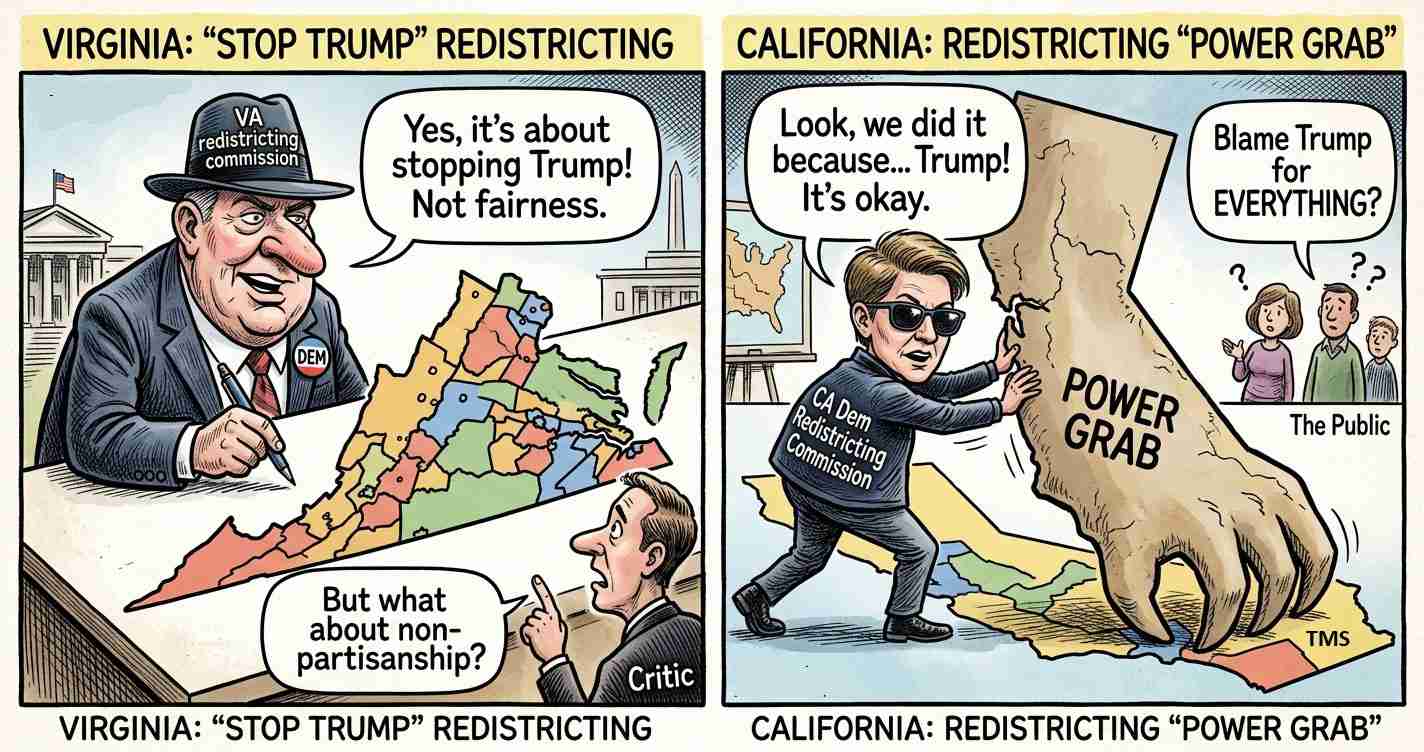
The approved February map pulls large populations from dense, left-leaning Northern Virginia — especially Fairfax County — into multiple new districts. Analysts describe the proposals as creating contorted district shapes, often labeled “spaghetti” or “scorpion” maps that concentrate Democratic voters and weaken Republican incumbents; critics point to those contorted shapes as evidence. Supporters counter that the design restores fairness after Republican-drawn maps elsewhere.
What a top Democrat reportedly said
Rep. Donald Beyer (D-Alexandria-Fairfax) was quoted as saying Democrats need to make the case that “even though this seems unfair in Virginia, it’s totally fair for America, for those of us who believe that taking back the House is the most significant thing we can do to stop Donald Trump.” (reporting)
The comment was seized on by Republicans as confirmation the effort is about national power rather than local fairness.
Public and political reactions
Republican leaders called the amendment a partisan power grab. House Minority Leader Terry Kilgore (R-Gate City) said Beyer “said the quiet part out loud” and called the plan “manifestly unfair for the Commonwealth of Virginia,” arguing a 10-1 map would “silence nearly half the Commonwealth’s voters.”
Sen. Ryan McDougle (R-Hanover) labeled the move a “con job,” while Rep. Ben Cline (R) said the plan is designed to “rig the map to take back the House.” These statements were reported by multiple outlets.
Polling and public opinion
A Roanoke College poll released in February 2026 found 62% of Virginians support the current independent redistricting system; on the amendment itself, 52% said no and 44% yes, with 4% undecided — suggesting the referendum faces an uphill climb among voters wary of changing a 2020-approved process (poll).
Legal challenges and timeline
A lower court found procedural flaws in how the amendment was advanced; Democrats have appealed and say they need a court resolution before ballots are finalized. Election officials have indicated a new map could be implemented for the 2026 midterms if legal hurdles are cleared. Critics have filed suits alleging rule breaches and a lack of transparency (lawsuits reported).
Why critics call it a Fairfax County gerrymander
Opponents point to plans that draw substantial voting populations from Fairfax County and parts of Northern Virginia, using those dense, left-leaning populations as anchors for multiple Democratic-leaning districts. The approach concentrates Democratic votes by stretching district lines into populated liberal areas, while splitting or shifting rural and swing areas to reduce Republican strength — the reason critics label it a Fairfax County gerrymander (analysis).
National context
The Virginia move mirrors a broader trend of state-level responses to party-controlled redistricting elsewhere. Democrats view it as restoring fairness after aggressive GOP maps in states such as Texas; opponents warn trading one gerrymander for another deepens public distrust. Coverage explores how Virginia’s debate could influence control of the U.S. House in 2026 (context) and in a CBS analysis (CBS News).
Implications for Las Vegas, Nevada
Economic impact: Control of the U.S. House shapes federal spending and policies that affect Las Vegas — tourism, infrastructure, disaster relief, and gaming regulation. If Virginia’s map helps flip the House, Nevada could see different federal funding priorities for transportation projects, airport security, and tourism recovery programs.
Political consequences: Las Vegas is a growing urban area with many moderate voters; national House control influences agendas on taxes, labor rules and immigration that matter to Nevada’s hospitality industry and workforce.
Social effects: Congressional laws on healthcare, unemployment benefits and workforce training affect Las Vegas families reliant on service-sector jobs; national battles beginning with a Virginia map fight can ripple to local services and benefits.
Cultural relevance & practical applications: Nevada voters often prioritize practical results; local leaders and activists may use Virginia’s legal and political experience as a guide for future redistricting, ballot campaigns and voter information drives.
Sources
- YouTube clip: RXC6Q4VJ6z4
- YouTube clip: H5EBfHVe3XE
- YouTube clip: tb2WGxnNc98
- YouTube clip: zsyDVr2oW_Q
- YouTube clip: dAZCPHhXk5Y
- YouTube clip: EbBKFw2Gdxg
- YouTube clip: SdsyJ-FMWwM
- CBS News: What Virginia Democrats’ redistricting effort could mean for control of the U.S. House
Reporting compiled from the above sources and public statements by Virginia lawmakers.