Jackie and Shadow lay third egg at Big Bear Lake; eagle cam captures moment of resilience
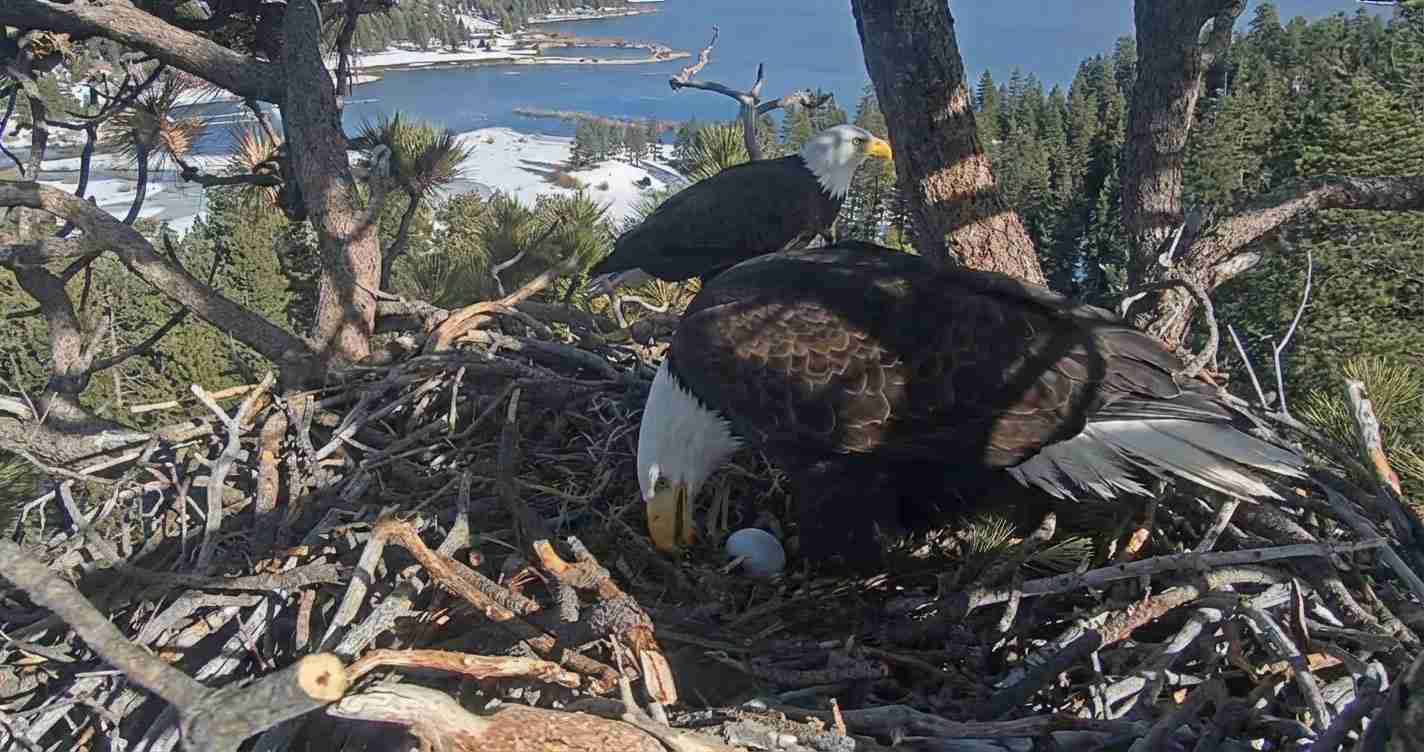
Big Bear Lake’s iconic bald eagle pair, Jackie and Shadow, laid their third egg of the season on Feb. 24, 2026 — a hopeful rebound after two eggs were lost to ravens in late January this year.
- New egg observed on Feb. 24: Jackie stood, revealed a pale egg and returned to incubate while Shadow came back minutes later (CBS Los Angeles).
- Previous losses: Two earlier eggs were destroyed by ravens after a Jan. 30 nest invasion; this new egg appears to be the first of a second clutch (ABC7).
- Incubation timeline: Bald eagle eggs typically incubate about 35 days — hatchwatchers should expect focused nest activity through late March and April.
- How to follow: The live feed from the Friends of Big Bear Valley nest cam streams 24/7 and draws a worldwide audience; coverage and context are available via the regional news reports above.
The egg, the camera and the moment
What viewers saw: On Tuesday afternoon, thousands tuning in to the live feed watched Jackie briefly stand and reveal a large, pale egg tucked into the nest. She rearranged nesting material, settled back and appeared to resume incubation.
The feed is run by the Friends of Big Bear Valley and streams around the clock, giving global viewers real-time access to nesting behavior. The monitoring group issued a statement: “Jackie did a great job and she is now resting.”
Weather at the valley was mild that day — recent snow had melted and skies were clear with temperatures in the mid-50s. (CBS Los Angeles; ABC7)
A hard lesson: raven predation and egg loss
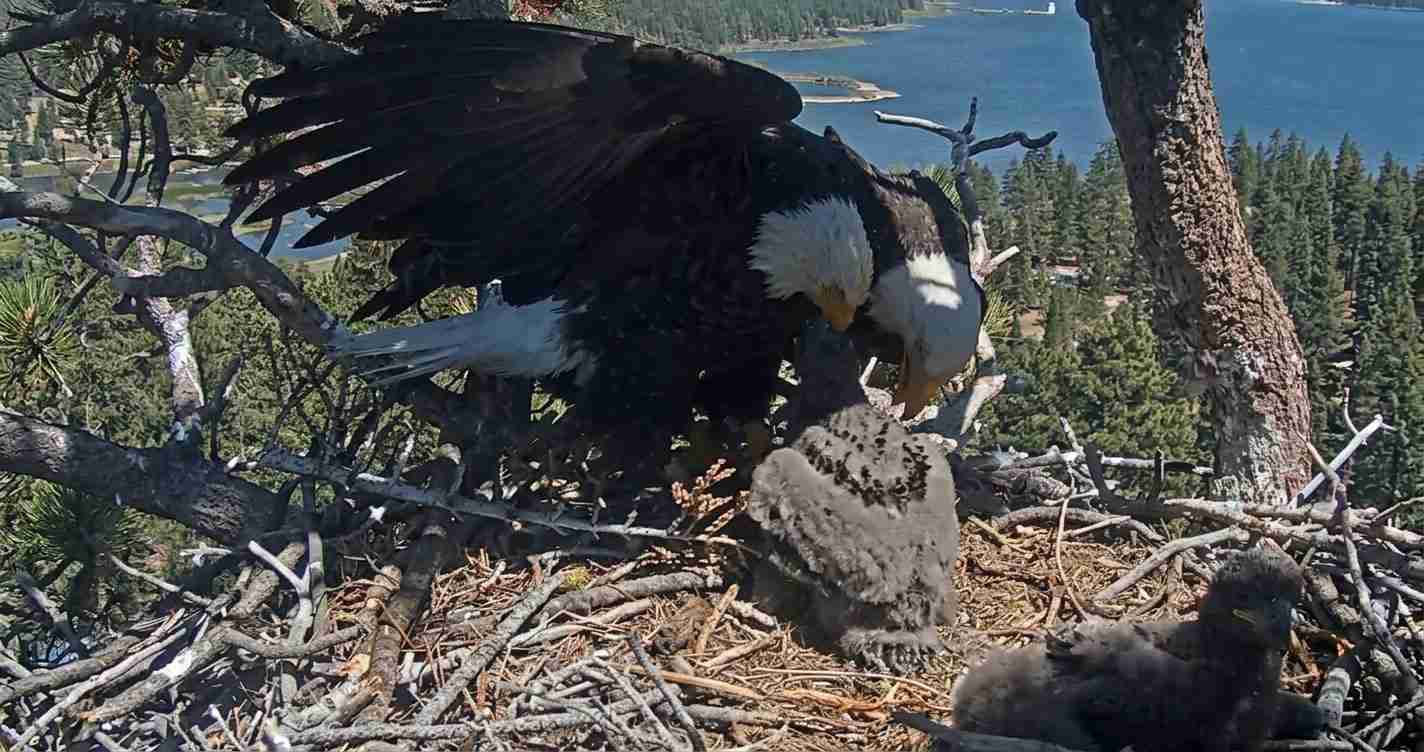
This season has been difficult. Jackie and Shadow laid eggs on Jan. 23 and Jan. 26, but on Jan. 30 ravens invaded the unattended nest. One egg may have been compromised before the ravens arrived; when the corvids destroyed both eggs, it prompted a global outpouring of sympathy from the cam’s audience. That loss prompted renewed attention to nest vulnerability and local management questions. (ABC7)
Why ravens matter
Ecology and risk: Ravens are intelligent, social and opportunistic nest raiders. When adult raptors are absent — even for hours — eggs can be vulnerable. Experienced pairs like Jackie and Shadow still face threats from other wildlife, underscoring the need to protect nesting habitat and reduce disturbances that increase adult absences. (ABC7)
Incubation and what to expect next
Bald eagle incubation usually lasts about 35 days. If this egg is viable and incubation is consistent, it could hatch in late March or early April. Bald eagles commonly lay eggs roughly three days apart, so the community will be watching for a second egg in this clutch. Nesting season in the region often continues through April, leaving open the possibility of additional eggs.
A history of small wins
Big Bear Valley’s nesting record shows both victories and losses. The valley’s first recorded bald eagle chick hatched in 2012 and fledged; since then roughly a dozen eggs have been laid locally, with only a portion reaching adulthood. Wild eaglet survival to adulthood is roughly 50 percent, which makes each successful hatch important. Jackie and Shadow have raised chicks before — including Sunny and Gizmo in 2025 and chicks in 2019 and 2022 — helping cement their place with viewers. (CBS Los Angeles)
The role of the Big Bear Lake eagle cam
The Friends of Big Bear Valley nest cam is an active research and outreach tool: it provides continuous behavioral data for scientists and students while connecting a global audience to local conservation work. The camera’s worldwide reach can spur donations, volunteer interest and broader support for habitat protection — turning one nest into a focal point for education and stewardship. (CBS Los Angeles)
Questions for researchers and managers
The Jan. 30 loss raises practical questions for managers and the public:
- Can nests be made less vulnerable to corvid predation without harming the ecosystem?
- Should public access or nearby human activity be adjusted to reduce adult absences?
- How can community-science feeds like the eagle cam pair with on-the-ground monitoring to support nesting success?
Experts urge caution: direct intervention in wild nests is discouraged unless authorized, but the incident highlights the need for thoughtful local management and clear guidance for viewers and visitors. (ABC7)
Implications for Las Vegas, Nevada
Economic: Renewed interest in Jackie and Shadow can boost day trips and weekend bookings from Las Vegas visitors, supporting hotels, restaurants and recreation businesses during shoulder seasons. The nest cam’s online audience can translate into donations and financial support for local nonprofits. (CBS Los Angeles)
Political and cultural: Wildlife stories can shape policy debates on conservation funding and habitat protection. For Las Vegas-area leaders and residents who value outdoor recreation and community science, the eagles’ story offers a cross-community touchstone that can support regional partnerships and education programs. (ABC7)
Practical applications for residents
Las Vegas families and educators can stream the nest cam for lessons on incubation, nesting behavior and conservation biology. Local groups might host viewing events or fundraisers tied to the nest’s progress. For travelers, the Jan. 30 incident reinforces responsible wildlife viewing practices — avoid disturbing nesting areas and support organizations that protect habitat. (CBS Los Angeles)
How to follow the nest
Watch Jackie and Shadow on the Friends of Big Bear Valley Eagle Live Nest Cam. Regional coverage with timeline context is available from CBS Los Angeles and ABC7.
Sources
Primary coverage and reporting: CBS Los Angeles; ABC7.