Bondi Beach shooting hero hailed after bystander tackles, disarms gunman in deadly Sydney antisemitic attack; Anthony Albanese praises those who ‘ran towards danger’
A bystander tackled and disarmed a shooter during the 14 December 2025 Bondi Beach Hanukkah attack, preventing further killings. The antisemitic assault killed 16 and wounded 42 as police and community rushed to assist nearby civilians.
- Rapid citizen action: An unnamed bystander tackled and disarmed one shooter while he was firing, an act credited with limiting further loss of life.
- Terrorist intent: Authorities declared the attack a targeted, antisemitic terrorist assault during a Hanukkah event hosted by Chabad of Bondi.
- Scale of harm: Sixteen people were killed and at least 42 wounded after roughly 50 rounds were fired from a pedestrian bridge.
- Security questions: Australia’s security agency ASIO said one attacker was known to them and had links to ISIS, prompting review of threat assessments.
The attack and the bystander’s intervention
On 14 December 2025, two men — described in reporting as a father and son — positioned themselves on a pedestrian bridge overlooking Archer Park beside Bondi Beach and opened fire into a crowd gathered for the first night of Hanukkah. Police say at least one bolt‑action rifle was used and roughly 50 shots were fired into the crowd.
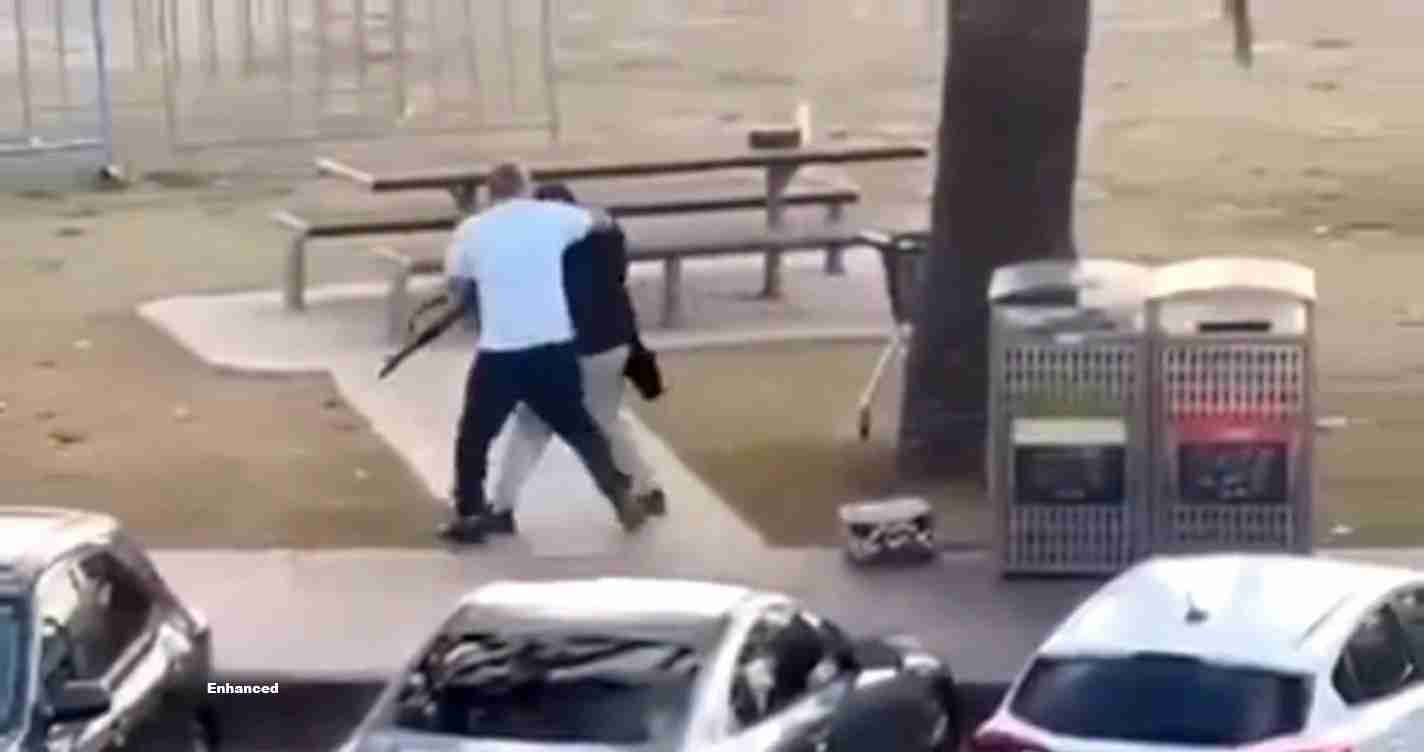
Eyewitness and recorded footage show an unarmed male bystander approach a shooter from behind while the attacker was still aiming and firing. He tackled the shooter, wrested the firearm away and momentarily turned it toward the attacker, who then recoiled and retreated toward the bridge. That sequence — captured on continuous video from about 50 metres away — has been widely circulated and verified in reporting and police review (see video footage).
Police engagement and aftermath
Following the bystander’s intervention, New South Wales Police officers returned fire toward the bridge. One attacker was killed at the scene; the other was shot, taken into custody and hospitalised under guard. Authorities immediately treated the incident as a terrorist attack and opened criminal and counterterrorism investigations.
“Those who ran towards danger showed courage and community spirit,” Prime Minister Anthony Albanese said, calling the killings “shocking and distressing.”
Casualties and the scale of the violence
Officials confirmed 16 people were killed, with victims aged between 10 and 87. At least 42 people were wounded; five were critically injured, including two police officers who responded quickly to the scene. Authorities described the event as Australia’s deadliest terror incident in modern history.
Terror designation, motive and security findings
Federal and state authorities declared the shooting a deliberate, targeted assault on Jewish Australians at a community Hanukkah gathering hosted by Chabad of Bondi. Officials said one attacker had been known to ASIO and had links to ISIS, though he had not been judged an immediate threat prior to the attack.
Investigators are examining how the attackers obtained weapons, whether they received any external assistance, and whether existing intelligence and information-sharing practices could have identified a heightened risk.
Government and public response
Prime Minister Anthony Albanese and state leaders publicly praised first responders and civilians who intervened. The federal government signalled plans to pursue stricter gun laws and to tighten security at places of worship and public gatherings. The NSW Government urged anyone with mobile or dash-cam footage to share it with police to assist investigations (see NSW Government — Bondi Beach attack official information).
Support for victims and community services
Authorities and community organisations set up hotlines and extended mental‑health services. A Safe Haven for young people at Sydney Children’s Hospital and other trauma services increased capacity to help survivors, families and witnesses. The NSW Government committed to practical and emotional assistance for affected families.
The identity of the bystander
As of the latest public reporting, the man who tackled and disarmed the shooter has not been publicly named. Media and officials have widely lauded him as a hero whose actions likely prevented even more deaths. Authorities continue to review video and witness accounts as part of ongoing inquiries.
Investigative questions still open
Key lines of inquiry remain: how the attackers acquired weapons, whether others were involved, and how intelligence assessments and information‑sharing might be improved. ASIO’s admission that one attacker was known to the agency but not assessed as an immediate threat has sparked scrutiny of monitoring and threat‑assessment processes.
Implications for Las Vegas, Nevada
The Bondi Beach attack holds lessons for large-event cities like Las Vegas. Practical considerations include:
- Event security: Reassess security for public religious and cultural events — visible security, access control and clear evacuation routes.
- Rapid response: Review response times, patrol patterns and coordination between on‑scene officers and command centres.
- Intelligence sharing: Strengthen interagency information-sharing and continuous review of threat indicators.
- Bystander training: Promote evidence‑based public guidance and first‑aid training (for example, Run, Hide, Fight; Stop the Bleed) so civilians can make safer choices under stress.
- Trauma care: Ensure surge capacity for mental‑health and pediatric services after mass‑casualty incidents.
- Community cohesion: Bolster interfaith ties and public messaging to counter hate-motivated violence.
Conclusion
The Bondi Beach story is both a tragedy and an example of extraordinary courage by ordinary people. For communities and officials worldwide — including Las Vegas — it is a prompt to review security, support systems and intelligence practices while preserving the openness of public life that enables community celebrations.