Florida deploys solar-powered robot rabbits to lure and detect invasive Burmese pythons in the Everglades
Florida launched a summer 2025 pilot using solar-powered robot rabbits to attract and detect invasive Burmese pythons, a joint effort by the South Florida Water Management District and the University of Florida to speed removal and protect native mammals.
Key takeaways
- Pilot scale: up to 120 robot rabbits deployed across key Everglades sites in summer 2025.
- Technology: solar-powered decoys combine movement, heat packs, scent diffusers, cameras and AI-driven video detection.
- Cost and logistics: roughly $4,000 per robot plus camera and software expenses; funded in part by the South Florida Water Management District.
- Limitations: not a silver bullet — useful for focused detection but requires continued funding and field validation.
How the robot rabbits work
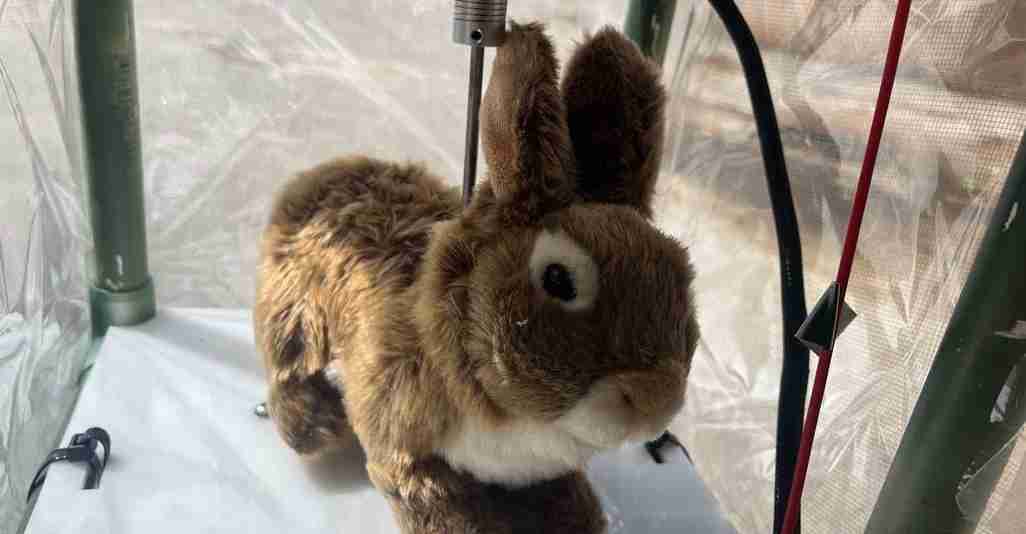
Design and purpose: Modified toy bunnies are built to mimic marsh rabbits — the common prey that triggers Burmese python predation behavior. Each unit is solar-powered, waterproof and remotely controlled, and placed inside small pens monitored by cameras and sensors.
Key components:
- Motors to create lifelike motion.
- Heat packs to emit a warm body signature similar to live prey.
- Scent diffusers that release odors tested to resemble marsh rabbits.
- AI-driven video detection that recognizes python approach behaviors and sends alerts to crews.
Officials say the system alerts response teams, who can often reach a triggered site and remove the snake within roughly an hour.
Scale, cost and deployment details
The summer 2025 pilot placed up to 120 robot rabbits across critical locations — including parts of Everglades National Park and adjacent management areas. Each robot unit costs about $4,000; cameras, AI software and maintenance add to program costs. The South Florida Water Management District provided project funding and coordination.
Agencies reported that when the AI video system detects python behavior, it sends an alert so removal crews can respond quickly, often capturing snakes within about an hour of a trigger.
Background: the Burmese python crisis
Burmese pythons established breeding populations in South Florida largely through escapes, releases and damage to captive facilities after Hurricane Andrew (1992). Populations are estimated in the tens of thousands; pythons have been linked to declines of up to 95% for some small mammal populations in parts of the Everglades, dramatically altering local food webs and habitats.
Despite removal efforts — including the Python Elimination Program and multiagency work that removed thousands of snakes (more than 11,000 in 2023 alone) — managers say new detection tools are needed to complement field teams and public reporting.
Partnerships and management strategy
The pilot is led by the South Florida Water Management District in partnership with the University of Florida, coordinating with the Florida Fish and Wildlife Conservation Commission, National Park Service and U.S. Fish and Wildlife Service. Tech-driven detection is intended to complement targeted traps, removal crews and habitat restoration.
Why scientists turned to robot decoys
Traditional detection methods struggle because pythons hide in dense vegetation and blend into surroundings. In earlier efforts, live rabbits were sometimes used as bait — a practice that was costly, hard to scale and raised animal welfare concerns. Researchers highlight the robot rabbits as a humane, repeatable and scalable alternative to attract and find pythons faster.
Questions and limits
Researchers caution that robot rabbits are not a silver bullet. The Everglades is vast and remote; pythons are versatile predators. The robots are most effective in focused areas and require evaluation for detection rates, false positives, durability and overall benefit to wildlife recovery. Scaling will depend on continued funding and demonstrated field performance.
Implications for Las Vegas, Nevada
Economic: Nevada does not face the same snake threat, but Florida’s pilot shows how solar-powered sensors and AI monitoring can protect habitat and infrastructure, and how upfront tech costs might be weighed against long-term savings in labor and ecological damage.
Policy and social effects: The project models government–university partnerships and evidence-based pilots that could appeal to urban-moderate voters. Local pilots in Las Vegas could test low-cost, solar sensors and AI video to detect invasive plants, rodents, illegal dumping or trespass in parks.
Practical applications: Cities could fund university-led pilots, use clear success metrics, and engage residents through transparency and internships to build local capacity and trust.
Supporting reporting and visuals
Video and reporting from national and local outlets show robot rabbits in pens and crews responding to alerts. The AP newsroom posted explanatory video and local outlets and university pages describe how researchers tested motion, heat and scent signatures.
Sources and further reading
- CBS News
- South Florida Water Management District
- Route Fifty
- AP Newsroom video
- University of Florida biology feature
- Palm Beach Post
- SFWMD Python Program overview
Reporting synthesized from the sources above. For detailed project pages and video, see the linked agency and news pages.