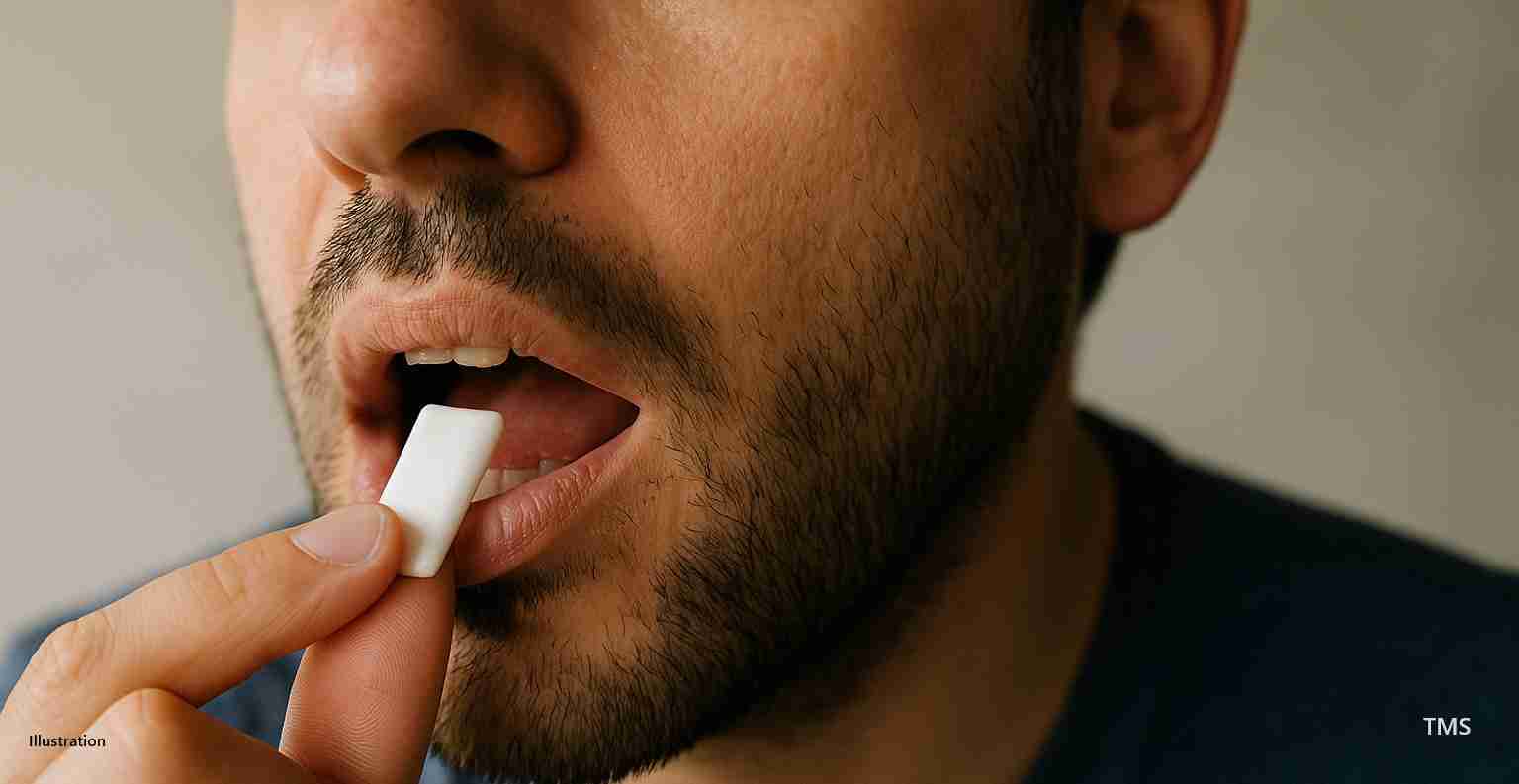
Chewing-gum flu test? New taste-based molecular sensor could flag influenza by flavor before symptoms appear
German researchers engineered a molecular sensor that releases a thyme-like compound (thymol) when influenza neuraminidase is present, producing a detectable taste in saliva; the team plans edible formats such as gum or lozenges for rapid screening.
Key takeaways
- Novel sensor: Researchers built a synthetic neuraminidase substrate that frees thymol, producing a thyme-like taste when influenza enzyme activity is present (ACS press release: “A step toward diagnosing the flu with your tongue”).
- Lab promise: In saliva samples from people with flu, the sensor released measurable thymol in ~30 minutes and showed no harm to human or mouse cells in initial assays (ACS press release).
- Edible plan: The team aims to embed the sensor into chewing gum or lozenges and hopes to begin human trials in about two years, but substantial testing remains (Clinical Laboratory Products & Technology coverage).
How the taste-based flu test works
Concept: The approach uses the virus’s own enzyme against it. Influenza viruses express neuraminidase (the “N” in strains such as H1N1), which cleaves specific chemical bonds during infection.
Sensor design: Scientists attached thymol—the natural compound that gives thyme its sharp herbal taste—to a synthetic neuraminidase substrate. When viral neuraminidase is present in saliva, it cleaves the bond and frees thymol.
If thymol is released, it travels to taste receptors and a user may perceive a thyme-like flavor. If no virus is present, thymol remains bound and no taste appears. As lead researcher Lorenz Meinel put it, the idea is to use “a detector that is available for anyone, everywhere and anytime: the tongue.” (ACS press release).
Laboratory testing and early results
Controlled experiments: In lab tests, researchers exposed the molecular sensor to vials of human saliva from people diagnosed with influenza. Within roughly 30 minutes, samples containing virus produced measurable free thymol.
Safety signals: The team tested the molecule on cultured human and mouse cells and reported no interference with normal cell functions in those assays. Results and methodology are described in the team’s publication and related press materials (ACS press release; CLPmag coverage).
Why this could matter
Testing gaps: PCR nasal-swab tests are accurate but slower and sometimes costly; antigen tests are fast and cheap but can miss pre-symptomatic infections. Detecting influenza before symptoms emerge could reduce onward transmission.
The researchers argue for “readily manufacturable, easily supplied and straightforward first-line defense tools.” A taste-based rapid screen could be cheap, easy to use, and widely available, potentially flagging contagious people in airports, workplaces, schools and other crowded settings (CLPmag coverage).
Paths to an edible screening product
The team envisions embedding the sensor into everyday consumables—chewing gum, lozenges, or small dissolving tablets—that people could use before visiting vulnerable individuals or entering crowded venues. Early reporting notes these formats align with existing manufacturing chains, but what worked in a vial must be proven in people (ACS press release).
Why caution is needed: limits and unanswered questions
Accuracy unknown: Sensitivity and specificity in real-world human use are not yet established. Taste perception varies by person and can be altered by smoking, medications, dental work, age, and recent food intake.
Safety and specificity: The team must demonstrate the thymol dose is both safe and reliably perceptible, and that the sensor won’t react to other microbes or salivary substances. Regulatory and manufacturing pathways for edible diagnostics also remain to be defined.
Expert reactions and context
Public-health experts call the idea creative and worth testing but caution against overstating results. Any taste-based test would require robust evidence that it consistently identifies contagious people without excessive false positives. The research fits a broader push for faster, cheaper, and more accessible respiratory-virus detection tools (CLPmag coverage).
Implications for Las Vegas, Nevada
Economic impact: Las Vegas’s tourism and convention economy depends on crowd safety. A low-cost, easy-to-use flu sensor in gum or lozenges could reduce outbreaks that disrupt businesses and events, helping hotels, casinos and convention centers protect staff and guests.
Political consequences
Local leaders might shift policy thinking from broad mandates to targeted prevention if a practical screening tool becomes available. Officials in Clark County and Nevada would need to weigh whether to promote pilot programs, fund trials, or set safety standards for edible diagnostics.
Social effects
Hospitality, entertainment and transportation workers—often on the front lines of respiratory-virus spread—could gain an extra layer of protection. For residents and tourists, a quick, familiar screening option could ease decisions about attending shows or visiting family.
Cultural relevance
Las Vegas culture values convenience and immediacy; a chewing-gum or lozenge-style test fits local habits. Adoption would depend on trust in the product’s accuracy and safety.
Practical applications for local life
- Travelers: Quick self-checks before flights or conventions could reduce in-transit spread.
- Employers: Casinos and hotels could offer voluntary screening during peak flu season to protect staff.
- Health clinics: Community clinics might use inexpensive first-line screens to triage who needs confirmatory testing.
- Event operators: On-site screening for staff and performers could reduce last-minute cancellations.
Local caveats and planning
Las Vegas health providers and employers should await human-trial data and published accuracy metrics before adopting taste-based testing. Public-health planners must consider privacy, consent, cost, and potential inequities in access. If trials show high accuracy, agencies could pilot programs in long-term care, shelters, and high-traffic tourist zones.
Sources and further reading
- ACS press release: “A step toward diagnosing the flu with your tongue” — (ACS Central Science)
- Clinical Laboratory Products & Technology coverage: “Taste-based flu detection technology shows promise in lab tests”
- General audience report: “Chewing gum flu test could detect the virus through flavor before symptoms strike”
Reporting note: This story was reported from Wurzburg, Germany, and will be updated as human trial data and regulatory reviews become available.