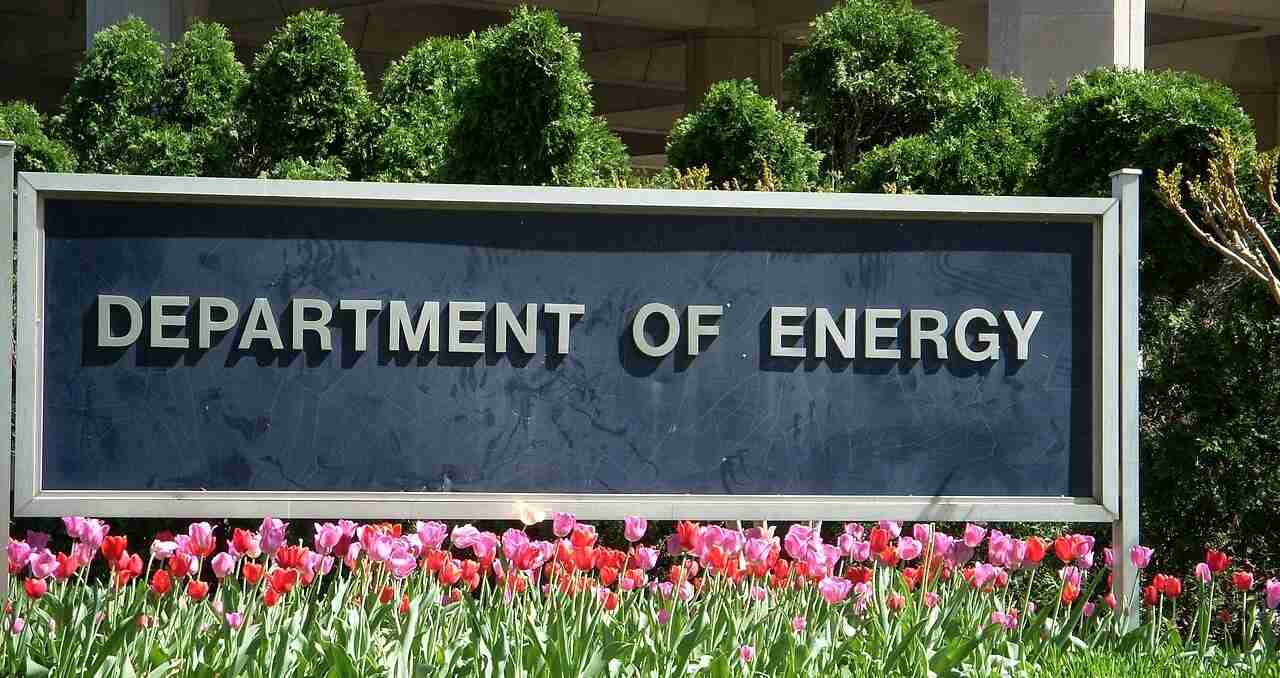
Trump signs executive order launching “Genesis Mission” — a Department of Energy AI push to speed U.S. scientific discovery
WASHINGTON (Times Media Service) — On November 24, 2025, President Donald Trump signed an executive order launching the Genesis Mission, a DOE-led AI initiative to accelerate scientific discovery, boost energy performance and strengthen national security.
Key takeaways
- What: Executive order launching the Genesis Mission to speed scientific and engineering breakthroughs (sources: WSLS, Fox News).
- Lead: The Department of Energy and national labs, coordinating with OSTP, will lead the effort (sources: TechPolicy.Press, Axios).
- Partners: Private tech firms and universities are invited to collaborate on government scientific and engineering problems (sources: WSLS, Fox News).
- Focus: Priority areas include advanced manufacturing, biotech, critical materials, nuclear energy, quantum information science, and semiconductors (TechPolicy.Press).
What the order does
The executive order directs the Department of Energy and its national laboratories to assemble a national digital platform that pools federal scientific data and makes it available more quickly to researchers and partners. The platform is intended to allow private and academic AI systems to run on federal datasets to find new solutions — a move described by officials before the signing (WSLS, WTOP).
The order explicitly names the DOE as the lead agency and tasks its national labs with building a robust Department of Energy AI platform and linking government supercomputers with private-sector capabilities — with the aim of turning U.S. scientific datasets into a shared national asset for AI-driven discovery (TechPolicy.Press, Axios).
Priority domains and technical resources
The Genesis Mission lists six priority areas expected to deliver fast returns: advanced manufacturing, biotechnology, critical materials, nuclear energy, quantum information science, and semiconductors and microelectronics (TechPolicy.Press).
Officials stressed the program will tap both public supercomputers at national labs and private-sector supercomputing capacity to run large AI models and simulations — linking high-performance computing resources to accelerate research (WSLS, WTOP).
“The administration wants to build the largest, most powerful, most innovative AI ecosystem in the world,” officials said, comparing the Genesis Mission’s reach to historic national projects such as the Manhattan Project (Fox News, TechPolicy.Press).
National security, data controls and public-private partnerships
Because the Genesis Mission will involve sensitive data and national security issues, the order includes provisions for data controls and security oversight. The White House says safeguards will protect classified or sensitive information when private companies or universities contribute AI resources (WSLS, WTOP).
Supporters argue that partnering with major tech firms allows the government to use advanced AI tools and large-scale computing without building everything in-house. Critics, however, warn that heavy reliance on private platforms could create governance and accountability challenges and concentrate power in a few firms — concerns raised by policy analysts (TechPolicy.Press, Axios).
Notably, the White House and DOE officials did not list medical research as a target of the Genesis Mission; public comments and the order emphasize engineering, energy systems, and national security rather than biomedical innovation (WSLS, WTOP, Axios).
Why the Genesis Mission matters now
The administration frames the Genesis Mission as a push to secure “energy dominance” and to keep the United States competitive in critical technologies. By centralizing federal scientific datasets and inviting AI partners, the White House aims to accelerate innovations such as more resilient power grids, faster chip design, and improved manufacturing efficiency (TechPolicy.Press, Fox News).
The initiative signals a shift toward treating government-collected scientific data as strategic assets to be actively used by AI systems — not merely archived. That approach offers opportunities for faster discovery but raises risks around access, oversight, and accountability (TechPolicy.Press).
Implications for Las Vegas, Nevada
Economic impact
Nevada depends on reliable power and growing technology investment; the Genesis Mission’s goal to modernize the electric grid could affect the state directly. Local utilities and the Las Vegas metro area may gain access to new AI tools and modeling to predict outages, manage demand spikes from tourism and casinos, and integrate renewables more smoothly (WSLS, TechPolicy.Press).
City economic planners and utility regulators should monitor whether DOE-funded modeling and AI tools become directly available to regional grid operators or whether private partners retain control of the technology. Faster grid innovation could reduce blackout risk during peak seasons and support Las Vegas’s convention and events economy (Fox News).
Workforce and education
The Genesis Mission could spur demand for AI-skilled workers across Nevada. If DOE and university partners create research roles or training programs, Las Vegas-area colleges and technical schools may see new opportunities in data science, AI engineering, and energy systems — helping diversify an economy long centered on tourism (TechPolicy.Press, Axios).
Political and regulatory angles
Local leaders will need to consider how federal-private partnerships align with Nevada’s regulatory framework. Regulators and lawmakers may press for clear rules on data sharing, privacy, and public benefit if private companies use federal datasets and supercomputing to develop commercial products (TechPolicy.Press).
Public safety and national security
Las Vegas hosts critical infrastructure that could be affected by national efforts to secure energy systems. Federal research that improves grid resilience may strengthen protections for hospitals, emergency services, and major event venues. Conversely, integrating private-sector AI tools into local infrastructure could create new cybersecurity priorities (WSLS, WTOP).
Research and academic partnerships
Universities in Nevada and the Mountain West could pursue DOE and national lab partnerships to participate in the Genesis Mission. Federal funding might support local projects in critical materials, semiconductor manufacturing, or renewable energy integration — areas important to Nevada’s clean-energy and mining sectors (TechPolicy.Press).
Questions for local stakeholders
City and state officials in Las Vegas should ask early questions: Will local utilities and universities have fair access to DOE’s AI platform? What safeguards will protect Nevadan data and infrastructure? How will workforce programs be funded and targeted to include local residents? The answers will shape whether Genesis Mission investments benefit the Las Vegas region directly (WSLS, TechPolicy.Press).
Source notes
This reporting draws from early coverage and White House briefings. See initial reporting and briefings from:
Reporting by Times Media Service — facts, sources, and links preserved above.