
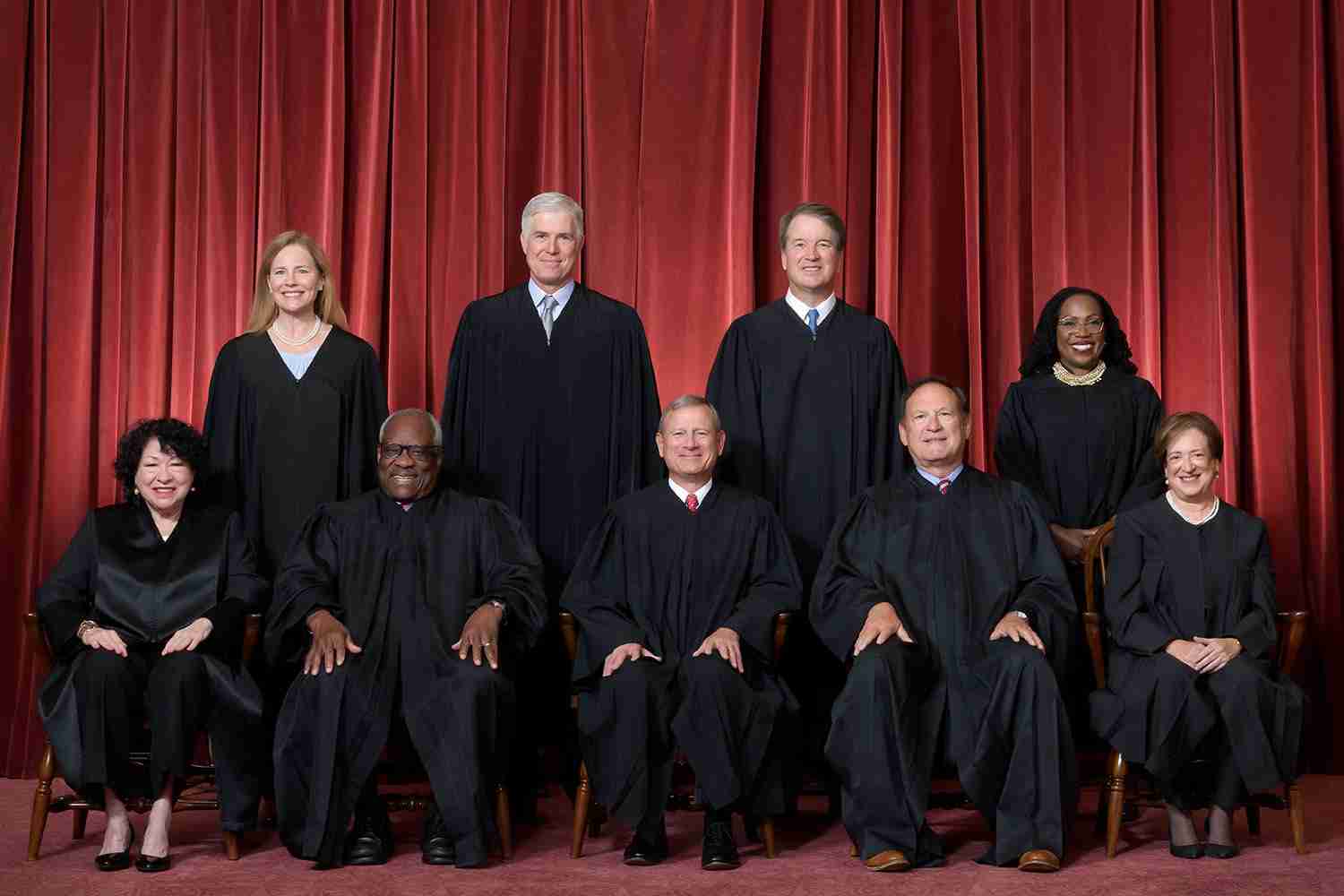
Trump blasts justices after Supreme Court hears major cases on transgender athletes; oral arguments show justices probing Title IX and Equal Protection questions
The U.S. Supreme Court on January 13, 2026, heard lengthy arguments in Little v. Hecox and West Virginia v. B.P.J., and several justices’ questions suggested a possible majority inclined to uphold state bans on transgender girls in school sports.
Key takeaways
- Lengthy arguments: The Court heard more than three-and-a-half hours in Little v. Hecox and West Virginia v. B.P.J..
- Legal claims: Challengers contend the bans violate the Equal Protection Clause and Title IX, relying in part on Bostock reasoning (challengers’ arguments described in JURIST analysis and an ACLU press release).
- State defense: States argue sex-separated sports preserve fairness and safety and urged judicial deference (JURIST).
- Lean of the Court: Observers noted questioning that commentators say leans toward upholding bans, but the ruling’s exact scope remains uncertain (SCOTUSBlog).
What was argued at the Supreme Court
Attorneys for the transgender students and their allies argued that state statutes excluding transgender girls from girls’ teams treat those students worse than others of the same sex. Joshua Block of the ACLU told the Court West Virginia’s law singles out a girl “on the basis of sex,” harming her opportunities and participation in school life (see the ACLU press release and reporting in Education Week).
Challengers invoked the logic of Bostock v. Clayton County, arguing that discrimination “because of sex” includes discrimination against transgender people, and that courts should apply a but‑for causation test: would the student have been treated the same if she were of a different sex? (background coverage: JURIST).
State attorneys countered that competitive sports are a distinctive context where sex-based distinctions are permitted to protect fairness and safety. They urged the Court to accept a more deferential standard — allowing legislatures leeway when they reasonably pursue competitive equity and safety (reporting: JURIST; SCOTUSBlog).
What the justices asked and why it mattered
Several justices pressed technical questions that could shape the decision’s reach, focusing on Title IX’s text and history and how Bostock applies beyond the workplace.
- Justice Neil Gorsuch asked whether the “Javits Amendment” and longstanding Title IX regulations about sex-separated sports change Title IX analysis and make school athletics different from Title VII contexts like Bostock (Education Week).
- Chief Justice John Roberts and others probed when courts should defer to legislative judgments about fairness and safety in athletics — questioning that observers read as open to state arguments for upholding bans (SCOTUSBlog).
- The Court’s more liberal members — Justices Sotomayor, Kagan and Ketanji Brown Jackson — pressed defenders on whether transgender girls who have used puberty blockers or female hormones could be excluded, and emphasized the concrete harms exclusion causes (Education Week).
Those exchanges were significant because they signaled which legal standards the Court might adopt. Treating the cases like Title VII claims (guided by Bostock) would strengthen challengers; a more deferential approach tied to Title IX or historical sports regulation would favor the states. Commentators noted a balance of questions suggesting a majority leaning to uphold the bans, though scope remained uncertain (SCOTUSBlog).
Title IX, Equal Protection and the central legal conflict
At issue were two legal pathways: the Equal Protection Clause of the Fourteenth Amendment and Title IX, the federal law barring sex discrimination in federally funded education programs. Challengers asserted both paths protect transgender students from exclusion; states argued Title IX’s separate-sex provisions and long-standing sports regulations permit distinctions in athletics (JURIST; Education Week).
Central tension: whether Bostock’s reasoning — that discrimination against a transgender person is discrimination “because of sex” — should govern school athletics, or whether athletic contexts are distinct enough to justify sex-based rules aimed at fairness and safety.
Trump’s reaction at the White House
After the hearing, former President Donald Trump criticized what he described as certain justices’ positions, saying some “were fighting hard for men to be able to play in women’s sports.” He added that justices who appeared to support the trans-athlete plaintiffs “should lose a lot of credibility,” and reiterated that “we banned men from playing in women’s sports.”
Media reports do not identify which justices Trump had in mind or include a full transcript of his remarks; reporting summarized his comments (Fox News).
How observers read the hearing
Legal analysts and education reporters said the tone and focus of questions from several justices suggested a majority might be willing to uphold the bans. Still, analysts stressed uncertainty about the ruling’s scope: the Court could issue a broad, nationwide decision or a narrower ruling limited to school sports or the parties before the Court (SCOTUSBlog; Education Week).
Full oral-argument transcripts and recordings will clarify the justices’ precise reasoning; advocates on both sides said they would review the questions as they prepare for next steps and for lives affected by a decision (ACLU).
Implications for Las Vegas, Nevada
Economic impact: Nevada schools and athletic programs could face policy and funding consequences. If the Court upholds bans, districts that currently allow transgender girls to play on girls’ teams may encounter legal pressure to change policies, affecting participation and potentially Title IX compliance reviews.
Political consequences: The issue is likely to surface in Nevada campaigns. Elected officials in Clark County and statewide could be asked to take positions that resonate with moderate urban voters in Las Vegas.
Social effects: The decision could change who plays on which teams, increasing uncertainty for transgender students and prompting greater demand for counseling, communication, and clarifying district policies.
Cultural relevance: Debates will intersect with local concerns about inclusion, fairness, and youth development; faith communities, sports organizations, and parent groups are likely to weigh in publicly.
Practical applications: Coaches, athletic directors, and administrators should monitor the Court’s written opinion. Districts may need to revise eligibility forms, update handbooks, train staff, and consult legal counsel for Title IX compliance and risk management.
Sources and further reading
- SCOTUSBlog: Supreme Court appears likely to uphold transgender athlete bans
- Education Week: Supreme Court signals support for state bans on trans girls in sports
- JURIST: Supreme Court takes up transgender athletes in girls’ sports
- ACLU press release: Supreme Court concludes oral arguments in historic transgender rights hearing
- Fox News: Trump calls out Supreme Court justices after trans-athlete hearing



