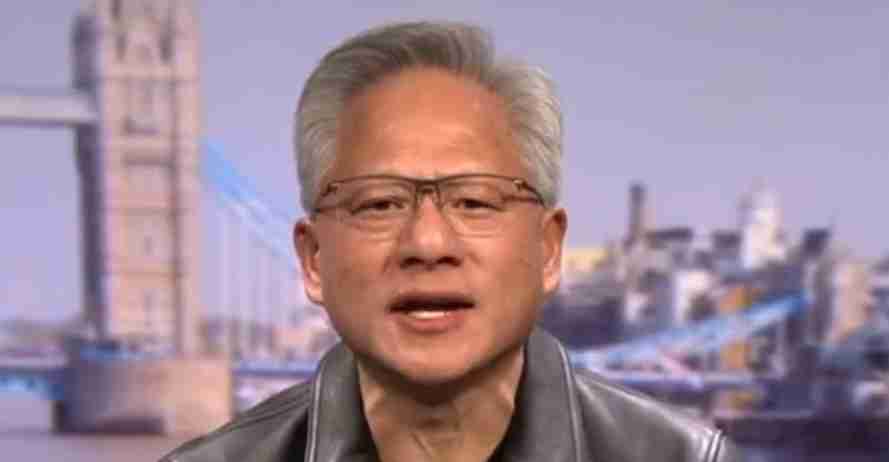
Nvidia CEO warns “China is going to win the AI race,” blames energy subsidies, regulation and Western cynicism
At the FT Future of AI Summit in November 2025, Nvidia CEO Jensen Huang warned that China is “going to win the AI race,” citing energy subsidies, centralized regulation and Western export controls and “cynicism” as decisive factors.
Key takeaways
- Jensen Huang warned China is only “nanoseconds behind” and could overtake the U.S. in AI without policy change.
- Energy subsidies, centralized regulation and restricted U.S. chip exports are cited as structural advantages for China.
- Export controls limit Nvidia’s market access and may push China toward domestic alternatives, with economic and strategic trade-offs.
- Local impact: Regions like Las Vegas could lose investment unless U.S. policy and incentives adapt.
Summary and context
At the FT Future of AI Summit in London, Jensen Huang delivered a stark message: China is poised to close the gap fast. He argued that factors beyond pure chip fabrication — notably energy pricing, regulatory speed and market access — could determine who wins the global AI competition.
China’s structural advantages, Huang says
Huang emphasized what he called systemic advantages for Chinese firms. He argued that government policies that lower operating costs — especially subsidized electricity for data centers — give companies such as ByteDance, Alibaba and Tencent a major cost edge. He was quoted saying,
“Power is free.”
Reporting and analysis of these remarks have appeared in multiple outlets, including Fox Business and Tom’s Hardware.
Regulatory speed and scale
Huang contrasted China’s centralized, uniform approach with what he called a patchwork of U.S. rules — “50 new regulations” — that can slow deployment. He argued that uniform regulation enables faster scaling of large models and data centers, accelerating practical progress even where technical gaps remain.
Analysis of the regulatory contrast has been noted by Axios and Fox Business.
U.S. export controls and business trade-offs
Huang criticized U.S. export controls that restrict sales of Nvidia’s most powerful processors — including Blackwell-era chips — to China. He warned these rules reduce U.S. reach to roughly half of AI developers and customers and could encourage China to accelerate domestic chip programs.
He said restricting sales not only limits Nvidia’s revenue — a market opportunity he estimated at roughly $50 billion — but also weakens U.S. influence over the global developer ecosystem. This perspective has been covered by Investing, TrendOnTech and Axios.
“Cynicism” and the tone of Western debate
Beyond policy mechanics, Huang called out what he described as Western “cynicism” about AI. He urged greater optimism and argued that a culture of confident investment and development is a competitive advantage. In his view, skepticism combined with heavy regulation risks stifling the very innovation policy aims to control.
Coverage highlighting this framing appears in Fox Business and Tom’s Hardware.
Where experts disagree
Many analysts urge caution: China still trails in the most advanced chip fabrication and in some software ecosystems. Closing those gaps will require years and large capital investment. Still, proponents of Huang’s warning say systemic factors — energy costs, regulatory speed and market access — can materially alter trajectories.
Reporting that balances these views includes pieces from Channel NewsAsia and the South China Morning Post.
Nvidia’s position and incentives
Nvidia is central to the debate: its GPUs power many leading AI models and data centers worldwide. Huang’s remarks reflect both strategic business concerns and broader national policy debates. The company must weigh security-driven export limits against the business case for global market participation.
Further reporting on Nvidia’s commercial and strategic position appears in Axios and TrendOnTech.
Policy trade-offs: security versus competitiveness
U.S. officials argue export controls protect national security by keeping the most advanced compute out of adversaries’ hands. Huang counters that controls carry competitive costs: reduced market reach, weakened developer relationships and incentives for adversaries to develop domestic alternatives.
The debate frames a trade-off: immediate security versus long-term economic and innovation leadership — a theme covered in reporting by Investing and TrendOnTech.
Implications for Las Vegas, Nevada
Economic impact: Las Vegas is expanding its tech footprint. Local data centers, cloud services and AI startups could be affected by national shifts in AI competitiveness. If U.S. policy or high energy costs slow AI growth, investment that might come to Nevada could instead flow to lower-cost regions overseas.
Political consequences: Nevada officials may face pressure to adjust incentives, permitting and state-level AI rules to keep investment local — a response to Huang’s warning about regulatory fragmentation and competitiveness.
Social effects and culture: AI-driven growth can reshape local labor markets and the convention economy. Las Vegas’s identity as a tech-forward destination depends in part on hosting events and companies that require strong compute and network infrastructure.
Practical applications and next steps
For city planners and business leaders: evaluate local energy pricing and incentives for data centers, streamline permitting for tech infrastructure and support workforce programs that build AI-ready talent. Local companies should weigh supply-chain risks tied to export controls and global competition.
Recommended actions include targeted incentives, clear permitting pathways and investment in training programs to ensure the region can attract or retain AI-related projects.
Reporting and sources
This article draws on reporting of Jensen Huang’s remarks at the FT Future of AI Summit and subsequent coverage by the following outlets:
Preserved facts and links above reflect reporting of Huang’s November 2025 remarks and subsequent coverage; readers can follow the linked outlets for the primary articles and full transcripts of his comments.