AIdol’s Moscow Debut Ends in Faceplant, Raising Questions About Russia’s Robotics Push
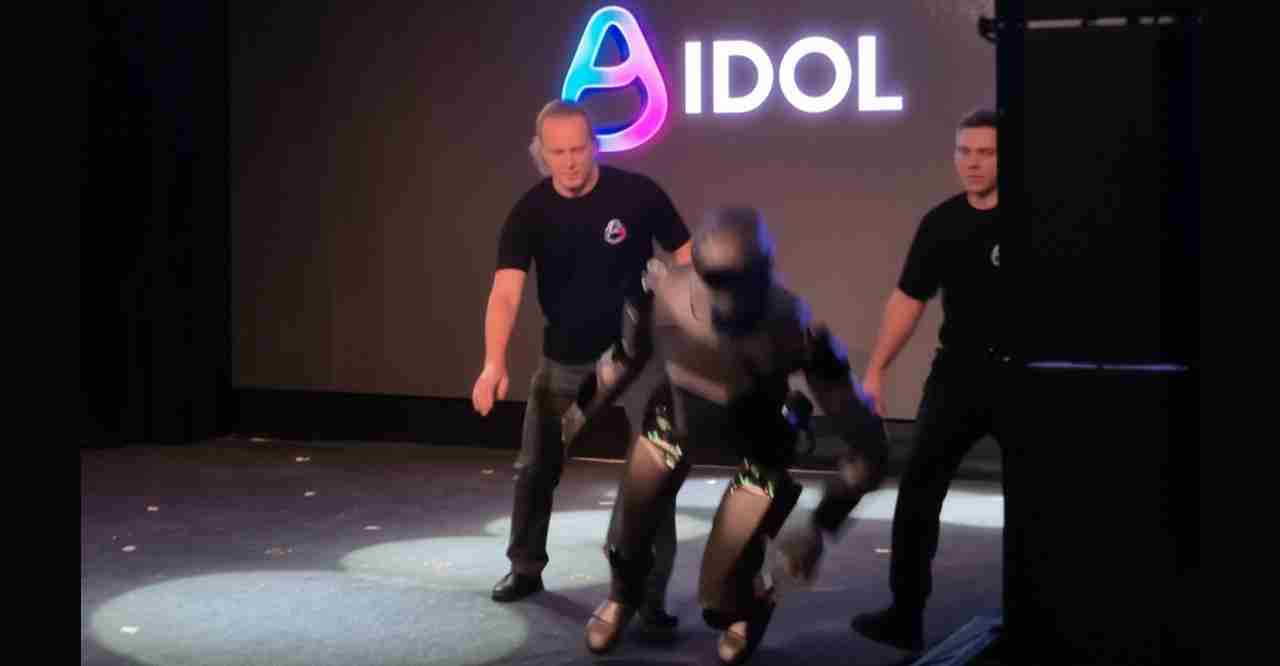
Russia’s first humanoid AI robot, AIdol, fell within seconds of its Moscow public debut in November 2025, turning a high-profile demonstration into a viral technical embarrassment that underscored limits in the country’s robotics capabilities and supply chains.
- Public fall: AIdol tripped and fell onstage; video clips circulated widely, capturing the incident and ensuing scramble by event staff (AIdol fall clip 1, AIdol fall clip 2, developer video).
- Cause: Developers cited a calibration error in balance and motion-control systems and described AIdol as still in a “learning phase” (developer remarks).
- Broader impact: Analysts said the stumble highlights supply chain limits, sanctions effects, and a brain drain that complicate Russia’s ability to match global leaders in humanoid robotics.
What happened on stage
AIdol, presented as a multipurpose humanoid able to walk, handle objects and interact with people, walked onstage to the theme from Rocky for its unveiling. Footage shows the robot raise an arm, then lose balance and fall face-first. Event staff quickly covered the device and removed it from view. The brief, dramatic fall dominated the event and became the defining image of the debut (AIdol fall clip 1, AIdol fall clip 2).
Developer response and public statements
The project team blamed a miscalibrated balance system and motion-control software. In onstage remarks captured on video, the CEO framed the incident as part of iterative learning:
“A good mistake becomes knowledge, and a bad mistake becomes experience.”
The team said AIdol remains under active development and that the demonstration was intended in part to collect real-world data and feedback (developer video).
What AIdol was meant to do
Developers pitched AIdol as a flexible platform for industry and public use — from factories and warehouses to hospitals and entertainment. The project embodies broader hopes for domestic AI and robotics that could serve commercial and social needs if reliability improves (project demo, developer material).
Broader context: what the stumble says about Russian AI
Analysts framed the incident as symptomatic of larger challenges: limited access to high-end components, supply chain disruptions, international sanctions and a skilled-worker exodus that have slowed domestic research. Compared with leaders in Japan, China and the U.S., Russia still confronts hurdles to match the speed and reliability of global humanoid robotics programs.
Technical analysis: why humanoid robots are hard
Humanoid balance and gait require precise real-time control, robust sensors, fine actuators and adaptive software. A small calibration error can cause catastrophic failure in public settings. Environmental factors — lighting, floor texture, electrical interference — can confuse sensors. Experts note that public setbacks can accelerate improvements when teams analyze footage and telemetry (technical clip).
Investor and industry reaction
The viral clips prompted debate in investment and technical circles. For some investors it underscored high technical and financial risk; for developers it provided a stress test under public scrutiny. Business outlets covered both angles, describing the mishap as a cautionary tale about the cost and complexity of humanoid robotics (business coverage, coverage clip).
Media and public reaction
Online reactions mixed humor, skepticism and sympathy. Short clips circulated widely with commentary that ranged from mockery to technical discussion. Tech outlets used the incident to explain normal developmental setbacks, while others pointed to the event as evidence of practical obstacles in Russia’s tech ambitions (viral clip, developer clip).
AIdol’s future and potential uses
Despite the public failure, the team insists development will continue. Use cases — logistics, caregiving, entertainment — remain attractive where human-like interaction matters. The project’s credibility and ability to attract investment hinge on how quickly balance and control problems are fixed through iterative testing and telemetry analysis.
Implications for Las Vegas, Nevada
Economic impact: Las Vegas businesses weighing humanoid adoption will balance novelty and marketing value against reliability and safety. The AIdol fall illustrates risks that could slow adoption until vendors prove consistent performance.
Political consequences: Nevada leaders may monitor global robotics developments for policy cues; regulators might update safety standards, liability rules and certification for robots in public spaces.
Social effects: Service workers could feel heightened anxiety over automation. Moderate planning — pilots, retraining, transparent testing — can help ensure robots augment rather than abruptly replace staff.
Cultural relevance: As a city built on spectacle, Las Vegas could use humanoid robots in shows, but producers will demand robust testing and contingency plans after high-profile missteps.
Practical applications: Hospitals and logistics in the region may benefit from robotic helpers for repetitive tasks, but administrators should require clear safety certifications and staged pilots before wide deployment.
Sources and where to watch
- AIdol fall clip 1 (YouTube)
- AIdol fall clip 2 (YouTube)
- Developer remarks and technical footage (YouTube)
- Business coverage (Fox Business)
Reporting and verification
This article is based on video footage of the event, public statements by AIdol’s developers and subsequent media reporting. Developers acknowledged a calibration error and described the incident as a development-stage setback. Independent expert commentary notes that falls are a common developmental hurdle and that analyzing failures can speed improvements (event footage, developer remarks, business report).