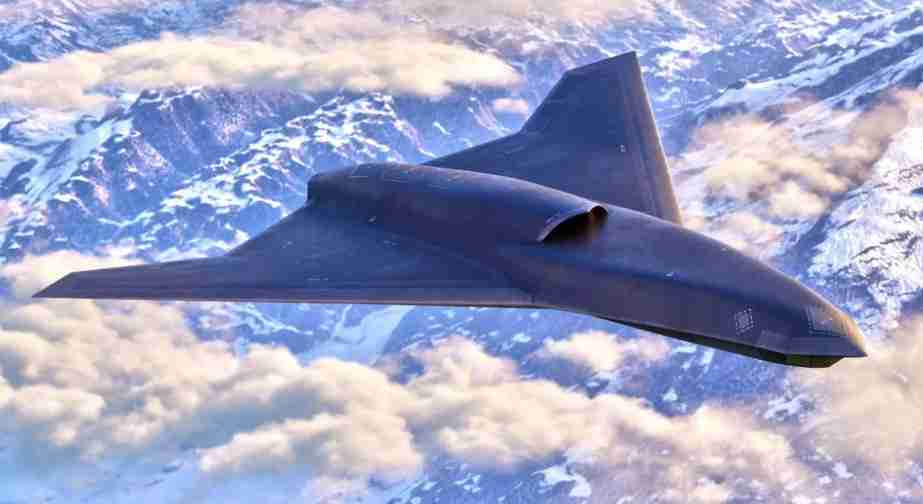
Lockheed’s Skunk Works unveils Vectis — a stealth combat drone built to be an AI-driven “loyal wingman”
Palmdale, California (Times Media Service) — Lockheed Martin’s Skunk Works unveiled Vectis, a stealthy, runway-launched combat drone built for ISR, electronic warfare, precision strike and AI-driven teaming as a collaborative combat aircraft — a ‘loyal wingman’ for manned fighters like the F‑35.
Key takeaways
- Name: Vectis, announced by Lockheed Martin’s Skunk Works via news release and media briefings.
- Roles: Designed for ISR, electronic warfare, precision strike and multiple counter-air missions, plus decoy and battlefield data relay (reported by Axios and Fox Business).
- Design & autonomy: Stealth-first lambda wing with top-mounted intake and advanced AI autonomy for sensor fusion and teaming as a collaborative combat aircraft (company video and release).
Key information
Name: Vectis — announced by Lockheed Martin’s Skunk Works in its news release and media briefings.
Roles: Intelligence, surveillance and reconnaissance (ISR); electronic warfare; precision strike; offensive and defensive counter-air missions; decoy; battlefield data relay — as reported by Axios and Fox Business.
Design: Stealth-first, tailless lambda wing, top-mounted intake, blended shapes and antennas to reduce radar signature — described in the company’s video and official release.
Autonomy: AI-driven autonomy with sensor fusion and teaming capability to operate as a collaborative combat aircraft (CCA) or “loyal wingman” alongside manned fighters (video; Axios).
Size & launch: Runway-dependent; reportedly smaller than an F‑16 but larger than Lockheed’s CMMT drone (Axios).
Development: Funded internally by Skunk Works to accelerate prototyping and testing; not yet tied to a single contract (Fox Business; company briefing).
What Vectis is and why Skunk Works went public
Skunk Works, famed for secretive advanced aircraft programs, positions Vectis as its bid to lead the next wave of air combat by fusing stealth, sensors and autonomy into one adaptable platform. OJ Sanchez, head of Skunk Works, told reporters the program “is the culmination of our expertise in complex systems integration, advanced fighter development and autonomy … We’re not simply building a new platform – we’re creating a new paradigm for air power based on a highly capable, customizable and affordable agile drone framework” (Fox Business).
Public announcements from Skunk Works are rare; the decision to unveil Vectis signals the importance Lockheed places on collaborative combat aircraft to extend reach and survivability for fighters such as the F‑22 and F‑35 (Axios).
Design and capabilities, in plain terms
Vectis uses a stealth-first shape — a tailless lambda wing and careful blending of surfaces to cut radar returns. It features a top-mounted air intake and chine lines designed to mask its signature, features intended to improve survivability in heavily defended airspace (company video; press release).
Internally, Lockheed says Vectis will employ advanced autonomy to fuse many sensor inputs, change roles mid-mission — for instance switching from scouting to decoy to strike — and share data directly with manned jets. Analysts and the company describe this as a “loyal wingman” concept, where unmanned systems assume risk and expand pilots’ options (video; Axios).
Modularity and fast upgrade pathways are central. Skunk Works describes an “agile drone framework” allowing customers to tailor payloads for ISR, electronic attack or weapons, and to adapt the platform for joint-service use and allied partners (Axios).
What Lockheed hasn’t released
Key performance details remain withheld. Lockheed has not disclosed engine type, exact weights, range or the complete sensor suite, citing operational security and competition. The company says more technical disclosure will come as testing continues (Axios).
Operational context and strategy
Vectis is being positioned to help the U.S. retain an edge in contested theaters — the Indo-Pacific, Middle East and Europe. Its combination of stealth, electronic warfare and autonomous teaming aims to increase survivability for U.S. and allied aircrews and give commanders more options in high-threat environments (Axios).
Lockheed is using internal funds to speed prototyping, systems integration and testing and says Vectis is intended for multi-domain operations and joint-service interoperability, not limited to a single branch or customer (Fox Business; company briefing).
AI, autonomy and the ethical questions
Vectis’s AI-driven autonomy revives longstanding policy and ethical debates about autonomous weapons. Skunk Works stresses human oversight and operation alongside manned aircraft, but analysts expect scrutiny on control lines, data sharing and safeguards to prevent unintended actions. The public announcement will likely draw attention from defense committees, watchdogs and advocacy groups (Axios).
“We’re not simply building a new platform — we’re creating a new paradigm for air power,” Lockheed’s Skunk Works said, highlighting adaptability and affordability as program goals.
How Vectis fits the current market
Multiple companies are racing to produce collaborative combat aircraft and advanced drones. Vectis is intended to compete on survivability, modularity and U.S.-system compatibility. Skunk Works hopes its track record in advanced fighters and secret programs will make Vectis attractive to the Pentagon and allied customers seeking a stealthier, flexible unmanned option (Axios).
Sources and reporting
This article draws on Lockheed Martin’s announcement and briefings (news release and media briefings), reporting from Axios, coverage by Fox Business, and Lockheed’s public video materials outlining design and autonomy features.
Implications for Las Vegas, Nevada
Economic impact: Las Vegas sits near major Air Force ranges and bases that support testing and training and hosts a growing high-tech and aerospace supply chain. A program like Vectis could generate new contracts, subcontract work and jobs for Nevada firms making composite parts, avionics, software or testing services. Lockheed’s rapid prototyping and systems-integration focus could funnel work to local suppliers as the program advances from prototype to production (Fox Business; Axios).
Political consequences: As a swing state, Nevada could see both parties emphasize job creation and national security benefits from Vectis-related work, while oversight concerns about autonomous weapons could motivate scrutiny from lawmakers and civic groups. Potential testing or basing discussions involving Nellis AFB or nearby ranges would likely trigger local negotiations over economic benefits and community safeguards (Axios).
Social effects: New defense work in Nevada could create high-skilled jobs and training partnerships with institutions such as UNLV, boosting workforce development in engineering, cybersecurity and manufacturing. Civic groups and privacy advocates may push for public meetings about autonomous weapons and how AI-driven systems are deployed alongside human warfighters (Fox Business).
Cultural relevance: Nevada’s long connection to flight testing and national security work means the Vectis announcement adds to the state’s aerospace history. Museums, flight schools and tourism that reference Nevada’s aviation role may attract interest from residents and visitors curious about new regional technology (Axios).
Practical effects on daily life: Residents may notice more air activity at nearby ranges as prototypes are tested. Local contractors and small businesses could secure contracts. Workers may find new career paths in software, systems integration, optics and manufacturing. Travelers are unlikely to see major changes, though temporary airspace restrictions for tests could alter training flight patterns (Fox Business; Axios).
Bottom line
Vectis represents Skunk Works’ push into AI-enabled, survivable unmanned systems designed to team with advanced fighters. While technical specifics remain classified, the program signals a major industry and policy conversation about autonomous teaming, exportability and community impacts where testing and supply chains grow.