
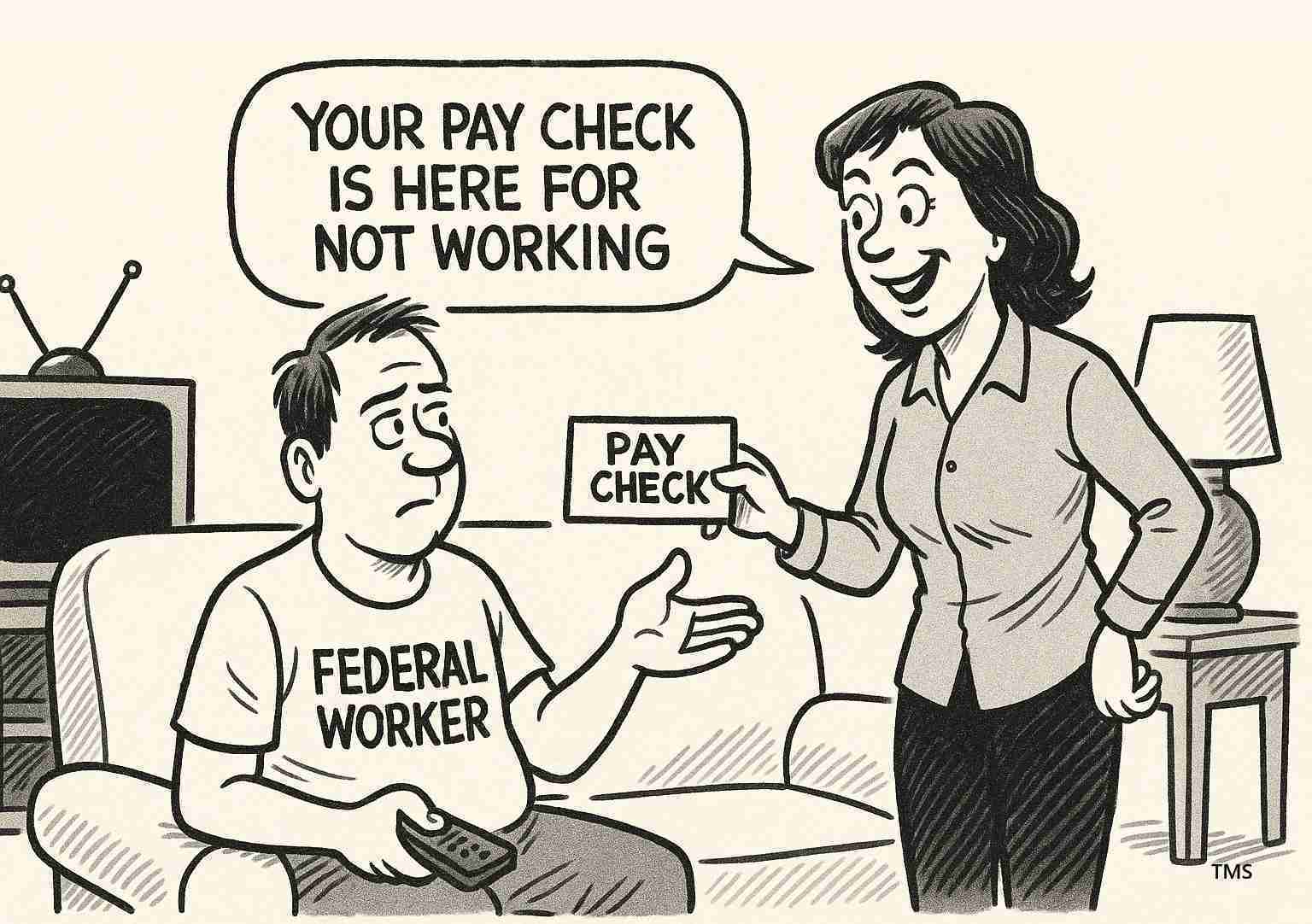
Schumer shutdown already cost taxpayers an estimated $1.2 billion in backpay, law guarantees furloughed workers get paid
Federal shutdowns force retroactive pay under a 2019 law, and Republican estimates say about $1.2 billion will go to furloughed workers — a direct, taxpayer-funded cost once funding is restored, prompting partisan blame and local impacts.
- Immediate payroll cost: GOP offices estimate roughly $1.2 billion in retroactive wages owed to furloughed federal employees (Sen. John Barrasso statement; House GOP release on backpay and the 2019 law).
- Legal guarantee: The Government Employee Fair Treatment Act of 2019 requires retroactive pay for furloughed and many essential workers once funding resumes (House GOP release on backpay and the 2019 law).
- Political framing: Republicans call the lapse a “Schumer shutdown” to assign blame to Senate Democratic leadership; both parties have traded blame in past funding fights (Sen. John Barrasso statement; coverage of political messaging around Senate Majority Leader Chuck Schumer).
What the $1.2 billion figure covers
The $1.2 billion cited by Republican offices refers specifically to wages owed to federal employees for the days they were furloughed. Under the Government Employee Fair Treatment Act of 2019, when lawmakers reopen the government the Treasury must include retroactive pay for that period in the federal payroll, creating a direct, immediate cost once a funding agreement is reached. Sen. John Barrasso statement and the House GOP release use the furloughed payroll number because it is a visible, quantifiable line item.
Broader costs and longer-term impacts not included in $1.2 billion
That $1.2 billion is a narrow snapshot. It does not include:
- Administrative restart costs: Agencies spend to recall staff, resume operations and process backpay (Sen. John Barrasso statement).
- Lost economic activity: Local businesses, contractors and service providers can lose revenue while government activity pauses.
- Indirect effects: Delayed services for veterans, applicants and families, plus potential public trust and national security strains (Sen. John Barrasso statement).
How the 2019 law works: backpay for furloughed and essential workers
Congress enacted the Government Employee Fair Treatment Act of 2019 after the long 2018–2019 lapse. The statute guarantees that federal employees who were furloughed receive backpay for time off, and many who continued to work without pay are also entitled to retroactive wages. Supporters framed it as worker protection; critics argue it reduces the immediate pressure to resolve funding standoffs. The law’s mechanics and the political debate around it are central to how shutdown costs are both perceived and realized. House GOP release on backpay and the 2019 law.
Why lawmakers use the label “Schumer shutdown”
Political messaging drives labels. Republican leaders have called the funding lapse a “Schumer shutdown” to fault Senate Majority Leader Chuck Schumer and his caucus for the impasse. Messaging from Senate Republicans and House GOP leaders aims to shape public attribution of responsibility; historically, both parties have traded blame in appropriations fights. The rhetorical focus intensifies because the backpay guarantee blunts one form of human cost even while fiscal and operational consequences persist. Sources include Sen. John Barrasso statement and reporting on the political framing (coverage of political messaging around Senate Majority Leader Chuck Schumer).
Which employees are affected
Two broad groups are covered by the law:
- Furloughed employees: Typically deemed nonessential and sent home during a lapse; they are entitled to retroactive pay once funding resumes.
- Essential/excepted employees: Those who continued working during the shutdown but were not paid at the time; the law also covers many of them for retroactive wages. House GOP release on backpay and the 2019 law.
The practical effect: the payroll bill for the shutdown period is deferred, not avoided — the hit to the Treasury shifts to when appropriations are enacted.
Implications for Las Vegas, Nevada
Economic impact
Las Vegas has federal employees at the Department of Veterans Affairs, Social Security offices and other agencies. Backpay will be covered by taxpayers, including Nevada residents, while local businesses that serve federal workers may see short-term dips in sales. Casinos and tourism are less dependent on federal payrolls, but delays in visas, passports and permits can affect some businesses and visitors. Sen. John Barrasso statement.
Political consequences
Urban moderate voters in Las Vegas often prioritize practical governance; a prolonged shutdown and the “Schumer shutdown” label can sharpen local debate about which leaders failed to reach a deal. Local members of Congress may face pressure to explain service impacts and push for protections for residents and businesses. Coverage of political messaging highlights how framing shapes voter views.
Social effects
Even with guaranteed backpay, furloughed federal workers can face immediate household strain — rent, bills and child care need to be paid in real time. Residents who rely on timely federal services such as veterans care or benefit applications may experience delays and anxiety during the lapse. House GOP release on backpay and the 2019 law.
Practical applications for residents
- Document losses: Federal employees should keep records of lost income and work status; backpay is required by law but documentation helps with local planning.
- Check agency updates: Residents relying on federal services should monitor agency sites and expect call-volume surges and delays when operations resume. Sen. John Barrasso statement.
Sources and further reading
- Sen. John Barrasso statement: “Hardworking Americans pay the price for a Schumer shutdown.” — Sen. John Barrasso statement
- House GOP release on backpay and the 2019 law: House GOP release on backpay and the 2019 law
- Coverage of political messaging around Senate Majority Leader Chuck Schumer: Coverage of political messaging around Senate Majority Leader Chuck Schumer
“The law aims to protect workers from income disruptions caused by political disputes over appropriations,” while critics say it can reduce pressure to end shutdowns quickly.
Reporting by Times Media Service. All facts and URLs preserved from original reporting.



