
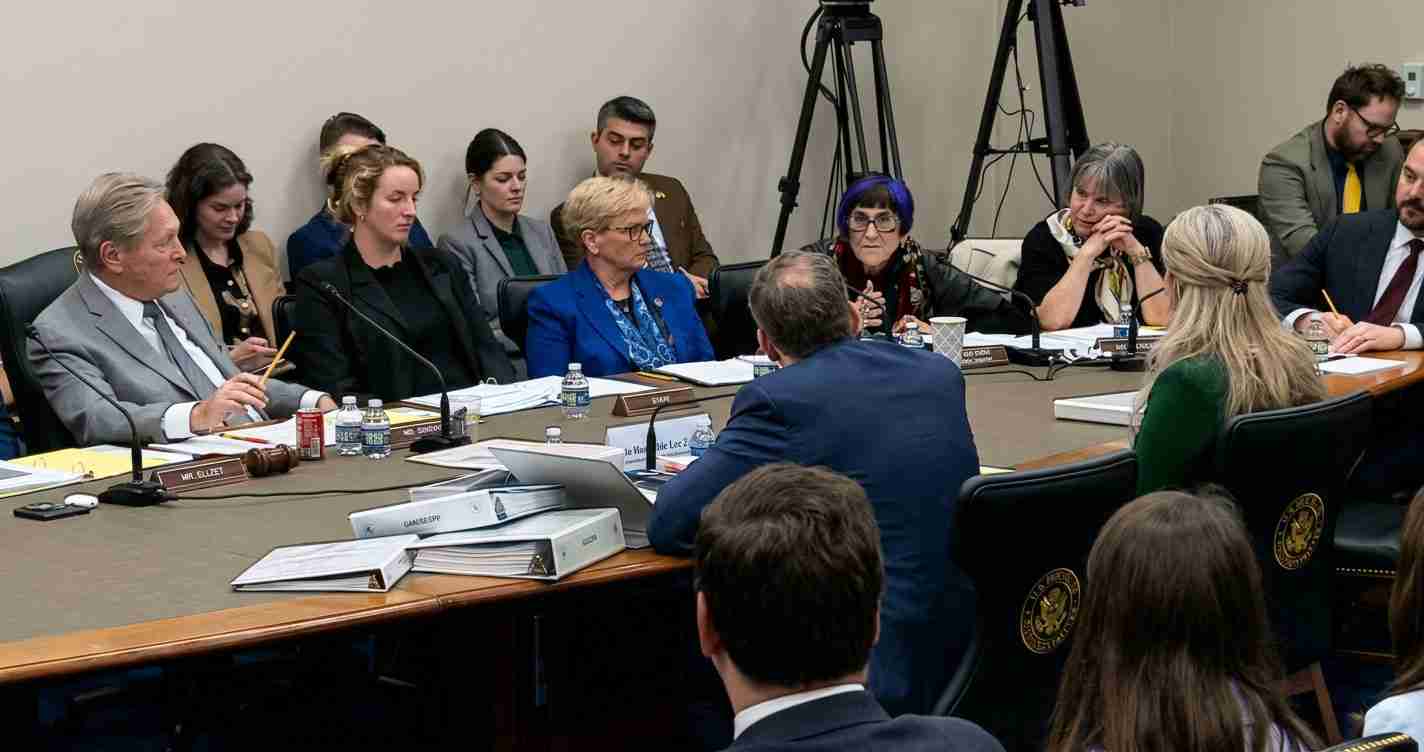
DeLauro and Zeldin Clash Over Climate, Authority and Loper Bright During Heated EPA Budget Hearing
Rep. Rosa DeLauro and EPA Administrator Lee Zeldin sparred at a House Appropriations hearing over a proposed 52% EPA budget cut and agency authority after the Loper Bright decision, igniting a viral partisan debate about climate policy and legal limits.
- Budget cut: The EPA’s 2027 request would drop funding from $8.82 billion to about $4.2 billion — roughly a 52% reduction.
- Legal limits: The clash highlighted the impact of the Loper Bright decision and the major questions doctrine on agency action.
- Viral moment: Video of the exchange circulated widely, praised by conservatives and criticized by Democrats and environmental groups.
The hearing and the exchange
What happened: At a House Appropriations Committee hearing on the EPA’s 2027 budget request, Rep. Rosa DeLauro pressed Administrator Lee Zeldin over language in the budget document and what she called the agency’s failure to acknowledge climate harms. DeLauro said the proposal “reads like a climate change denier’s manifesto,” warning it could leave Americans less protected as flooding and polluted air worsen public health and infrastructure burdens.
Zeldin’s response: Administrator Zeldin pushed back, arguing the EPA lacked legal authority to adopt certain policy positions without clear congressional authorization. He invoked the Loper Bright Supreme Court decision and the major questions doctrine, telling DeLauro, “You’re a member of Congress. You should know,” and asking whether she was familiar with the legal precedents shaping agency authority. The exchange grew heated as DeLauro attempted to answer and was cut off.
“You’re a member of Congress. You should know.” — Administrator Lee Zeldin, during the exchange with Rep. Rosa DeLauro
Video of the back-and-forth spread quickly online; conservative commentators praised Zeldin for pressing the legal point, while Democrats accused the administration of attempting to evade responsibility for dismantling climate protections. (Sources include Fox News and the hearing video.)
What is Loper Bright and the major questions doctrine?
Background: The Loper Bright decision (2024) narrowed the latitude federal agencies have to interpret statutes when making major policy decisions. Courts applying the major questions doctrine now often demand a clear statement from Congress before allowing agencies to take actions with wide economic or political effects.
In plain terms: If a proposed rule would significantly change the economy or people’s lives, courts may require explicit congressional authorization before allowing an agency to proceed. Zeldin cited that legal ground when arguing the EPA cannot unilaterally adopt certain climate-related policies without clear statutory direction.
Budget battle: what’s being proposed
The numbers: The EPA’s 2027 budget request proposes cutting funding from $8.82 billion in FY2026 to about $4.2 billion in 2027 — a reduction of roughly 52%. Administrators and the White House say the cuts will force the agency to refocus priorities and reduce regulatory burdens.
Democrats and environmental groups warn the cuts would weaken pollution enforcement, public-health monitoring, and programs addressing climate-related harms. At the hearing, DeLauro pressed how the agency could justify what she called abandoning its duty to protect Americans in the face of climate threats; Zeldin replied that agency action must be navigated within legal and court-imposed limits, illustrating how doctrine and politics collide in the budget fight.
Political fallout and public reaction
Online reaction: Clips of the exchange circulated widely. Conservative commentators praised Zeldin for emphasizing legal limits to agency power and for putting DeLauro “on the spot.” Critics, including Democrats and environmental advocates, said the exchange showed an attempt to shirk responsibility for policies that protect public health and the environment.
Environmental response: Advocacy groups warned that steep budget cuts could weaken enforcement against polluters, reduce science and monitoring programs, and leave states and communities with fewer federal resources — concerns echoed by lawmakers defending federal environmental programs.
Why the legal argument matters to budget fights
Legal limits highlighted by the Loper Bright decision affect what agencies can do without new laws from Congress. If courts require clearer authorizations, agencies may scale back regulations or wait for explicit congressional direction, shaping how the EPA justifies funding and program scope.
For lawmakers: Members of Congress face a dual choice: pass new laws that grant clear authority for major climate actions, or provide funding and narrow mandates that limit agency discretion. The budget debate thus becomes a proxy for whether Congress will take the lead on climate policy or leave decisions to agencies and the courts.
Implications for Las Vegas, Nevada
Economic impact: Las Vegas’ tourism, hospitality, outdoor recreation and growing tech and clean-energy sectors could be affected if cuts reduce federal air-quality monitoring or pollution cleanup tied to tourism and public health.
Political consequences: As a competitive state, Nevada may see environmental and public-health issues influence moderate urban voters. Local leaders could press Congress for clearer laws or increased state-led solutions if federal authority is narrowed by courts.
Social effects: Reduced EPA funding could limit monitoring and outreach around wildfire smoke, dust, and extreme heat — issues that disproportionately affect older adults and outdoor workers. Lead testing and other public-health programs in vulnerable neighborhoods could face cutbacks.
Practical applications for local officials: City and county agencies in the Las Vegas region should consider: updating local air and water monitoring plans; budgeting for increased state or local environmental spending; coordinating with Nevada’s congressional delegation on targeted requests; and planning outreach for residents most at risk.
Reporting sources and video
- Fox News reporting on the hearing and exchange
- Full hearing clips and excerpts (YouTube)
- YouTube clip: viral exchange excerpt
- YouTube clip: reaction and commentary
The exchange between Rep. DeLauro and Administrator Zeldin emphasized how legal doctrine, budget priorities and climate politics are intertwined. Local officials and residents in Las Vegas will be watching whether Congress addresses the authority and funding gaps raised during the hearing, or whether states and communities will need to fill those gaps themselves.



