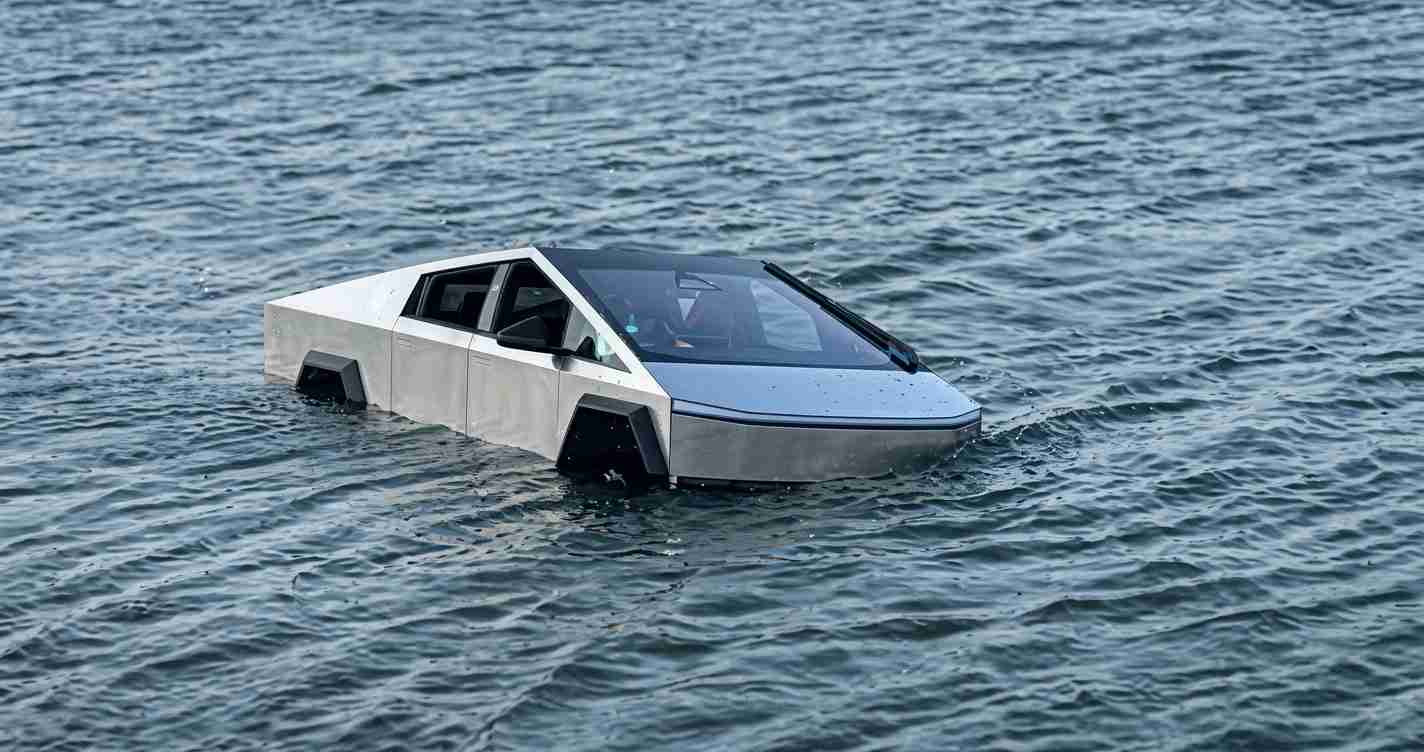
Man arrested after Tesla Cybertruck driven into Grapevine Lake in apparent test of “Wade Mode”
A Tesla Cybertruck was intentionally driven into Grapevine Lake at Katie’s Woods Park Boat Ramp Monday in an apparent test of the vehicle’s Wade Mode; the truck disabled and partially submerged while occupants escaped and the driver was arrested.
- Location: Katie’s Woods Park Boat Ramp, Grapevine Lake, Grapevine, Texas.
- Incident: Driver reportedly drove into the lake to test Wade Mode; vehicle lost power and took on water.
- Outcome: Passengers escaped without injury; Grapevine Fire Department’s Water Rescue Team removed and recovered the vehicle.
- Legal: Driver (about 70 years old) arrested on multiple park and water safety violations; authorities warned of legal and safety risks.
What happened at Grapevine Lake
Officers responded Monday after witnesses reported a vehicle partly submerged at the boat ramp, according to the Grapevine Police Department. Investigators say the driver admitted he intentionally drove the Cybertruck into the lake to test Wade Mode, a Tesla feature intended for shallow water crossings.
The truck reportedly lost power and began taking on water. Everyone inside got out safely, and Grapevine’s Water Rescue Team later removed the vehicle from the shoreline. No injuries were reported. The driver’s name has not been released; he remained in custody as of Tuesday, police said.
“Police described the episode as a botched attempt to test the truck’s water-crossing function,” officials said, warning that driving vehicles into lakes creates legal and safety risks under Texas law.
What Tesla says about Wade Mode
Tesla markets the Cybertruck as capable off-road and highlights features for mud, sand and shallow water. Wade Mode temporarily raises ride height and pressurizes the battery pack to help navigate shallow water and rough terrain, but Tesla cautions drivers to avoid water conditions that exceed the vehicle’s capabilities.
Company guidance stresses limits: Wade Mode is not meant to turn the vehicle into a boat or for deep-lake submersion. This incident illustrates the gap between owner testing and manufacturer guidance—owner videos of fords and streams do not replace manufacturer limits or local laws.
Charges, legal context and police warnings
Grapevine police said the driver was arrested on charges that include operating a vehicle in a closed section of a park or lake and multiple water safety equipment violations. Authorities did not release the full list of charges or the driver’s identity. Officials emphasized that park facilities, ramps and public waters are regulated and that such tests can endanger occupants and rescue personnel.
Texas statutes and local ordinances govern ramp use and public waters and impose safety requirements for boats and watercraft. Police noted that vehicle recoveries and water rescues divert emergency crews and create added risks; social media posts from Grapevine urged the public not to test vehicles in lakes or ignore posted closures.
Emergency response and recovery
Grapevine Fire Department’s Water Rescue Team assisted in removing the Cybertruck. Photos released by authorities showed the stainless-steel pickup partly submerged at the ramp while crews secured and recovered it. Fire officials said the priority was ensuring occupant safety and extracting the disabled vehicle without creating additional hazards at the boat ramp.
Tesla Cybertruck marketing and owner experiments
Since late‑2023 deliveries, Tesla marketing and owner videos have spotlighted off-road durability. Owners have posted footage of Cybertrucks in mud, sand and shallow water, often highlighting increased ride height and protective battery seals. That content can encourage experimentation, but experts caution owner videos do not replace manufacturer limits or local regulations.
Automotive engineers note that even with protective systems, electric vehicle battery packs and electronics are not intended for extended immersion. Pressurization can protect against splashes or brief fords but can fail in deeper or sustained water, risking disablement and costly recovery.
Why authorities treat vehicle water entries differently from boating
Driving a vehicle into a lake can trigger different legal and safety responses than using a boat. Boat ramps are for launching vessels; driving vehicles steeply into water or using shorelines to test vehicle features can damage public property, create navigational hazards, and require rescue resources. Police said the Grapevine Cybertruck arrest underscores that parks and lakes are governed spaces and violating closures or safety requirements can bring criminal charges, fines and recovery costs.
Implications for Las Vegas, Nevada
Although the incident occurred in Texas, there are takeaways for Las Vegas-area residents who use desert and lake recreation areas:
- Economic impact: Emergency recoveries and rescues are costly; agencies in Nevada, including Clark County parks and Lake Mead managers, face budget pressures.
- Political consequences: High-profile rescues can prompt calls for stricter enforcement, clearer signage or fees to cover recoveries.
- Social effects: Social media stunts can inspire copycats; community education about responsible recreation reduces preventable rescues.
- Practical advice: Treat Wade Mode or similar features as tools for specific conditions—not permission to enter closed or deep waters. Follow posted rules, carry safety equipment, and report unsafe behavior.
Sources and reporting notes
This article draws on local law enforcement and fire department accounts and reporting from regional and national outlets. Key sources include the Grapevine Police Department and Grapevine Fire Department public statements and local coverage. For more information, see:
- Grapevine city and public safety pages
- Tesla support and owner resources
- News searches and coverage (examples)
Times Media Service staff contributed to this report.