Tesla to end Model S and Model X production as Fremont factory shifts to Optimus robot manufacturing
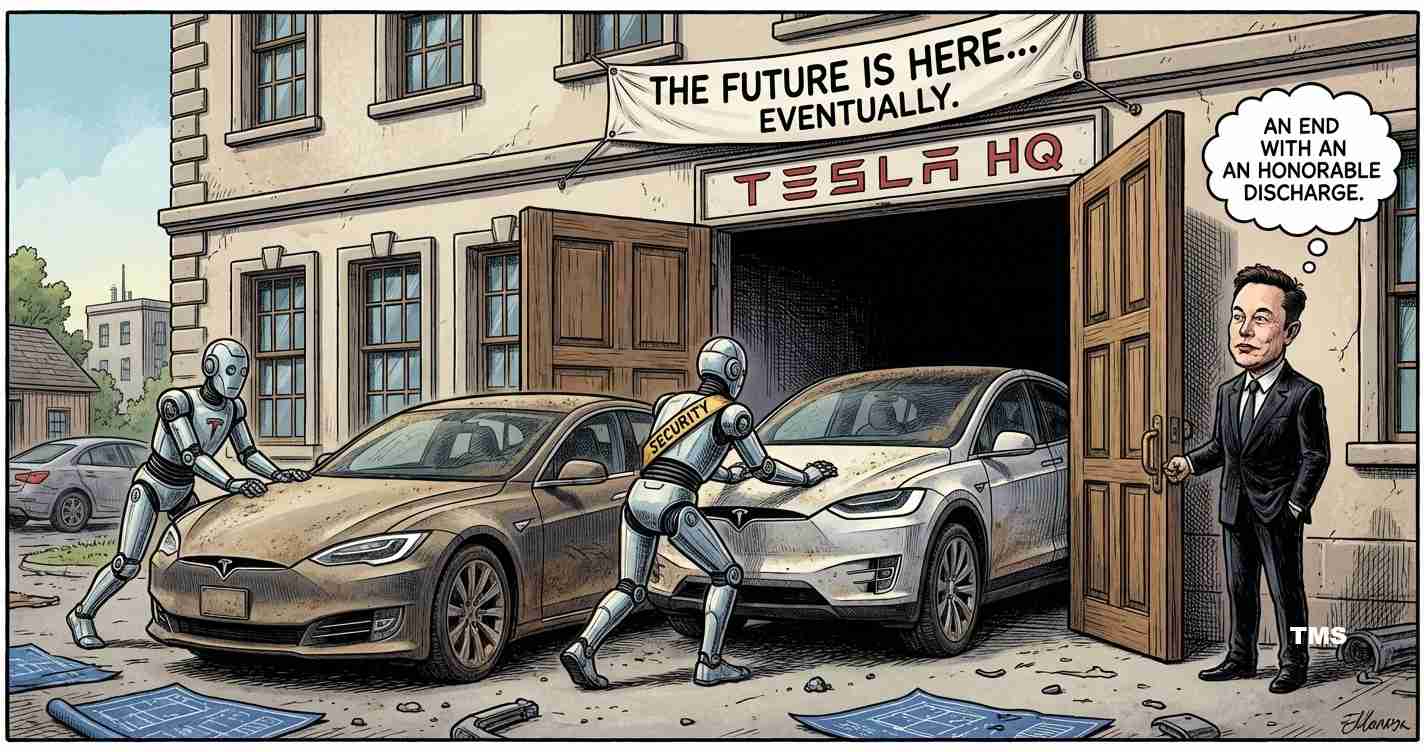
On Jan. 28, 2026, during Tesla’s Q4 2025 earnings call, CEO Elon Musk said the company will end Model S and Model X production by the close of Q2 2026, repurposing Fremont for Optimus humanoid robot manufacturing.
- Production end: Tesla will wind down Model S and Model X next quarter and stop production by end of Q2 2026 — Fox Business, Electrek.
- Factory pivot: Fremont lines will be repurposed to ramp Optimus humanoid robot production and other initiatives, with a newly discussed supply chain for mass robot output — Fox Business, Electrek.
- Financial context: Q4 2025 revenue fell 3% to $24.9 billion as vehicle deliveries and “other models” figures show sharp declines — Fox Business, Electrek.
What Musk said and what it means
“It’s time to basically bring the Model S and X programs to an end with an honorable discharge,” Musk said on the Jan. 28 earnings call, urging buyers that “if you’re interested in buying a Model S and X, now would be the time to order it.” Sources reporting the call include Fox Business and Edmunds. The company also posted a video of the call — posted video of the call.
Musk: “It’s time to basically bring the Model S and X programs to an end with an honorable discharge.”
Analysts and investors read the move as a deliberate strategic pivot: Tesla is prioritizing autonomy and robotics over premium legacy car lines, positioning Optimus and self-driving tech at the center of the company’s next growth phase. Industry coverage highlights the shift as both a cost-cutting step and a long-term bet on automation markets — Electrek, Fox Business.
Production timeline and Fremont factory repurpose
Tesla will begin winding down Model S and Model X assembly next quarter and intends to halt manufacturing by the end of Q2 2026. The decision targets Fremont, California lines that once formed the company’s premium core. Musk said freed factory space will support Optimus humanoid robot production and other new initiatives — reporting by Electrek and Fox Business.
Reports note S and X lines had roughly 100,000 units of annual capacity but were underutilized as sales declined. Switching that capacity aims to accelerate Optimus output; Musk has said mass robot production will require a “completely new supply chain.” Industry scenarios discussed targets as high as 1 million robots annually in some long-term visions — Electrek, Fox Business.
Financial and sales context
Tesla reported Q4 2025 revenue of $24.9 billion, down 3% year-over-year; full-year 2025 revenue was $94.8 billion, also down 3% Y/Y. Vehicle deliveries for 2025 were roughly 1.64 million units, down about 9% from 2024, with the Model 3 and Model Y composing the bulk of sales — Fox Business.
Breakdowns on “other models” (Model S, Model X, Cybertruck and Semi) fell from 23,640 deliveries in Q4 2024 to 11,642 in Q4 2025, with year-to-date totals near 50,850 for 2025. Analysts estimate S/X deliveries were under 3% of Tesla’s 2025 volumes, with total S/X around 30,000 for the year — a >30% decline Y/Y — Electrek.
Recent model updates and market pressures
Tesla issued modest mid-2025 updates to the S and X — new paint, a front camera, slight range improvements and ambient lighting. That June “refresh” also raised prices by about $5,000, which some reviewers described as a muted send-off rather than a full redesign. Competitive pressure and Tesla’s pricing shifts in 2025 likely contributed to the decision — Electrek.
How the industry responded
Auto press and owner forums reacted quickly. Mainstream outlets framed the announcement as the end of an era for Tesla’s flagships; enthusiast sites and Tesla owner forums posted a mix of nostalgia and debate. Coverage highlighted supply-chain challenges for robot production and questions about consumer acceptance of humanoid robots at scale — reported by Fox Business, Electrek, Edmunds, Autoblog, CarBuzz and community discussion on Tesla Motors Club.
Future Tesla plans and the Optimus pitch
Tesla plans to unveil a third-generation Optimus humanoid robot design this quarter and bring multiple new production lines online in 2026 across vehicles, robots, energy and batteries. The company told investors it will invest in infrastructure for clean energy, transport and autonomous robots in 2026, aligning with Musk’s autonomy-first vision — Fox Business.
Stock reaction and investor signals
Shares were largely steady after the announcement; one report cited TSLA at $430.46 (down 0.10%). The shift reduces short-term production complexity but raises questions about the capital required to scale Optimus and create new robot supply chains. Market watchers emphasize that success depends on consumer and commercial adoption of humanoid robots, a largely unproven mass market — Fox Business.
Implications for Las Vegas, Nevada
Economic impact
Jobs and suppliers: While the decision centers on Fremont, parts suppliers and service providers nationwide — including Las Vegas-area dealerships and service shops — could see shifts. Tourism-related luxury transport services that use Teslas may face inventory changes. Reporting: Fox Business, Electrek.
Business opportunity: If Tesla scales Optimus production, Las Vegas logistics, hospitality and convention firms could be early customers for automation tech. The city’s large event venues and hospitality workforce make it a potential testbed for robotics pilots — Fox Business.
Political consequences
Local and state policymakers will monitor how EV supply-chain shifts affect Nevada’s economy. Nevada plays a major role in EV and battery supply chains; this move could prompt calls for diversified manufacturing, workforce training, and incentives to attract suppliers — analysis by Electrek and Fox Business.
Social effects
Workforce transition: Widespread adoption of robots like Optimus could change job roles in hospitality and logistics, creating demand for robot operators, technicians and maintenance staff — requiring new training pipelines. Consumer choice: Las Vegas buyers may see fewer S/X options, shifting demand toward Model 3/Y, other premium EVs or the used market — Electrek, Autoblog.
Cultural relevance and practical applications for residents
Brand nostalgia: The Model S and X helped make EVs mainstream; their retirement marks a cultural shift for many owners and enthusiasts — coverage by Edmunds and Electrek.
Repair and resale: Las Vegas buyers and mechanics should monitor used-market prices and parts availability; ending production could make some parts scarcer over time, affecting maintenance costs — Electrek, Autoblog.
Tech pilots: Conferences, casinos and hotels might host early robot pilots or demonstrations, creating partnership opportunities for local startups and workforce training programs — Fox Business.
Reporting and sources
This story draws on Tesla’s Q4 2025 earnings call reporting and industry coverage, including:
- Fox Business
- Electrek
- Edmunds
- Autoblog
- CarBuzz
- Tesla Motors Club forum thread
- Posted video of the earnings call
For Las Vegas readers: The end of Model S and Model X production and the Fremont repurpose toward Optimus robot production could mean both disruption and new opportunity. Local businesses, policymakers and workers should watch how automation and new supply chains intersect with Nevada’s EV and tech economy.