Voting underway on California’s Proposition 50 as Gov. Gavin Newsom pushes redistricting to blunt GOP gains in Texas and Missouri
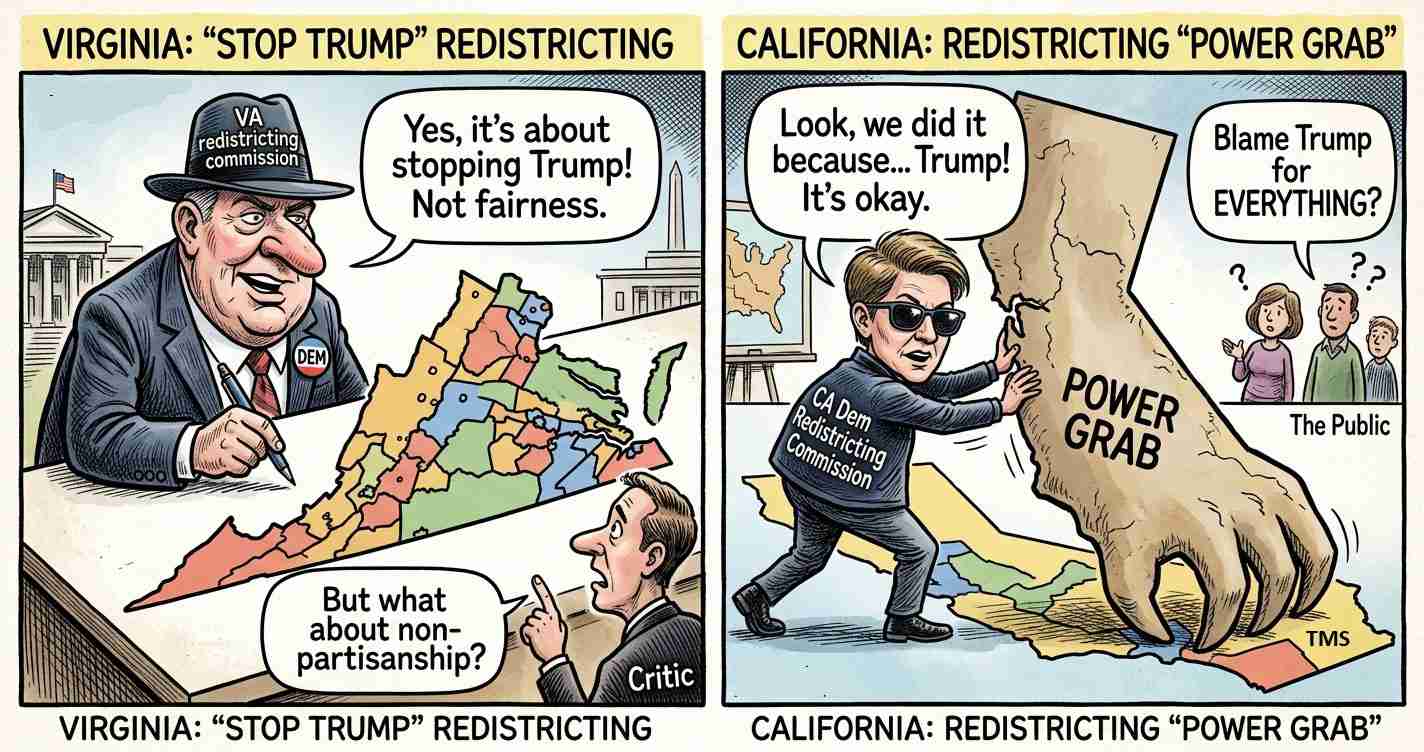
California voters are deciding Proposition 50, a measure to suspend the Citizens Redistricting Commission and let the state legislature draw congressional maps for three cycles — a move Gov. Gavin Newsom says counters GOP redistricting nationwide.
- Temporary change: Proposition 50 would pause the independent Citizens Redistricting Commission and give the Legislature authority over maps for 2026, 2028 and 2030.
- National stakes: Supporters say the shift is intended to offset Republican gains from new maps in states such as Texas and Missouri.
- High-profile fight: Backers include Gov. Gavin Newsom and national Democrats; opponents include Arnold Schwarzenegger and major campaign committees preparing heavy spending.
- Legal uncertainty: Both sides expect court challenges that could shape final outcomes across multiple states.
Summary and sources
Spearheaded by Gov. Gavin Newsom, the ballot question asks voters to temporarily transfer map-making power from the independent Citizens Redistricting Commission to the California Legislature for three redistricting cycles. The measure is pitched as a response to alleged Republican gerrymanders elsewhere that could shift control of the U.S. House (see Senate District 5 news release, Wikipedia: 2025 California Proposition 50, ABC News).
What Proposition 50 would change
What it does: Proposition 50 — labeled by supporters the “Election Rigging Response Act” — would amend the California Constitution to pause the Citizens Redistricting Commission and allow the state Legislature to draw congressional maps for three cycles (2026, 2028 and 2030). The provision is framed as temporary but would cover a pivotal decade of federal elections (Wikipedia: 2025 California Proposition 50).
Supporters’ case
Backers, including Gov. Gavin Newsom and national Democrats, argue this is a defensive move to preserve representation in the U.S. House after GOP-led maps in other states. They point specifically to Texas and Missouri as examples where recent redistricting could add multiple Republican-held seats — and say California should have the means to respond in kind (Senate District 5 news release; ABC News).
Analysts and Democratic backers contend a legislature-drawn map could net Democrats up to five additional U.S. House seats — roughly mirroring potential GOP gains in Texas. Supporters describe the strategy as “fighting fire with fire.”
How big the shift could be
Estimates from analysts and Democratic strategists suggest California could gain as many as five House seats under a legislature-drawn map, a figure that would offset some GOP gains in other states. If both sets of maps remain in place, the national net effect could materially influence which party controls the House in 2026 (Senate District 5 news release; Wikipedia; ABC News).
Opposition: independence, fairness, and legal risk
Critics warn that moving map-drawing back to the Legislature would undercut the independent process intended to reduce partisan bias. The Citizens Redistricting Commission was created after earlier battles over gerrymandering to provide an impartial approach. Opponents include former Gov. Arnold Schwarzenegger and several commission founders, along with campaign groups such as “Stop Sacramento’s Power Grab” and “Protect Voters First.” They plan major spending to defeat the measure and argue the change would be a step backward for independent oversight (Wikipedia).
Legal and political uncertainty
Both sides expect litigation regardless of the vote. Courts are likely to be asked to weigh in on any substantive redistricting change — especially as disputes are already unfolding over maps in Texas and Missouri. The ultimate impact of Proposition 50 could depend on federal court rulings about the validity of other states’ maps (ABC News).
“Any major redistricting change invites judicial review; the legal track will be as consequential as the ballot box,” say observers tracking the litigation timeline.
How this compares to redistricting in Texas and Missouri
California’s action is explicitly framed as a response to Republican-controlled redistricting in Texas and emerging efforts in Missouri. In Texas, GOP mapmakers produced a plan that could add several Republican seats; Missouri’s changes have similarly been criticized for favoring Republicans. Unlike relying on an independent commission, California’s approach would use legislative power to try to counter those shifts (ABC News).
Campaign dynamics and voter sentiment
Turnout is uncertain in this special election because the ballot contains no candidates and deals with a technical issue. Special election turnout can be low and ballot measures about redistricting are often challenging to communicate at the ballot box. Despite a Democratic registration advantage in California, technical measures can be unpredictable; voter fatigue and confusion may shape results.
Spending: Pro- and anti-Prop 50 committees have signaled large fundraising plans, preparing for a costly, nationalized messaging fight aimed at urban, suburban and rural voters.
National stakes
Political analysts warn the measure could have broad national impact: control of the U.S. House in 2026 may well hinge on redistricting outcomes in key states. If Texas gains several GOP seats while California offsets with Democratic gains, the net effect could be decisive. The Prop 50 battle is part of a larger national fight over rules that shape partisan advantage.
Implications for Las Vegas, Nevada
Economic impact: Las Vegas relies on federal funding for infrastructure, transit and disaster relief. Shifts in U.S. House control can change Washington priorities and influence federal grants that support tourism recovery, transportation and community development.
Political consequences: Nevada is a swing state; changes in the national map affect where parties allocate resources in 2026 and 2028. If California’s move offsets GOP gains, national Democrats may feel less pressure to reallocate campaign resources away from Nevada.
Social effects: Redistricting fights drive debate about representation. In Las Vegas, urban moderates and diverse communities may weigh arguments about fairness and independent oversight more heavily.
Cultural relevance: Voters in Las Vegas prize pragmatic solutions and clear rules. The Prop 50 debate — framed by some as a “power grab” and by others as “defending democracy” — will resonate with concerns about transparency and stable governance.
Practical applications for residents: Changes in House control affect immigration policy, tourism promotion, public health funding and infrastructure. Residents should monitor how the California vote shifts national strategy, because that will shape attention to local priorities such as jobs, travel and services.
How locals can stay informed: Las Vegas voters should follow national and state coverage, consult nonpartisan explainers on Proposition 50, and review local voter guides. Civic leaders and election officials may also revisit Nevada’s own redistricting rules in light of national trends.