Austin police charge into crowd at anti-ICE protest; pepper balls fired, multiple detained
Austin, Texas – late Saturday night, an anti-ICE protest in downtown Austin escalated as police and state troopers confronted demonstrators, employing pepper balls and making several arrests near South Congress Avenue and East 6th Street, and officials issued statements.
Key takeaways
- Police used nonlethal tactics — pepper balls and bicycle charges were deployed as officers moved into the crowd.
- Arrest totals vary among outlets, with reports ranging from at least three to seven detained as of late Saturday night.
- Protest linked to Renee Nicole Good’s killing — demonstrators demanded accountability and removal of ICE from Austin.
- State officials defended the response while organizers called police actions “brutal” and pledged to press for accountability.
What happened and where
Gathering and march: Protesters assembled at the J.J. Pickle Federal Building, which houses Immigration and Customs Enforcement offices, at about 6:30 p.m. under the “End ICE Terror” banner before marching through downtown Austin. Organizers and local reporters described more than 100 people at the federal building prior to movement through downtown. Sources: News4SanAntonio, Fox San Antonio, KUT.
Traffic blocking, bicycle charges and detentions
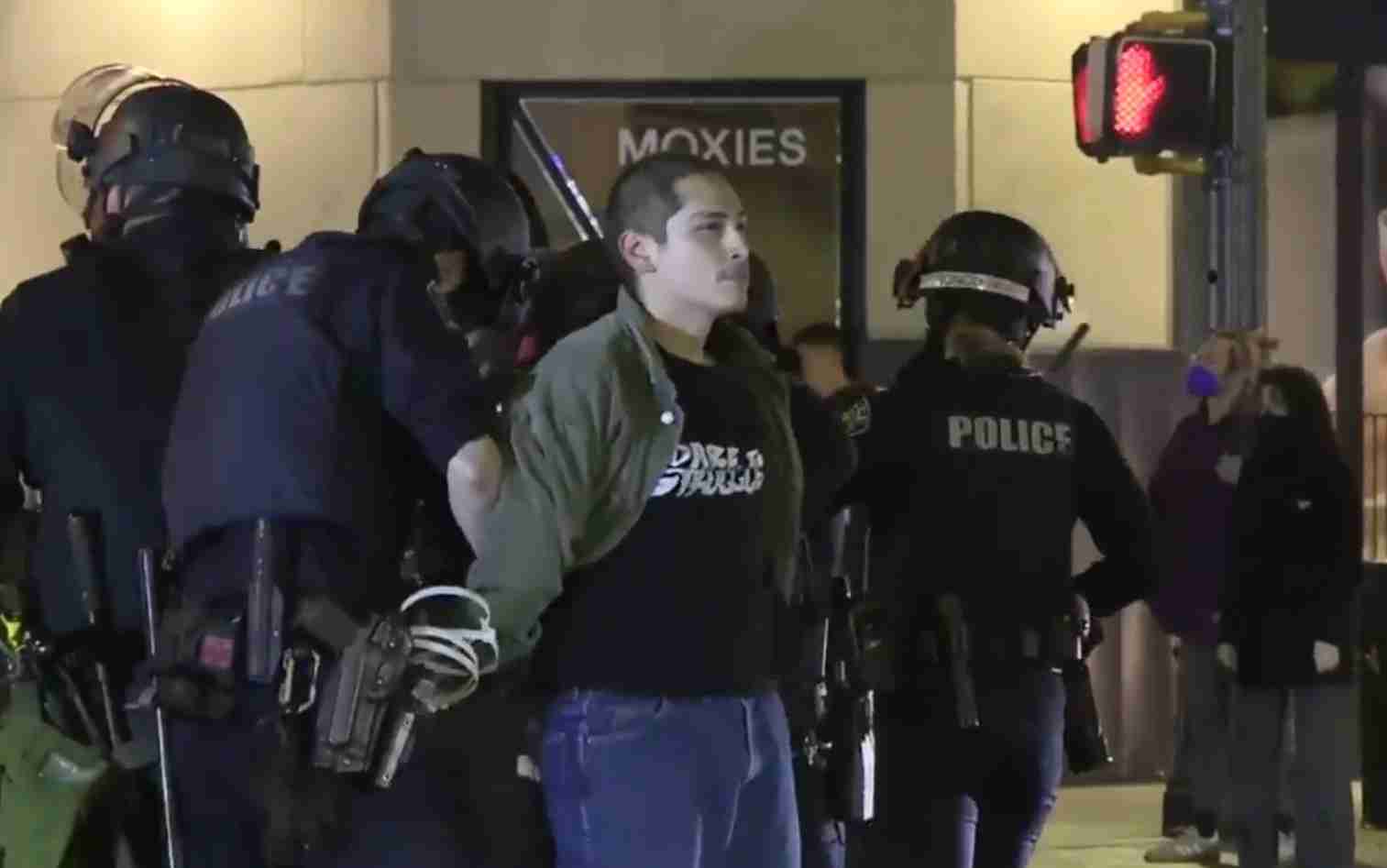
Around 8 p.m., demonstrators blocked traffic at South Congress Avenue and East 6th Street. Witness video and reporting show Austin Police officers on bicycles charging into the crowd, pushing back people and detaining several individuals after roughly 10 minutes of obstruction. Sources documenting the charge and detentions include News4SanAntonio, Fox San Antonio and raw video posted by Fox News.
Crowd size and protest background
Organizers and local outlets described more than 100 protesters near the J.J. Pickle Federal Building-area demonstration. Earlier that day, separate events drew larger turnout: an “ICE Out of ATX” rally at City Hall that morning drew roughly 400 people, and there were protests at the state Capitol earlier. Sources: CBS Austin, Fox San Antonio, KUT.
Motivation: Protesters said the actions responded to the killing of Renee Nicole Good, who was shot and killed by an ICE officer in Minneapolis; demonstrators demanded accountability and called for ICE’s removal from Austin. Sources: CBS Austin, News4SanAntonio.
Use of force: pepper balls and bicycle tactics
Nonlethal weapons: Several outlets reported that pepper balls — small projectiles that release an irritant — were fired at protesters near the federal building and downtown. Reporting indicates uncertainty about which agency deployed them. See News4SanAntonio, Fox San Antonio, and KUT.
APD officers in riot gear were recorded using bicycles to push back protesters and detain people organizers labeled “agitators.” Witnesses and local outlets described multiple rounds of what were said to be pepper balls as officers moved through the crowd. Sources: CBS Austin, News4SanAntonio.
Arrests and detentions
Varying counts: Arrest totals differ across reports. KUT reported APD said at least five people were arrested. CBS Austin quoted organizers claiming at least seven arrests, including one person detained while walking to their car. News4SanAntonio reported four detained when officers charged the crowd, and Fox News footage shows at least three detained on camera.
Incomplete accounting: As of late Saturday night, APD had not provided a final tally to some outlets and counts remained inconsistent. Source: Fox San Antonio.
Organizers’ claims and police statements
Organizers’ view: Groups including Dare to Struggle Austin described the response from DPS and APD as “brutal” and “aggressive,” accusing officers of charging with bicycles and firing pepper balls into the crowd and calling for immediate release of arrested protesters and charges related to the Renee Good case. Source: CBS Austin.
Gov. Greg Abbott posted on social media: “Texas is not Minnesota.” He warned that the Texas Department of Public Safety would not tolerate defiant protesters and emphasized backing law enforcement while prioritizing public safety. Source: CBS Austin, Fox San Antonio.
DPS stance: A Texas DPS spokesperson, Lt. Chris Olivarez, posted on X that DPS respects the First Amendment right to peaceful assembly but will not tolerate violence, threats, obstruction of roadways, or property damage. Sources: CBS Austin, Fox San Antonio.
Discrepancies and open questions
Reporting on the incident shows clear gaps and differences: arrest totals vary across outlets, and it remains unclear which agency fired pepper balls. APD had not released a complete accounting of arrests or the sequence of tactical decisions as of late Saturday night. Sources: Fox San Antonio, KUT.
Open questions include whether de-escalation options were exhausted before officers moved in and whether formal complaints or use-of-force reviews will be opened. Organizers plan to press for accountability; law enforcement says actions aimed to protect public safety.
Reporting sources and video
This account draws on local reporting and video captured at the scene. Key sources: News4SanAntonio, Fox San Antonio, KUT, CBS Austin, and raw video posted by Fox News.
Implications for Las Vegas, Nevada
Law enforcement tactics, protester responses and state-level political signals in Austin carry lessons for Las Vegas officials, activists and residents. Key points to consider:
- Public safety and crowd control: Agencies may review crowd-control playbooks and body-worn camera and video policies to ensure transparency when nonlethal weapons such as pepper balls are used.
- Protest planning and permits: Organizers planning direct-action events should expect close coordination with police over routes, timing and traffic impacts to reduce confrontation risk.
- Community-police relations: High-profile incidents tied to immigration enforcement can deepen distrust; officials should prioritize outreach and clear complaint pathways.
- Political signaling: State leaders’ public statements can influence law-enforcement posture and expectations during protests.
- Civil liberties and legal risks: Blocking roadways and direct action involve potential legal exposure; defense and civil-rights groups may prepare to assist arrested protesters.
- Tourism and economic concerns: Demonstrations near tourist corridors raise concerns about safety and business impacts; balancing crowd control with access is crucial.
For residents tracking similar events, the Austin anti-ICE protest and response highlight how quickly demonstrations can escalate, produce conflicting accounts and prompt questions about transparency. Local media, city officials and civil-rights groups may increase monitoring of use-of-force reports, arrest tallies and agency statements to ensure public accountability.