Trump says tariff-funded dividend payments could start mid-2026, targets “moderate income” Americans
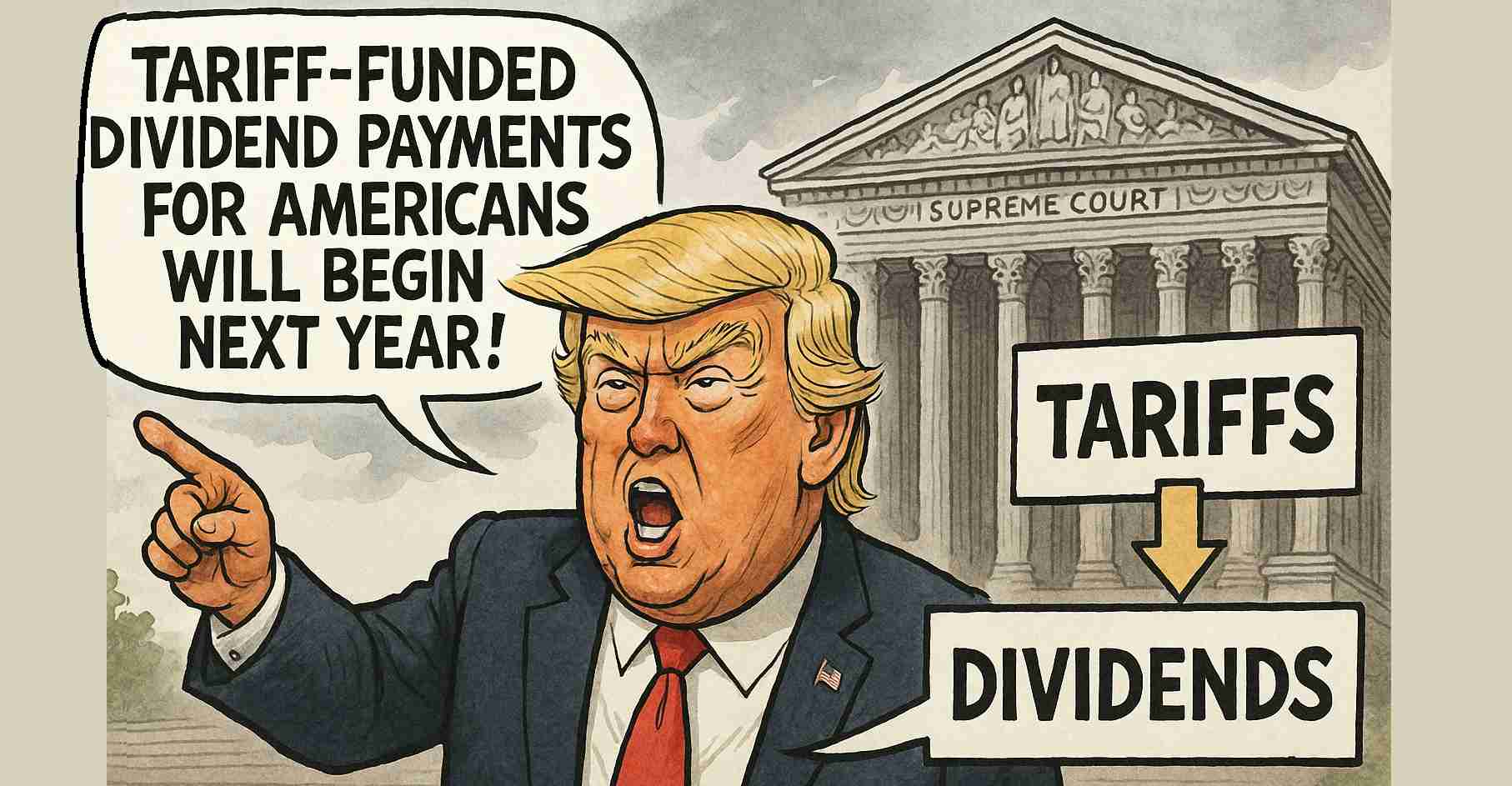
Donald Trump unveiled a proposal to distribute tariff-funded dividend payments to moderate- and middle-income Americans, potentially beginning in mid-2026, with White House officials suggesting checks could total thousands for many, though eligibility and implementation remain uncertain.
- Timing: The White House said payments could begin as early as mid-2026, potentially before the 2026 midterms.
- Target: The plan aims at “moderate income”/“middle income” Americans, but no eligibility rules have been released.
- Funding: Payments would be financed by U.S. tariff revenue; the administration also floated using some proceeds to reduce the national debt.
- Open questions: Legal, congressional and implementation details — including distribution method, size and frequency — remain unresolved.
What was announced
The White House described a plan for dividend payments funded by tariffs, saying Americans could begin receiving payments as soon as mid-2026. President Trump suggested the funds would come from “hundreds of millions of dollars in tariff money” and said checks could be “thousands of dollars” per eligible person, according to local reporting from ABC33/40 and KATU.
Administration comments
Treasury Secretary Scott Bessent said the tariff dividend “could come in lots of forms,” including direct checks or tax reductions. Press Secretary Karoline Leavitt said the administration is “mulling all options” but provided no specific timetable or legislative steps, per reporting from ABC33/40 and KATU.
Trump: “The money’s coming from tariff revenue… we can get checks out to people.”
Why this would be a major policy change
Historically, U.S. tariff revenue has flowed into general federal receipts, not directly to households. Allocating tariff proceeds for direct payments or tax cuts would be a notable departure from precedent and raises questions about distribution mechanics and economic effects.
Key concerns experts will raise:
- Revenue reliability: Can tariffs produce stable, recurring revenue sufficient for ongoing payments?
- Economic trade-offs: Would directing tariff funds to households blunt the protectionist aim of tariffs by effectively offsetting higher prices?
- Legal and budgetary rules: Constitutional and statutory questions about appropriation and whether Congress must authorize refunds or checks.
Legislative and legal hurdles
Direct checks or tax credits would likely require congressional approval and possibly new statutory language. The administration has not specified the delivery mechanism — whether via the IRS, a new program, or changes to withholding — and courts are weighing aspects of the administration’s trade actions that could affect revenue collection.
Any legal setback or adverse Supreme Court ruling could complicate the administration’s ability to collect or allocate tariff revenue as planned, a point underscored in local coverage from ABC33/40 and KATU.
Open questions reporters will follow
- Who qualifies? No definition of “moderate income” has been released.
- Payment size & frequency: Will payments be one-time, annual, or variable?
- Price effects: Will tariffs raise consumer prices enough to erode the dividend’s benefit?
- Oversight: What reporting and accounting will ensure tariff revenue is used as promised?
Implications for Las Vegas, Nevada
Las Vegas—whose economy centers on tourism, hospitality and gaming—could see mixed effects. Many hotels, restaurants and casinos rely on imported goods for operations; higher tariffs may raise input costs, which can pass to consumers. At the same time, moderate-income residents in service roles could benefit from direct payments if they materialize.
Local economic effects:
- Workers: Moderate-income workers in hospitality, gaming and services might receive short-term relief that boosts local spending.
- Businesses: Small businesses and independent restaurants may face squeezed margins if tariffs raise supply costs.
- Politics: Announcing potential payments before the 2026 midterms could be politically significant in Nevada’s competitive environment.
- Community: Community organizations may see shifting demand for aid and questions about outreach and eligibility.
Practical questions for Nevadans
- How would eligible residents register for or receive payments — via the IRS or another mechanism?
- Would payments be taxable at the federal level or affect state benefits?
- How quickly would money appear in bank accounts or mailed checks?
- Would local price increases from tariffs offset the benefit of any dividend?
Sources
Times Media Service reporting drew from White House remarks and administration comments reported by local outlets: ABC33/40 and KATU.