
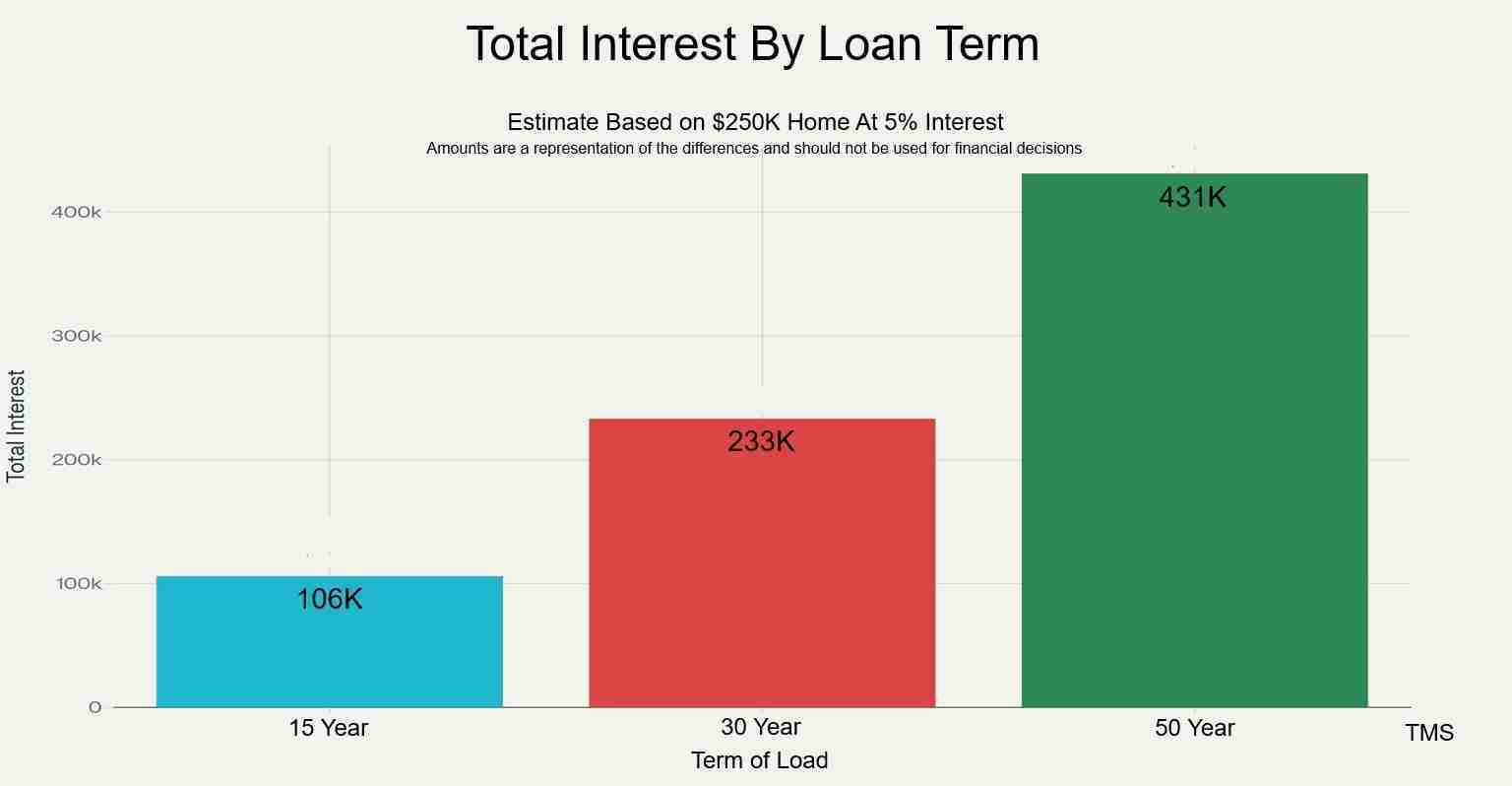
Trump 50-year mortgage proposal divides experts — could lower monthly costs but raise lifetime housing expenses
The Trump administration is proposing a 50-year fixed mortgage to lower monthly payments and expand homeownership, especially for younger and first-time buyers, but experts caution it could increase lifetime interest costs and slow equity accumulation.
Key takeaways
- Lower monthly payments: Stretching loans to 50 years can reduce monthly bills and help some buyers qualify.
- Higher lifetime cost: Longer amortization raises cumulative interest and slows equity buildup.
- Market effects: Easier monthly qualifying could push prices up, muting affordability gains.
- Local stakes: Regions like Las Vegas may see stronger price pressure and increased financial risk for borrowers and lenders.
Key information
Proposal: Create a 50-year fixed mortgage to reduce monthly payments and help more buyers qualify Create a 50-year fixed mortgage to reduce monthly payments and help more buyers qualify Create a 50-year fixed mortgage to reduce monthly payments and help more buyers qualify.
Backing: FHFA Director Bill Pulte has publicly said the agency is working on the idea FHFA Director Bill Pulte has publicly said the agency is working on the idea, calling it a potential “game changer.”
Trade-offs: Analysts warn the longer term would raise cumulative interest paid, slow equity buildup, and could push home prices higher Analysts warn the longer term would raise cumulative interest paid, slow equity buildup, and could push home prices higher Analysts warn the longer term would raise cumulative interest paid, slow equity buildup, and could push home prices higher Analysts warn the longer term would raise cumulative interest paid, slow equity buildup, and could push home prices higher.
How a 50-year mortgage would work
The idea is straightforward: stretch the loan payback period to 50 years instead of 30, which lowers monthly payments because principal is repaid more slowly. For example, at roughly a 6.6% interest rate on a $400,000 loan, monthly principal and interest would be about $2,788 on a 30-year fixed loan, $2,640 on a 40-year loan and $2,572 on a 50-year loan — figures cited in reporting from Fortune and Mortgage Professional America.
This model resembles long-amortization loans found overseas and could be offered through government-backed channels or via the FHFA-controlled secondary market — a critical path to scaling the product (Fox Business) (HousingWire).
Cumulative interest and slower equity buildup
Experts emphasize the main trade-off: stretching payments increases total interest paid over the life of the loan. Borrowers may enjoy lower monthly payments but ultimately pay far more to lenders over decades — a point highlighted in coverage by Fox Business, Fortune, and LiveNowFox.
Slower principal repayment delays equity buildup — and equity is the primary mechanism by which households build wealth through homeownership. With a 50-year schedule, early payments lean toward interest, leaving homeowners more exposed if prices fall (Fortune) (Politico).
Effect on home prices and market signaling
Some analysts warn that easier monthly payments may simply push more buyers into the market and enable them to bid on higher-priced homes, which could drive up prices and erase affordability gains — reversing the policy’s intended effect (Fox Business) (Fortune).
Critics call the plan a “band-aid” that avoids supply-side fixes such as building more homes, zoning reform and targeted incentives — measures many economists regard as central to long-term affordability (Politico).
Interest-rate risk and systemic concerns
Longer-duration loans increase complexity and risk across the mortgage system. Lenders and investors face greater uncertainty if interest rates shift over decades; that could ripple through the secondary market and potentially raise taxpayer exposure if government-backed entities assume more long-dated risk (Fortune) (HousingWire) (Mortgage Professional America).
Policymakers also worry that slow equity accumulation raises default risk: borrowers who build equity slowly may be more likely to owe more than their home’s value during job loss or recession, jeopardizing lenders and mortgage investors (Politico) (Mortgage Professional America).
Administration rationale and political momentum
The administration frames the 50-year mortgage as one tool among many to improve housing access amid high mortgage rates and elevated home prices. FHFA Director Bill Pulte has publicly signaled agency work on the idea and described it as a potential “game changer” for affordability (Fox Business) (Fortune).
Where alternatives stand
Adjustable-rate mortgages (ARMs) have returned to prominence for buyers seeking lower initial payments, but they carry reset risk. Industry observers often favor targeted first-time buyer programs, down-payment assistance and supply-side policies as more sustainable solutions (Fortune) (Mortgage Professional America).
Expert reactions
Economists and financial analysts are largely skeptical. Many argue that monthly affordability gains can be offset by higher lifetime costs, slower wealth building through home equity and upward pressure on home prices — making the plan a short-term fix with potential long-term downsides (Fox Business) (Politico) (HousingWire).
Implications for Las Vegas, Nevada
Local housing market: Las Vegas has experienced strong price gains and tight supply; a 50-year mortgage could let more buyers qualify for homes at higher price points, potentially further inflating local prices (Fortune) (Politico).
Workforce and affordability: Service and hospitality workers who earn modest wages could qualify with lower monthly payments, yet slower equity growth may limit homeownership as a wealth-building pathway in Las Vegas neighborhoods (Fox Business) (Fortune).
Renters and inventory: If more buyers enter the market and prices rise, renters could face fewer affordable options and faster rent inflation as turnover falls and supply tightens (Fortune) (Politico).
Local government and planning: Increased demand without supply expansion would pressure Las Vegas planners and elected officials to speed approvals and invest in affordable housing to avoid worsening affordability (Politico).
Financial risk: Local lenders that hold long-term loans or package them for investors could face greater exposure; homeowners who buy under extended terms risk owing more than their home’s worth in downturns, raising default potential (Mortgage Professional America) (HousingWire).
Policy trade-offs and local choices
For Las Vegas policymakers and residents, the choice is a trade-off: a policy that opens doors for some buyers now versus the risk of long-term financial stress and higher local housing costs later. Many experts urge pairing demand-side changes with robust supply-side action — more construction, zoning reform and targeted aid — to prevent simple demand increases from pushing prices higher (Politico) (Fortune).
Reporting note
This story draws on reporting from Fox Business, Fortune, Politico, LiveNowFox, Mortgage Professional America and HousingWire.
“Lower monthly payments could help buyers qualify, but the long-term costs and systemic risks deserve careful scrutiny,” analysts say.
