
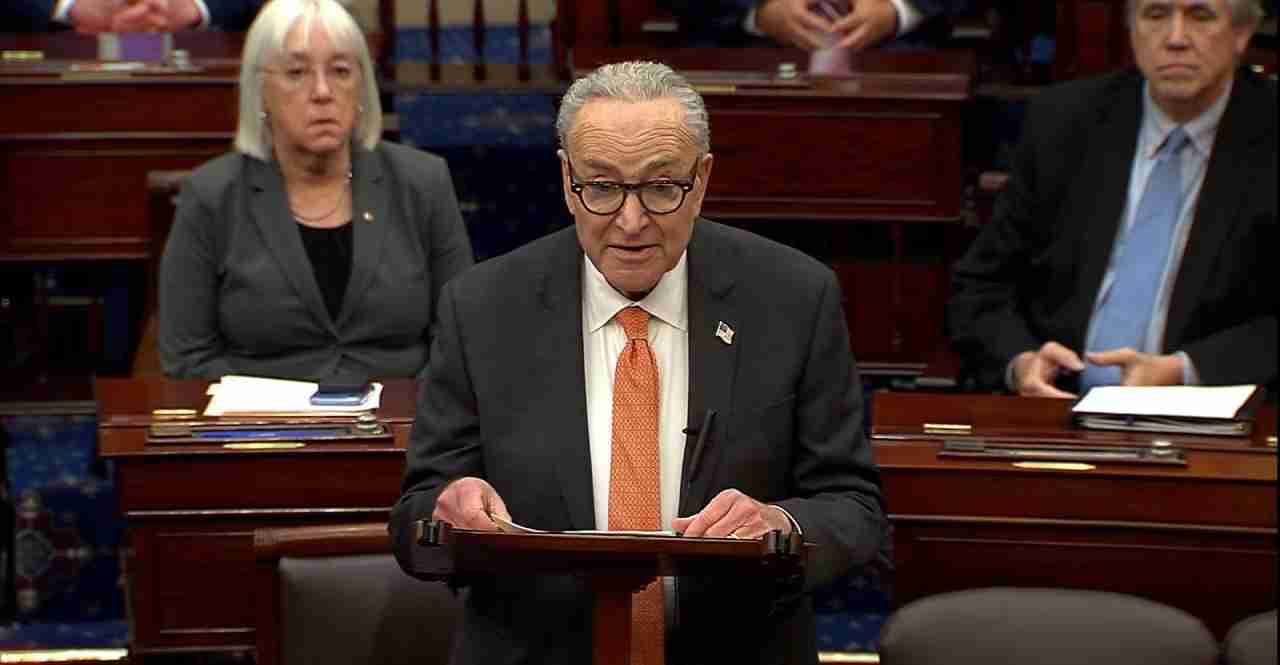
Schumer unveils shutdown counteroffer: one-year extension of Obamacare premium subsidies, urges Republicans to “just say yes”
Facing a potential 2025 government shutdown, Senate Majority Leader Chuck Schumer proposed a one‑year extension of enhanced Obamacare premium subsidies to avert steep premium hikes for millions of marketplace enrollees and urged House Republicans to “just say yes.”
Key takeaways
- Schumer proposed a short-term “clean” funding bill that includes a one‑year extension of enhanced ACA premium subsidies to prevent sharp price increases for marketplace enrollees.
- Nonpartisan estimates from the Congressional Budget Office and the Kaiser Family Foundation warn average subsidized enrollees’ annual out‑of‑pocket premiums could jump significantly if subsidies lapse.
- House Republicans are seeking to pair funding with border, immigration and policy riders; Democrats insist on a standalone, clean stopgap to avoid a shutdown.
Schumer’s counter-proposal and the stakes
Senate Majority Leader Chuck Schumer outlined a short-term, “clean” continuing resolution that would extend the enhanced Affordable Care Act (ACA) premium subsidies for one year to stabilize insurance markets and protect consumers. Democrats framed the move as a straightforward measure to keep the federal government open while preventing dramatic increases in Health Insurance Costs for middle- and lower-income Americans.
Schumer urged House Republicans to accept the offer and “just say yes,” arguing the proposal avoids a shutdown and shields millions from large premium spikes.
Major outlets reported Schumer’s remarks and the offer was described by his office as intended to be free of policy riders that could complicate or delay passage. Sources include reporting from Associated Press, Politico, and Axios.
Projected impact if subsidies lapse
Independent analysts warn a lapse in the enhanced subsidies could produce steep cost shocks. The Congressional Budget Office and the Kaiser Family Foundation estimate average annual out‑of‑pocket premiums for subsidized enrollees could rise from roughly $888 today to about $1,904 in 2026 if the subsidy boost expires — more than doubling costs for many families.
Beyond higher premiums, experts warn insurer participation may decline in some markets, competition could shrink, and hospitals and clinics may face greater uncertainty and increased uncompensated care. Patient advocates, insurers, and provider associations have sounded alarms about abrupt changes to state marketplaces and care systems.
What Republicans are demanding
House Republican leaders have pushed for short‑term funding that conditions extensions on border and immigration measures and other policy riders. GOP negotiators argue tying policy changes to funding is necessary; Democrats counter that attaching riders to must‑pass bills risks shutdowns or forces hasty acceptance of sweeping policy changes.
The standoff has framed a classic debate over clean continuing resolutions versus conditional funding, with the subsidy cliff adding urgency as lawmakers consider the timing and content of any stopgap measure.
Undocumented immigrants and gaps in the plan
Schumer’s one‑year subsidy extension does not change eligibility for undocumented immigrants. Under current federal law, undocumented residents are ineligible for ACA marketplace subsidies and, in most states, Medicaid. Advocates and some progressive lawmakers have urged state or federal actions to expand care options, but those measures were not included in the short‑term offer.
Public health experts caution that leaving undocumented immigrants without access to affordable coverage can increase pressure on hospitals and public health systems, especially in communities with large immigrant populations.
Reactions from stakeholders
- Insurers and market analysts: Urging quick congressional action to avoid premium spikes, reduced market participation, and billing uncertainty.
- Hospitals and clinics: Warning that falling coverage rates could lead to more uncompensated care and financial strain on safety‑net providers.
- Patient advocates: Calling the extension necessary to prevent immediate harm to families facing dramatic premium increases.
Implications for Las Vegas, Nevada
Economic impact
Nevada Health Link enrollees would face the same national subsidy cliff. If enhanced subsidies lapse, workers in Las Vegas’ dominant hospitality, retail, and service sectors could see sharply higher household Health Insurance Costs, reducing disposable income and potentially cutting consumer spending in a tourism-driven economy. See Nevada Health Link for local marketplace details and the Nevada Department of Health and Human Services for state policy information.
Political consequences
As a competitive state with many marketplace enrollees, Nevada could see the subsidy debate become a salient local issue. Premium spikes and coverage drops may increase pressure on federal lawmakers and influence statewide and local races.
Social and health-system effects
Local hospitals and community clinics may face increased uncompensated care if coverage declines. Safety‑net providers operating on thin margins could be strained; undocumented residents will remain dependent on local safety nets unless state or federal policy changes occur.
Cultural and practical concerns
Part‑time and seasonal hospitality workers often rely on individual marketplace plans. Sharp premium increases could force difficult choices between health coverage and other necessities for these households. Local advocacy groups have pursued state policy options, though such changes take time and political negotiation.
What local leaders can watch for
- Enrollment shifts during the next marketplace open enrollment — early trends will indicate whether price changes push people out of coverage.
- Hospital uncompensated‑care reports — rising numbers would signal immediate strain on local health systems.
- State‑level policy moves — Nevada could consider targeted programs or expansions to address gaps, particularly for undocumented residents.



