
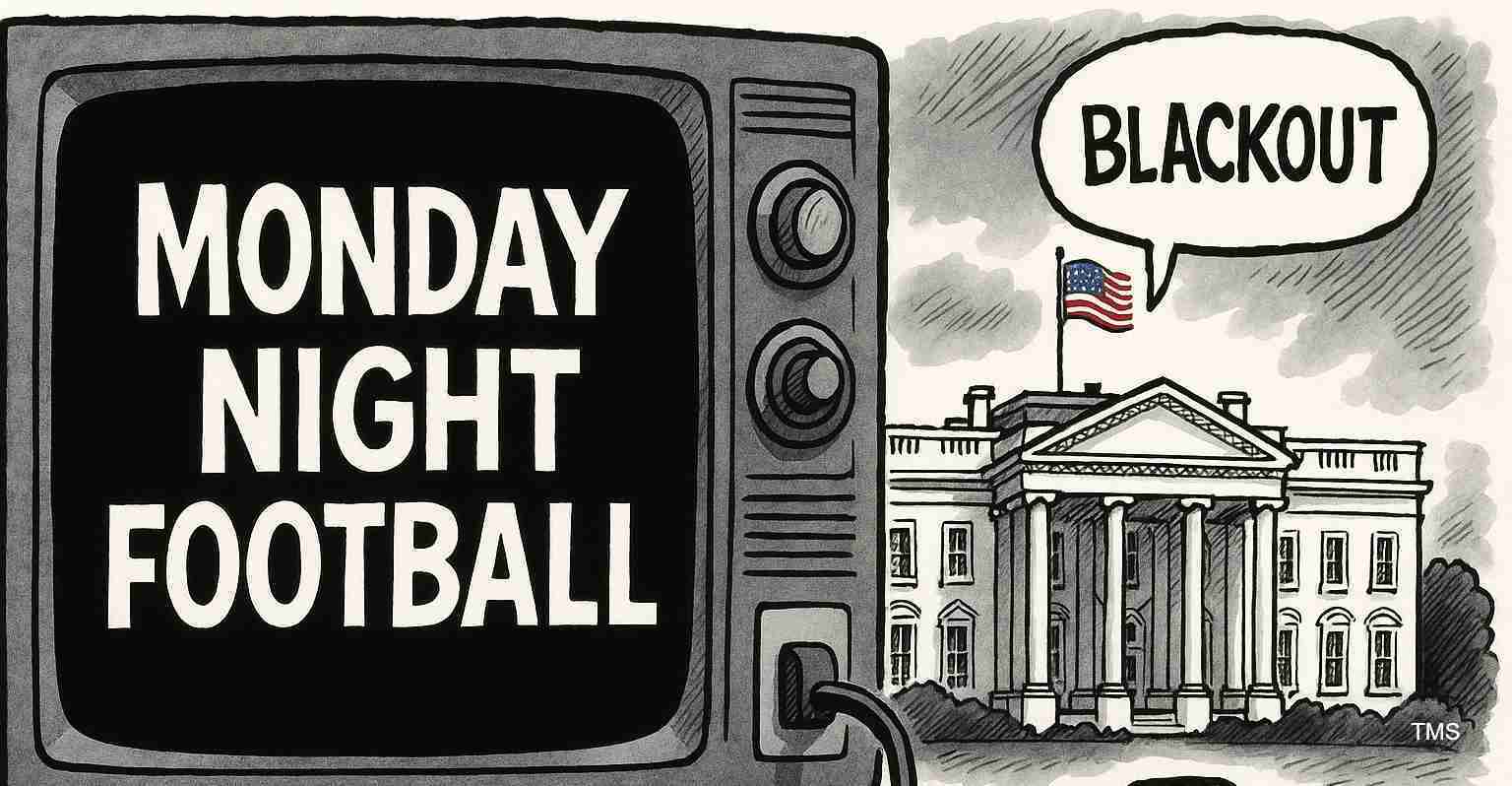
Washington Post pushes back after Warren blames Trump for Monday Night Football blackout in Disney–YouTube TV dispute
Sen. Elizabeth Warren blamed former President Trump for a brief Monday Night Football blackout after a contract dispute between Disney and YouTube TV; the Washington Post pushed back, calling it a private market negotiation, sparking debate on antitrust and intervention.
Key takeaways
- What happened: Disney channels, including ESPN, were briefly removed from YouTube TV amid a contract dispute, causing some subscribers to miss Monday Night Football. (Source: video)
- Warren’s claim: Senator Elizabeth Warren publicly tied the blackout to the Trump-era regulatory environment, arguing large companies can act unchecked. (Source: video)
- Pushback: The Washington Post editorial board and other commentators said the incident arose from private contract negotiations, not direct federal policy failure. (Source: video)
- Broader debate: The episode reignited discussion on media consolidation, antitrust enforcement, and when government should intervene in market disputes. (Source: video)
Background: how the Disney–YouTube TV dispute led to a blackout
What left millions unable to watch Monday Night Football was not a law or federal order but a private contract fight. Disney and YouTube TV were negotiating terms for carrying Disney-owned channels. When talks broke down, Disney channels — including ESPN — temporarily disappeared from the streaming service, leaving subscribers without access until a new deal was reached. (Source: video)
Industry context: Contract disputes like this are common; networks and distributors haggle over fees and terms, and impasses can lead to temporary blackouts. Analysts often call these impasses normal market negotiations — frustrating for viewers but typical in the media business.
Warren’s claim: blaming Trump for the blackout
Senator Elizabeth Warren publicly tied the fallout to former President Trump. In a widely shared statement she warned,
“when companies get too big, they have the power to cut off your favorite channels. That’s what’s happening here. And what’s Trump done about it? He’s let them get away with it.”
Warren used the blackout to illustrate concerns about corporate consolidation and to argue for stronger antitrust enforcement. (Source: video)
Washington Post editorial board response and criticism
The Washington Post editorial board pushed back, asserting the blackout resulted from a private negotiation gone wrong rather than federal policy. Their editorial argued that blaming a former president for a failed deal between Disney and a streaming provider misconstrues how such disputes occur and risks overstating the government’s role in routine market negotiations. (Source: video)
Editorial critics noted that while media consolidation and antitrust concerns are valid, not every corporate spat constitutes proof of regulatory failure. They warned against treating standard contract fights as political ammunition without clear evidence linking them to policy decisions.
Industry perspective: private negotiation, public frustration
Executives and analysts typically describe blackouts as leverage tactics: a content owner withholds distribution to secure higher fees, while a distributor resists to limit subscriber costs. The technical and contractual origins of these disputes nonetheless have very public effects, especially for high-profile live events like Monday Night Football.
As viewers shift toward streaming bundles, distribution disputes have higher stakes; live sports magnify the impact because fans and advertisers expect broad access.
Public debate: antitrust, consolidation, and the role of government
Supporters of Warren’s view argue the incident shows why stronger antitrust enforcement and oversight are needed: concentrated market power can let big companies act without sufficient consequences, harming consumers.
Critics respond that this specific dispute aligns with standard market behavior rather than clear monopolistic abuse, and caution against equating every market disruption with regulatory failure. Some also say calling on government to resolve private contract disputes can be politically inconsistent with arguments about limiting executive power. (Source: video)
Public discourse and political consequences
The exchange became a talking point across opinion shows and social media. Supporters praised Warren for highlighting consumer harm; opponents used the moment to criticize calls for more government involvement in private business. The Washington Post’s critique amplified the counterargument that the senator miscast the cause of the blackout.
Political implications: Framing a common annoyance — missing a football game — as the result of failed policy can sway voters, but if the framing is shown to be inaccurate it can damage credibility. For urban moderates, the dispute raises questions about balancing consumer protection with skepticism toward heavy-handed government intervention.
Implications for Las Vegas, Nevada
Economic impact: Las Vegas businesses — casinos, sportsbooks, bars and restaurants — depend on live sports to drive foot traffic and bets. A blackout on a widely used streaming service can reduce in-person viewership at betting hubs and shift where patrons go to watch games.
Operational response: Local businesses may keep multiple streaming options and cable packages to mitigate blackout risk, absorbing additional subscription and equipment costs to ensure access for patrons.
Political and social effects: The dispute spotlights media access, consumer protection, and market concentration concerns for Nevada voters and lawmakers. Fans and bettors feel immediate economic and social impacts when a game is unavailable, and the blackout becomes a local talking point.
Practical takeaway: Businesses and residents should consider backup access for live sports, monitor contract developments between content owners and distributors, and follow antitrust policy discussions that could reshape distribution models.
Source attribution and reporting sources
The primary public record for Warren’s remarks and the Washington Post editorial response is available in public videos and coverage of the exchange. Key public sources used for this article include the public statement and coverage of Senator Elizabeth Warren’s remarks and the Washington Post editorial board response. Reporting emphasizes there is no public record indicating federal actions under the Trump administration directly caused the blackout. (Source: video)



