Supreme Court allows Trump policy forcing U.S. passport sex markers to reflect birth sex, limiting options for transgender and nonbinary Americans
The U.S. Supreme Court on November 6, 2025 allowed the Trump administration to reinstate a policy requiring U.S. passports to reflect sex assigned at birth, blocking transgender and nonbinary Americans from choosing identity-aligned markers while litigation continues.
Key takeaways
- The Court allowed the administration to enforce a rule listing the sex on an applicant’s birth certificate on passports while challenges proceed — see the Supreme Court opinion.
- The policy implements a January 20, 2025 executive order to “recognize two sexes, male and female” based on birth certificates and “biological classification” — reporting from ABC30.
- Under the rule, the “X” marker and self-identification practice adopted under the Biden administration are suspended for passports while litigation continues; civil-rights groups warn of safety risks (see ACLU press release).
Key information
The Supreme Court permitted the administration to require that U.S. passports list the sex shown on an applicant’s birth certificate while legal challenges continue. Read the Supreme Court opinion for the order allowing the rule to take effect temporarily.
“Recognize two sexes, male and female,” language from the January 20, 2025 executive order instructing agencies to base records on birth certificates and “biological classification.”
Reporting and analysis of the policy and litigation are available from ABC30 and SCOTUSBlog analysis.
Background and legal timeline
Passports first included a sex marker in the mid-1970s. By the 1990s a change required medical documentation. In 2021 the State Department removed medical-documentation requirements and added an “X” marker to allow nonbinary self-identification after litigation and policy changes.
On January 20, 2025 President Trump issued an executive order directing agencies to recognize only “male” and “female” based on birth certificates and biological classification. Reporting on that order appears in ABC30 and analysis at SCOTUSBlog.
Litigation advanced quickly: a federal judge initially blocked the rule allowing applicants to continue choosing passport sex markers; an appellate court temporarily left that injunction in place; the Supreme Court has now allowed the administration’s policy to take effect while lawsuits proceed, leaving the ultimate merits unresolved.
Administration arguments and federal authority
Solicitor General D. John Sauer and administration lawyers argued the President holds broad authority over passports as part of foreign affairs and national identification. They said consistent standards matter for travel, foreign governments, and security agencies. Reporting on these arguments appears in ABC30.
Civil rights response and safety concerns
Civil-rights groups and legal advocates, including the ACLU and Lambda Legal, say the policy discriminates and increases the risk of harassment, detention, or violence for transgender, nonbinary, and intersex travelers when ID does not match appearance or other documents.
Advocates point to examples where passports contradicted long-standing identity documents; reporting has cited the case of actor Hunter Schafer receiving a passport listing “male” despite other IDs showing “female.” See reporting from ABC30.
Policy details and immediate effects
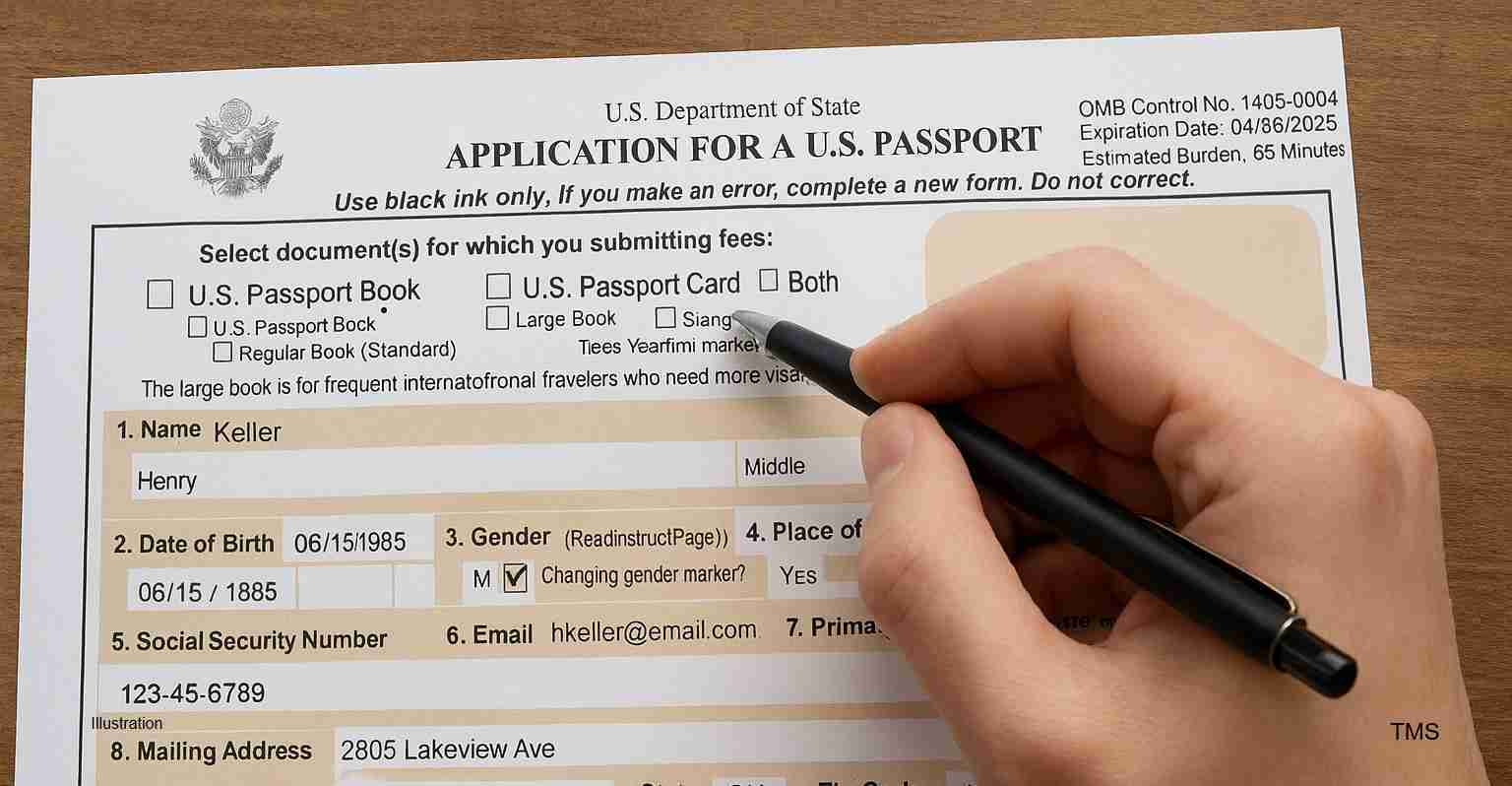
Under the policy allowed to proceed, the State Department will list the sex marker exactly as shown on a passport applicant’s birth certificate for all new and renewed passports. The Biden-era practice permitting self-identification and the “X” marker without medical documents is suspended for passports while litigation continues.
The change does not automatically alter every federal or state form that uses gender markers. However, passports are foundational identification for travel and federal interactions; mismatches can cause denial of boarding, customs issues, or confrontations with authorities domestically and abroad. Analysis at SCOTUSBlog and statements from the ACLU explain the concerns.
Historical and broader context
The dispute over passport sex markers is part of a wider national debate over how governments recognize gender. Courts, agencies, and legislatures have reached differing results. The current Supreme Court action is a major test of federal recognition for transgender and nonbinary rights in identification and travel; scholars note the final outcome could shape treatment of gender in other federal benefits and records.
Implications for Las Vegas, Nevada
Economic impact
Las Vegas, a global travel hub, could see effects if residents face barriers leaving or reentering the U.S. Disruptions to travel by workers, performers, or convention attendees may hurt tourism revenue and the city’s reputation as a visitor-friendly destination. Reporting and resources are available from ABC30.
Political consequences
Nevada’s swing-state status means civil-rights and safety issues can influence voters. Las Vegas leaders may face calls to expand local protections for gender recognition on city IDs, transit passes, and municipal services; the issue could surface in local and statewide campaigns.
Social effects
Las Vegas’ visible LGBTQ+ community and many service workers who travel may experience increased stress and risk. Community groups warn the rule heightens discrimination and complicates access to medical and social services when federal IDs do not match gender presentation.
Cultural relevance
Venues, cultural institutions, and nonprofits that promote Las Vegas as inclusive may confront tensions as federal policy diverges from local values. Organizers of festivals, Pride events, and conventions may need to provide extra support to attendees facing ID-related travel challenges.
Practical applications for residents
- Transgender and nonbinary Nevadans seeking new or renewed passports should check State Department guidance and consult advocacy groups; resources from the ACLU and Lambda Legal may help.
- Employers and event organizers should update travel policies, plan for ID checks, and consider alternative documentation or legal advice for affected staff and performers.
- Local government offices may review city ID practices and coordinate with community groups to reduce friction for residents.
Reporting and next steps
The Supreme Court’s order keeps the policy in place while underlying lawsuits continue through lower courts. Legal challenges remain active; courts may yet block, narrow, or uphold the rule in full. The high-court order temporarily resolves compliance while litigation proceeds — it is not a final ruling on the merits.
Sources and further reading
- Supreme Court order and opinion
- ABC30 reporting
- SCOTUSBlog analysis
- ACLU press release
- Lambda Legal resources
- Economic Times coverage
Reporting by Times Media Service