Newsom hails Prop 50 victory as a rebuke to Trump — “no crowns, no thrones, no kings” in U.S.
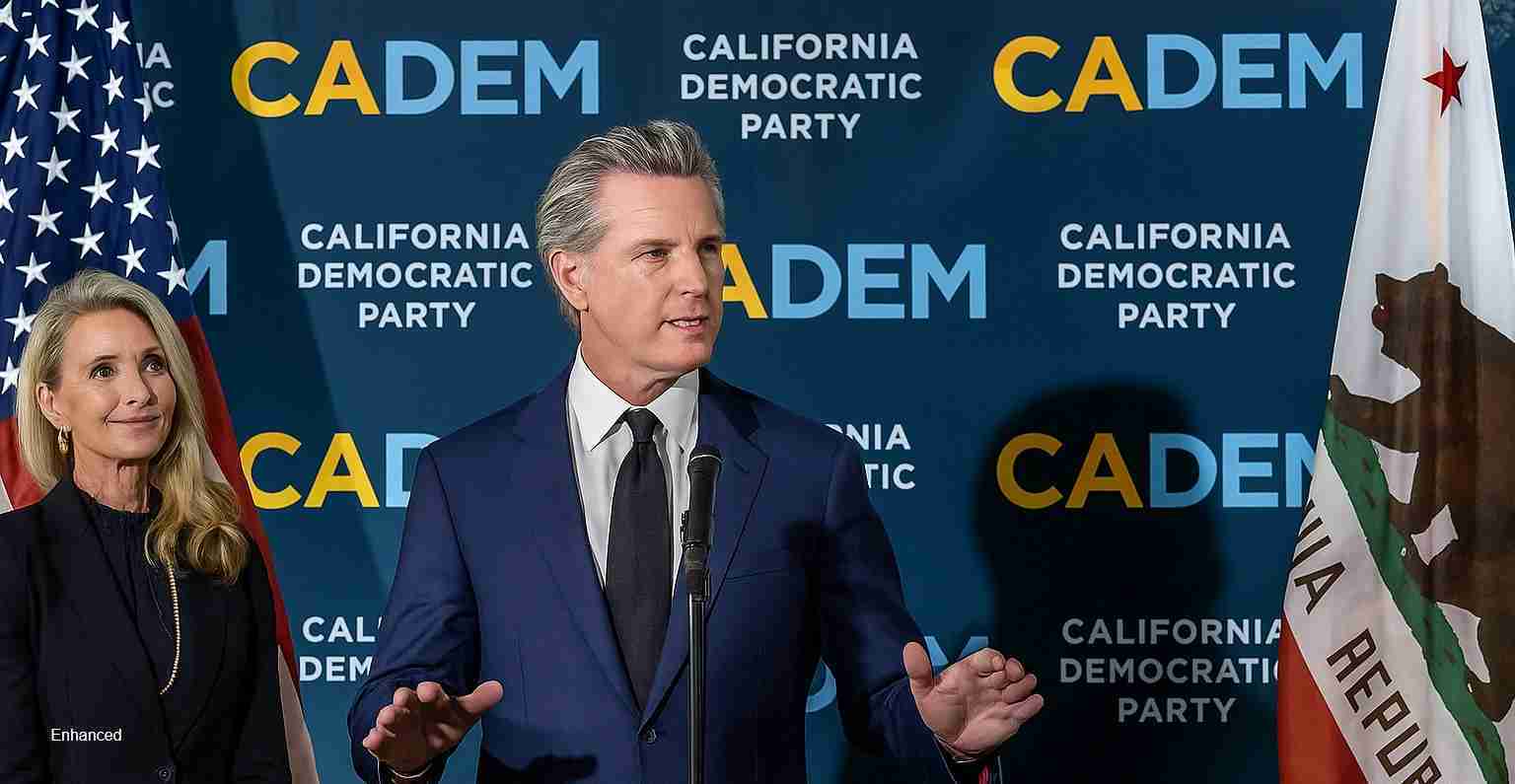
California Governor Gavin Newsom delivered a politically charged speech on November 4, 2025, celebrating the passage of Proposition 50 and framing the redistricting overhaul as a rebuke to Donald Trump and a test for 2026 midterm strategy.
- Prop 50 framed as a national defense of democracy: Newsom called the vote a rejection of what he described as Trump-era tactics and voter intimidation, linking it to the 2026 midterms.
- Maps return to Democratic legislature: The measure overturns the independent commission maps and gives the Democratic-controlled legislature authority to redraw congressional districts.
- Organizing mattered: Newsom praised an intense “90-day sprint” of volunteers and turnout that secured passage and could serve as a model for other states.
Newsom’s election night message
Governor Newsom spoke to supporters after ballots showed Proposition 50 passing, portraying the result as “a win for the United States, not just the Democratic Party.” He emphasized defending democratic values and ordinary people rather than simple partisan advantage.
See his full remarks for the complete speech and tone he struck on election night.
Accusations of voter intimidation and the national frame
During his remarks, Newsom accused former President Donald Trump of engaging in behavior that amounted to “voter intimidation” and described efforts he saw as “vandalism to this republic and our democracy.” He tied the accusations to national actions and to allied redistricting efforts in other states.
“There are no crowns, no thrones, no kings in the United States,” he said, underlining the need for institutional checks on power.
Watch Newsom’s remarks on this theme here: remarks and his broader 2026 framing here: remarks.
What Proposition 50 changes
Proposition 50 overturns maps drawn by California’s independent redistricting commission and returns authority over congressional boundaries to the state legislature, controlled by Democrats. Supporters — including Newsom — argue the change is intended to blunt Republican gains made through redistricting elsewhere and make several seats more favorable to Democrats in 2026.
Newsom and allies have explained the change and its intent in multiple appearances; for a direct explanation see his remarks and the campaign overview in this clip on organizing: remarks on organizing and turnout.
The 2026 stakes Newsom outlined
Newsom repeatedly connected Prop 50 to the 2026 midterms, arguing the new maps could influence who controls the U.S. House of Representatives. He cast the vote as part of a broader national strategy to block what he described as an authoritarian return to leadership, saying, “We can de facto end Donald Trump’s presidency as we know it.”
For context on how he tied the vote to national strategy, see his speech highlights here: remarks.
Turnout, organizing and the “90-day sprint”
Newsom praised grassroots volunteers and organizers who executed what he called a “90-day sprint.” He highlighted door-to-door canvassing, digital outreach and coordinated voter drives that produced what he called an “unprecedented” turnout for a special election.
Watch organizers and campaign leaders describe the effort here: remarks on organizing and turnout.
Investigative questions raised by the speech
- How will the new districts change the 2026 House races in California? Which districts are likely to flip?
- Will other states adopt similar legislative or legal strategies to reshape maps ahead of 2026?
- What evidence exists of the voter intimidation Newsom described, and how are federal and state officials responding?
- How will fast, high-intensity campaigns like the one Newsom praised shape future special elections?
Implications for Las Vegas, Nevada
Economic impact: While Prop 50 does not redraw Nevada districts, shifts in the U.S. House balance can affect federal funding and policy that matter to Las Vegas — including tourism promotion, transportation grants and disaster aid.
Political consequences: Nevada is a swing state. Newsom’s framing as a national model may prompt Nevada Democrats to increase organizing and legal strategy; conversely, Nevada Republicans may use California’s vote to mobilize their base.
Social and cultural effects: Rhetoric about “voter intimidation” and the map fight can deepen polarization. Local civic groups may face greater demand for voter education and election protection services. Californians’ influence in the region means the debate could echo in Nevada media and public life.
Practical takeaway: Las Vegas residents and businesses should monitor how possible House shifts could affect federal priorities tied to tourism, infrastructure and regulation.
What to watch next
- Map analysis: Analysts will publish breakdowns of how Prop 50 redraws districts and which seats may change hands in 2026.
- Legal follow-up: Watch for litigation or new state actions tied to redistricting rules in California and the other states Newsom named.
- Organizing trends: The speed and scale of California’s push could become a template for both parties and may be adopted in Nevada and elsewhere.
Sources and further reading
Gov. Newsom remarks and video excerpts:
- Remarks (KFhA_zxuCB8)
- Remarks (WCfz1tSFdkM)
- Full remarks (vN8-5rPVhps)
- Remarks on organizing and turnout (xjsxZ3KgUVs)
All facts, quotes and URLs in this article are preserved from the original reporting and source material provided.