Trump, Japan’s First Female Prime Minister Sanae Takaichi Sign Rare-Earth, Critical Minerals Pact; Takaichi Calls for “New Golden Age”
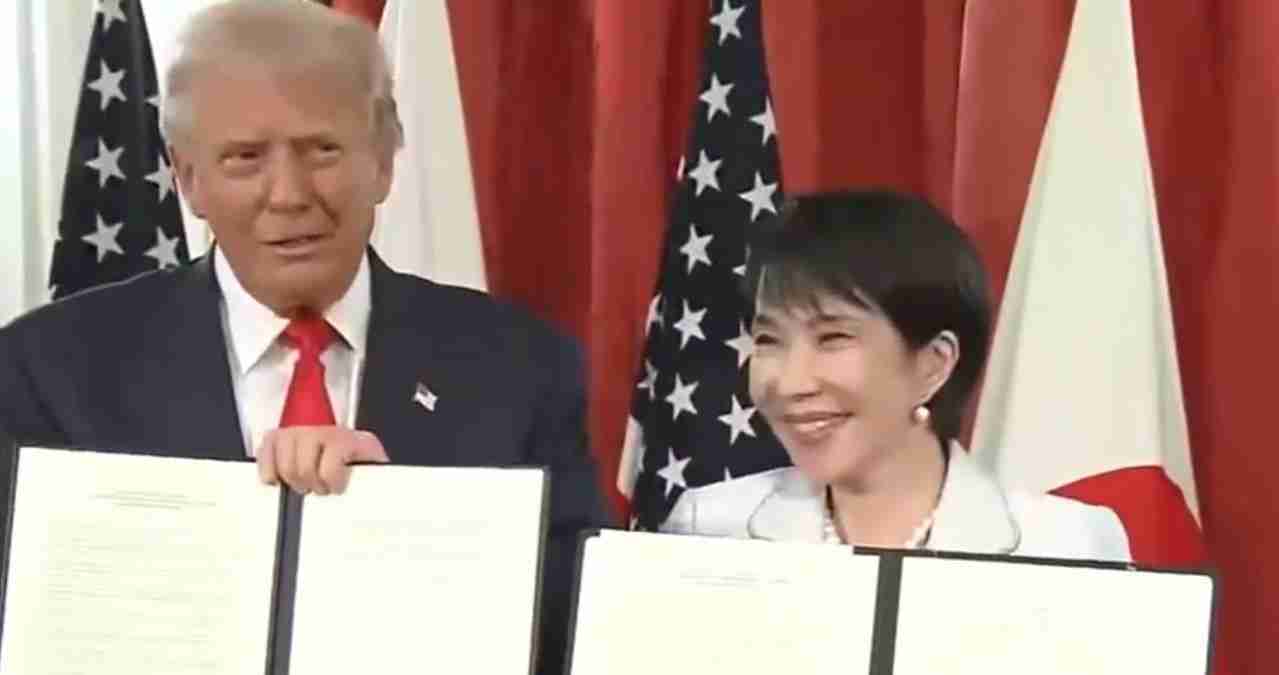
President Donald Trump and Japan’s first female prime minister, Sanae Takaichi, signed a framework to secure rare earths and critical minerals, aiming to diversify supply chains and strengthen economic and security ties between Washington and Tokyo.
Key takeaways
- Framework to secure supplies: The U.S. and Japan signed a joint framework focused on mining, processing and investment coordination — see the White House brief.
- Rapid Response Group: A new unit will map vulnerabilities and respond to supply disruptions, as reported by Fox Business.
- Joint funding, permitting, stockpiles: The deal contemplates coordinated funding, streamlined permits and possible stockpiling to reduce dependence on single suppliers (notably China) — see the White House brief and Fox Business.
Supply chain pact: what was agreed
The signed framework centers on securing materials that power modern electronics, electric vehicles, defense systems and green energy. The document commits Washington and Tokyo to work together on mining and processing rare earths and other critical minerals, and points to joint funding and steps to cut red tape for permits — detailed in the White House brief.
A notable feature is the planned Rapid Response Group. Officials said the group will map vulnerabilities and coordinate quick deliveries if a supplier is cut off or a mine shuts down, according to Fox Business. Leaders also discussed joint stockpiling and harmonizing standards for critical materials to lessen reliance on single-country dominance and curb market manipulation.
Alliance strengthening and symbolism
Takaichi used the White House visit to call for a “new golden age” in U.S.-Japan relations, linking her agenda to the late former prime minister Shinzo Abe and framing continuity with past security and economic ties, as covered by Arab News. Trump praised her historic appointment and said, “Anything I can do to help Japan, we will be there. We are an ally at the strongest level.” (Coverage by Economic Times and Arab News.)
“Anything I can do to help Japan, we will be there. We are an ally at the strongest level.”
Public elements of the visit included a signing ceremony and a formal welcome at Akasaka Palace; video of the events was published by the White House video and circulated more broadly, including on YouTube. Trump also addressed U.S. sailors aboard the USS George Washington during the visit (reported by Arab News).
Economic and trade aims on the table
Talks extended beyond minerals. Trump pushed for substantial Japanese investment as part of broader trade talks that could touch tariffs and industrial ties; reporting indicates he sought up to $550 billion in Japanese investment tied to negotiations over tariffs and market access (Arab News).
Takaichi offered symbolic gestures — including 250 cherry trees for America’s 250th anniversary and planned fireworks for July 4 — and the leaders discussed auto-trade measures such as a possible Japanese purchase of Ford F-150 trucks to boost U.S. vehicle exports (Arab News).
Short documents, big signals
Although described as wide-ranging, the signed documents are short. Media reports note the framework and alliance statement were summarized in brief, under-one-page documents signed by both leaders (Arab News; Newstimes). Officials said the short text sets a framework for follow-up technical and commercial agreements that will supply detailed implementation plans.
Why rare earths and critical minerals matter
Rare earths and certain critical minerals are essential for magnets, batteries, semiconductors and military hardware. Dependence on a single major supplier can expose industries and governments to shortages and price swings; the U.S.-Japan pact aims to diversify sources and build resilient supply chains (White House brief; Fox Business).
Security dimension
Securing mineral supply is partly a national security move. Officials noted that controlling the flow of materials needed for defense systems is a priority; the joint approach signals that mineral supply will be treated as part of alliance defense planning and economic security (White House brief).
Questions left open
The agreement raises practical questions: Which mines and processing plants will get funding? How quickly can permitting be sped up? How large will any stockpile be, and which private firms will participate? Officials say more technical and commercial talks will define these details (Fox Business; Arab News).
Coverage and public reaction
The visit drew live coverage from the White House and international outlets; footage of the welcome and signing circulated widely (White House video; YouTube). Commentators emphasized both symbolism — Japan’s first woman prime minister meeting a former U.S. president — and the strategic aim of diversifying supply chains away from heavy reliance on China (Fox Business; White House brief).
Implications for Las Vegas, Nevada
Economic opportunities:
- Mining and processing projects tied to the framework could create demand for American mining services, equipment and technology; Nevada is a U.S. leader in mining and hosts mineral-processing expertise (White House brief).
- Nevada universities and tech firms could partner on research into battery materials and magnet processing, opening grants and collaboration opportunities.
Jobs and workforce:
- New projects may create jobs in construction, engineering and skilled trades. Las Vegas employers in logistics, fabrication and support services could benefit.
- Workers may need training in modern processing techniques, suggesting roles for community colleges and workforce programs.
Manufacturing and high-tech industries:
Domestic rare earth processing growth would help Nevada-based tech and defense contractors reliant on stable supplies for sensors, motors and electronics, potentially lowering costs and reducing disruption risks.
Tourism and cultural ties:
Symbolic gifts and cultural exchanges — such as cherry trees or trade events — could generate tourism and trade-show ties; Las Vegas already hosts major trade shows and could draw new industrial delegations.
Political and policy effects:
Local officials and regulators may face pressure to streamline permitting and environmental review for mineral projects, renewing debates over jobs versus environmental protection in Nevada.
Security and supply resilience:
For Nevada defense firms, a U.S.-Japan push to secure rare earths could stabilize supplies for military contracts and support long-term investment planning.
Practical next steps for Las Vegas leaders
- Economic development officials should monitor follow-up agreements and funding announcements tied to the framework.
- Workforce agencies and colleges should assess training needs for mining and processing jobs.
- Local businesses in manufacturing, logistics and environmental services should explore partnerships and bidding opportunities related to critical-mineral projects.
Sources and reporting notes
This article draws on official and media reporting, including the White House statement and brief and the White House video. Media coverage used includes Fox Business, Arab News, the Economic Times, Newstimes, and public video of the welcome ceremony on YouTube.