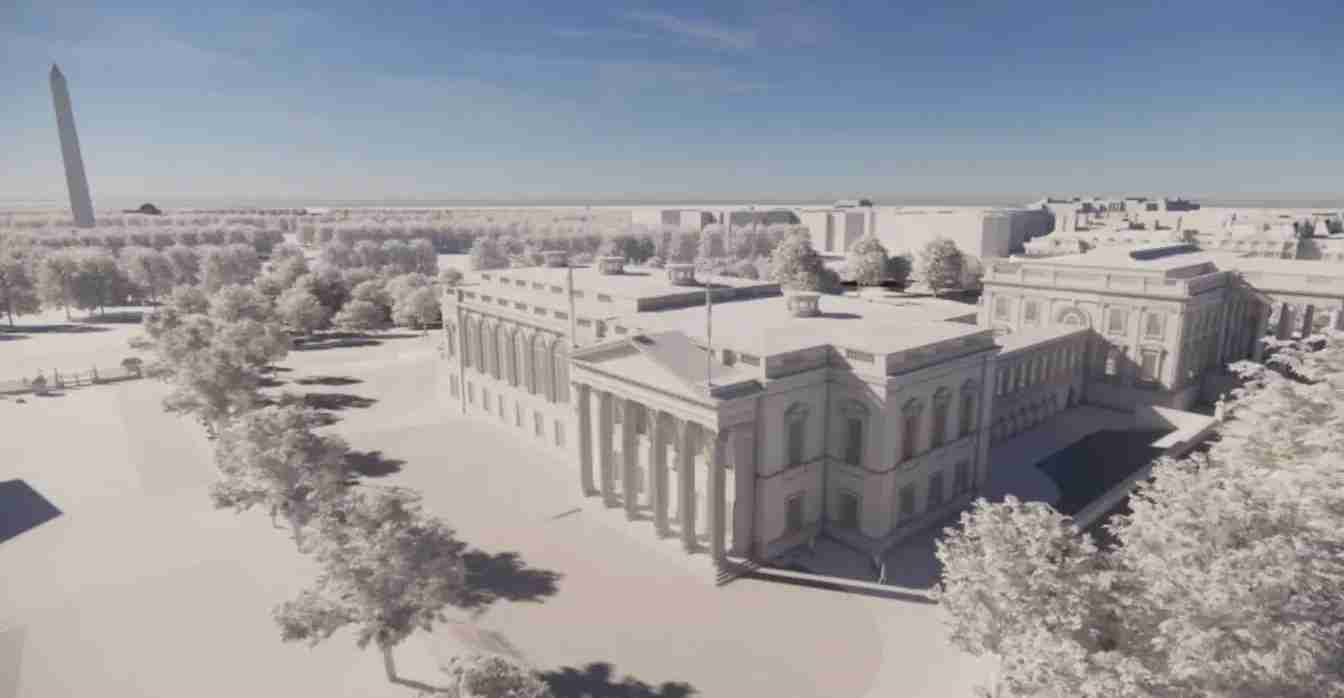
White House Confirms Plans for a Trump-Named Ballroom; Democrats Slam East Wing Demolition and Self-Branding
President Donald Trump has confirmed plans for a privately funded ballroom replacing parts of the East Wing, reportedly to be named “The President Donald J. Trump Ballroom,” prompting criticism from Democrats, historians and preservationists.
- Privately funded ballroom: The White House says the project is privately funded; media cost estimates range from $200–$300 million.
- Scale: Plans describe roughly 90,000–100,000 sq. ft. with seating between 650–900 guests.
- Naming controversy: Administration sources say the interior name is “The President Donald J. Trump Ballroom,” drawing criticism as self-aggrandizing.
- Preservation concerns: Democrats, historians and preservation groups warn about loss of historic fabric and insufficient transparency on donors.
What the White House announced
The White House published a statement announcing construction of a large new ballroom to replace the current East Wing configuration and provide a single, grand event space for formal dinners, diplomatic gatherings and other events. The announcement states the work will be privately funded and overseen by McCrery Architects and Clark Construction, and frames the project as a long-term improvement meant to serve future administrations (White House article).
Size, scope and timelines
Public details have varied across briefings. Officials have described a ballroom and supporting spaces between roughly 90,000 and 100,000 square feet, with seating estimates that range from about 650 up to 900 guests. Groundbreaking occurred in September 2025, and the White House says the work will be completed before the end of President Trump’s current term, though no firm public completion date has been provided (White House statement; ABC News reporting).
Funding and the “privately funded” claim
The administration emphasizes the project is privately funded by the president and outside donors and insists no taxpayer dollars will be used. Media estimates place the tab between $200 million and $300 million, figures that could shift as plans develop. Critics counter that private donations tied to major White House projects raise questions about access and potential influence (ABC News reporting).
The naming controversy
Multiple administration sources told reporters the project is referred to internally as “The President Donald J. Trump Ballroom.” The name has not been formally announced by the president, and when asked Trump declined to give a formal answer. Republicans and White House officials point to past presidential renovations as precedent and stress practicality; Press Secretary Karoline Leavitt called criticism “fake outrage,” urging critics to focus on the project’s benefits (Fox News coverage; White House article).
Critics: partisan concern and preservationists
Democratic lawmakers, historians and preservation groups argue naming a White House room after a sitting president crosses a longstanding norm that helps protect the building’s nonpartisan legacy. They call the reported name self-aggrandizing and question whether demolition of parts of the East Wing — originally built in 1902 and altered several times since — is warranted for what some view as a cosmetic project (Business Standard; Society of Architectural Historians statement).
“Preservation groups warn that technical details have shifted in public statements — capacity, square footage and cost estimates — fueling skepticism that the plan’s scope is unsettled.“
Transparency and donor questions
Watchdogs and some lawmakers say transparency is essential even with private funding: who donates, what conditions may be attached, and how fundraising will be managed at the historic executive residence. Critics want public answers on donors and oversight before the project advances (ABC News reporting).
Construction teams and design
The White House lists McCrery Architects and Clark Construction as lead teams; the stated design goal is to match the White House’s classical architecture while adding modern support spaces for events and security. Preservation groups, including the Society of Architectural Historians, have urged careful review of impacts and historical integrity.
What remains uncertain
Key facts remain in flux: the final cost, exact seating capacity, the full list of private donors and a formal naming declaration. Ground was broken and demolition of portions of the East Wing has begun, but many technical and oversight questions are pending (White House statement).
Implications for Las Vegas, Nevada
Economic impact: Las Vegas depends heavily on conventions, hotel bookings and event business. A high-profile White House ballroom could mean more national events, state visits and media attention tied to presidential hospitality, potentially creating ripple demand for local hotels and event planners.
Political consequences: Urban moderates in Nevada may see the privately funded claim as fiscally responsible in theory, yet share concerns about optics and precedent. Local officials and activists may press for transparency from their own officeholders and donors, using the debate to test statewide fundraising norms.
Social and cultural effects: Some Nevada nonprofits and arts groups may worry that expanded White House events could centralize high-profile gatherings in ways that reduce regional visibility, while others may see partnership opportunities for traveling exhibitions or satellite events tied to White House programming.
Practical applications: Local contractors and architectural firms in Las Vegas could study the project for lessons in historic-sensitive construction; firms working on preservation or large-scale event spaces might advise clients on balancing modern needs with historic concerns.