Federal Appeals Court Sends Trump’s Suit Over Iowa Poll Back to State Court in Win for Plaintiff
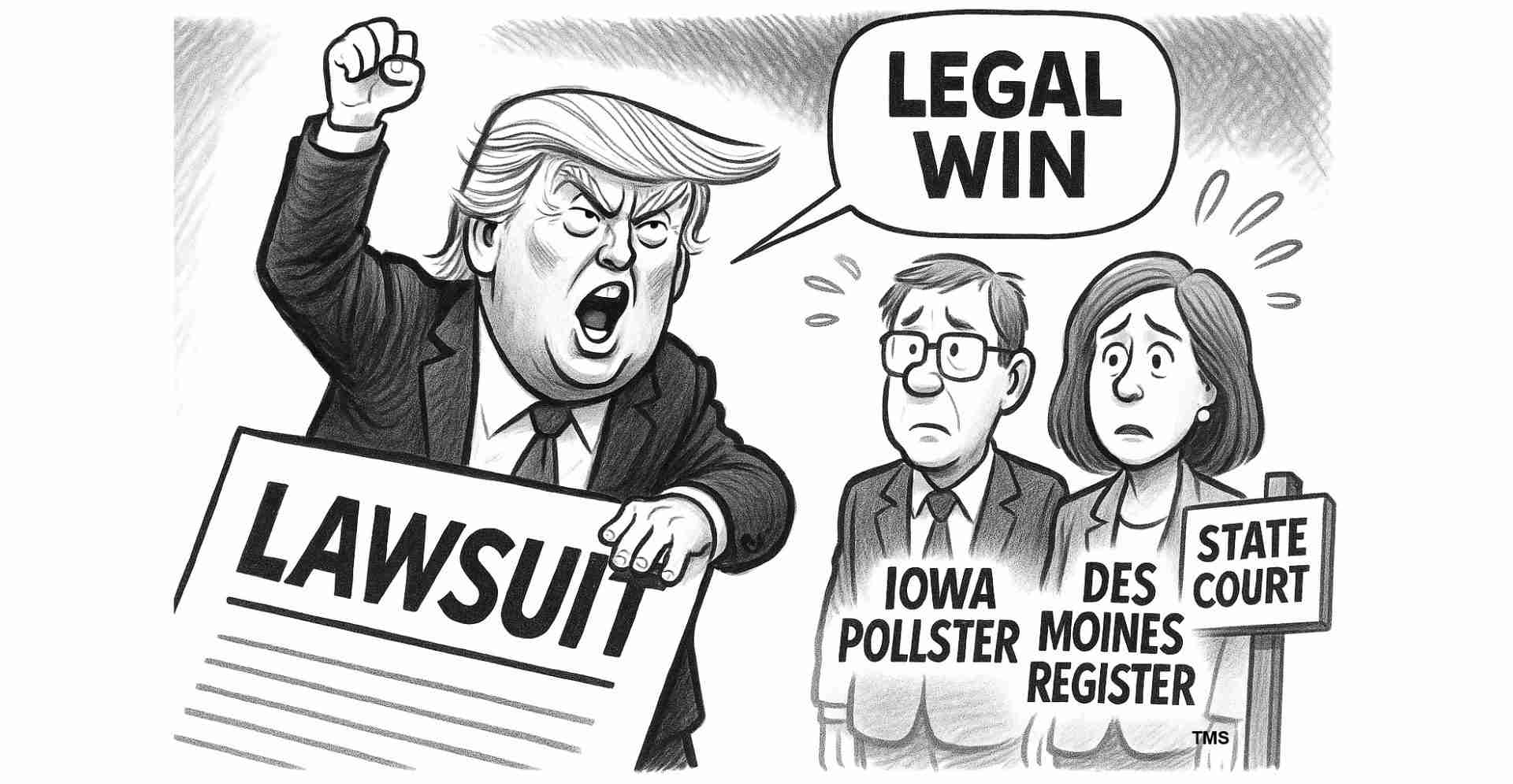
A federal appeals court ordered Donald Trump’s lawsuit against pollster J. Ann Selzer and The Des Moines Register moved from federal to Iowa state court, allowing the suit to be dismissed without prejudice and refiled in Polk County.
Key takeaways
- Venue shift: The Eighth Circuit ruled the dispute belongs in Iowa state court and ordered the federal case dismissed without prejudice — allowing refiling in Polk County. Eighth Circuit ruling
- Trump’s claim: His lawyers say the poll was deliberate “election interference” and seek relief under the Iowa Consumer Fraud Act.
- Free-speech defense: The Foundation for Individual Rights and Expression (FIRE) defends Selzer, calling the suit a SLAPP and a First Amendment issue.
- Core issue: The suit centers on Selzer’s final poll showing a three-point Harris lead days before the election — a result far from the eventual vote count. Final Selzer poll
Details of the appeals court order
The Eighth Circuit’s decision was procedural. It did not decide whether the poll was fraudulent or whether the Iowa Consumer Fraud Act applies to polling and news reporting. Instead, the court found the dispute should be litigated in Iowa state court, not federal court, and permitted Trump to refile in Polk County. Source
Trump’s legal theory and filings
Trump initially filed the suit in December 2024 in Polk County, Iowa, alleging Selzer and The Des Moines Register ran a “leaked and manipulated” poll intended to sway voters in the final days before the 2024 election. His team framed the claims as violations of the Iowa Consumer Fraud Act, a law generally used against commercial scams, and seeks damages plus a ban on what they call “deceptive polling.” More
Plaintiff statements and aims
A Trump spokesperson characterized the appeals decision as a win because it ensures the matter will be heard in the state forum his team preferred. His lawyers have called the poll “fake” and an example of “election interfering,” arguing voters were misled in the campaign’s final days. They seek legal remedies under consumer-protection law. Fox News report
Responses from Selzer, The Des Moines Register and FIRE
The Des Moines Register and parent company Gannett sought to keep the case in federal court, arguing the issues could have national implications and belong before a federal judge; they say they will defend their reporting decisions regardless of venue. Publisher response
FIRE is defending Selzer. The group argues the lawsuit targets core First Amendment protections, asserting that polls and predictions are protected speech and that consumer-fraud laws are ill-suited to policing editorial judgments or mistaken forecasts. FIRE has labeled the suit a Strategic Lawsuit Against Public Participation (SLAPP). FIRE statement
Selzer’s response: She released demographic breakdowns and additional analysis after the election to explain the discrepancy between her final poll and the actual result, and she later announced her retirement from election polling. FIRE coverage · Fox News coverage
Why the poll drew sharp criticism
Selzer’s final survey showed a sudden shift: it put Kamala Harris ahead by three points three days before the election, reversing a prior poll that had showed Trump up by four. When votes were counted, Trump won Iowa by more than 13 points. That disparity — a swing of roughly 16 points from the final poll to the result — is the core grievance in the complaint and the basis for the allegation the poll was not merely mistaken but intentionally manipulated.
Legal experts, free speech and the Iowa Consumer Fraud Act
Legal scholars and free-speech advocates warn that using the Iowa Consumer Fraud Act to police polling and news reporting raises major First Amendment concerns. The Consumer Fraud Act was designed to address commercial deception — for example, false claims in sales — not political speech, reporting or polling. FIRE and other advocates say applying consumer-protection statutes here risks chilling political commentary and forecasting. FIRE analysis
The Eighth Circuit’s move does not resolve those constitutional questions; it transfers the procedural battleground to state court where discovery scope, legal standards and timing could differ — factors that often shape litigation strategy and outcomes. Read more
Timing and the new Iowa anti-SLAPP law
Timing has been notable: one report noted Trump filed a new or amended suit one day before a new Iowa law aimed at curbing SLAPP suits was set to take effect. That change was intended to make it harder to bring meritless lawsuits meant to silence speech, and the filing’s timing means this case will proceed under the pre‑change legal landscape. Des Moines Register report
What’s at stake for pollsters, media and public debate
Analysts say the case could set precedent for when consumer-protection laws may be applied to journalists and pollsters. If courts allow such claims to proceed, media organizations and pollsters could face new legal risks when publishing political forecasts — potentially making outlets more cautious and reducing the information available to voters.
Critics’ warning: Increased legal exposure could chill reporting and polling. Advocates for plaintiffs: argue intentional deception by pollsters that misleads voters deserves legal remedy.
Implications for Las Vegas, Nevada
- Local news and polling trust: Las Vegas media and pollsters often rely on national/state polls; litigation that opens pollsters to fraud claims could chill local polling and reduce available data. Context
- Voter information and turnout: A reduction in public polling or cautious reporting might leave Nevada voters with less context on race trends, affecting engagement.
- Legal and political ripple effects: Nevada courts and lawmakers monitor high-profile speech/media fights; a shift could spur debate over anti‑SLAPP protections locally.
- Campaign strategy: Campaigns in Las Vegas and across Nevada could change how they release/respond to late polls, altering last‑minute messaging and outreach.
- Public trust and discourse: For urban, moderate audiences, the case highlights tension between protecting speech and ensuring accurate information; transparency about methodology may become more important.
Sources and further reading
- Fox News: “Trump scores legal win — he gets lawsuit against Iowa pollster, Des Moines Register moved to state court”
- FIRE: “FIRE will defend veteran pollster J. Ann Selzer in Trump lawsuit over outlier election poll”
- The Des Moines Register: “Trump files new suit over Iowa poll 1 day before new SLAPP law begins”
“Brazen election interference.” — Phrase used by Trump’s legal team to characterize the alleged manipulation of the poll.