Trump team readies tough oil sanctions on Rosneft, Lukoil to choke Russia’s war funding, seeks ceasefire
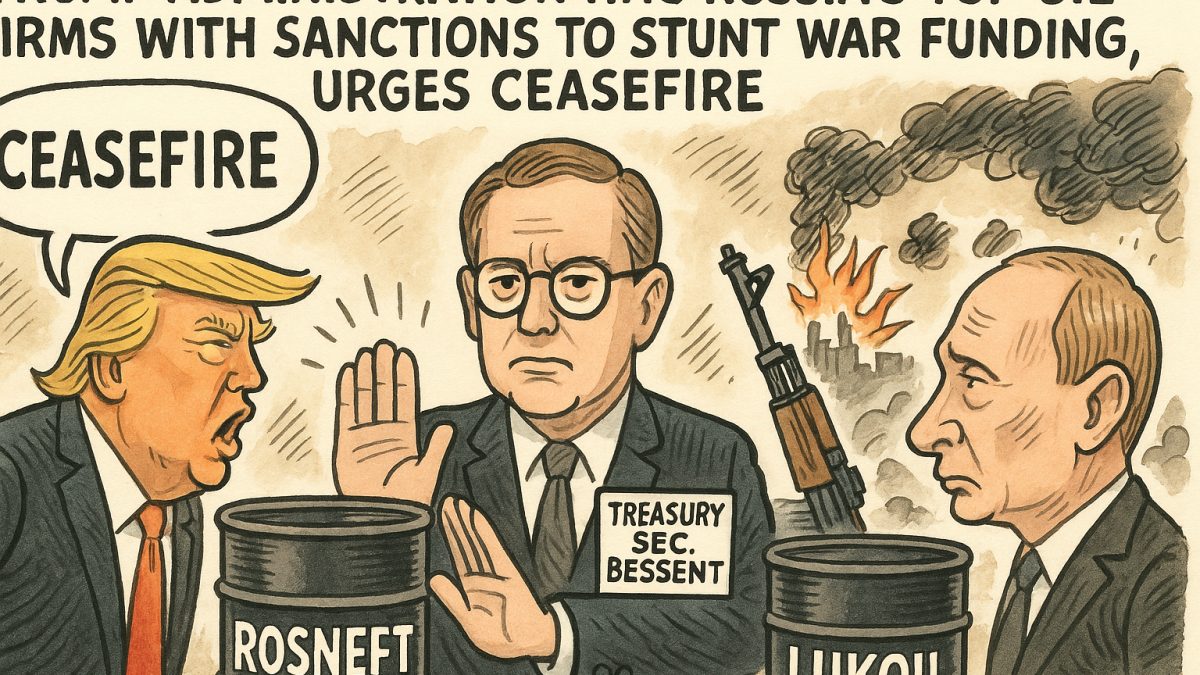
The incoming Trump administration is preparing a sanctions package targeting Russia’s top oil firms, including Rosneft and Lukoil, aiming to choke Moscow’s war funding in Ukraine while using potential relief as leverage to seek a ceasefire.
- Rosneft and Lukoil are named as likely targets in plans to curb Moscow’s oil revenue.
- Scott Bessent is reported to be central to Treasury strategy on asset blocks and enforcement.
- Officials weigh maximum pressure — expanded secondary sanctions — versus conditional easing tied to a Ukraine ceasefire.
- G7 coordination and market reaction are central considerations for policy direction.
What officials and reports say
Transition advisers and industry sources say the team is reviewing the Biden administration’s recent measures, which imposed broad freezes and restrictions on Russia’s oil sector in early January 2025. Cabinet nominees, former officials and outside advisors from conservative think tanks are among those evaluating options. Sources describe oil revenue as a key lever to press for a Ukrainian ceasefire, though there is internal debate over the intensity of pressure.
“Russia’s oil revenues are seen by the transition team as a central lever to influence Moscow’s conduct and push for a negotiated pause in hostilities.”
Several outlets name Scott Bessent as a likely lead for Treasury’s approach to blocking assets, but no formal administration statement or public directive had been announced as of mid-January 2025.
Options under consideration
Option 1 — Maximum pressure
Expand and tighten sanctions: Officials could impose stricter secondary sanctions that reach foreign shippers, insurers and buyers who enable Russian oil exports. Enforcement concepts include policing critical transit points and maritime chokepoints used by shipping.
Option 2 — Conditional easing
Use sanctions relief as leverage: If talks show real progress, the administration could offer limited relaxation — for example through general licenses or selective softening of oil price-cap enforcement — to incentivize a ceasefire.
How markets and prices are reacting
Global traders are on edge: Brent crude rose after earlier measures and analysts expect volatility tied to any new U.S. actions or broader enforcement. Conversely, a negotiated ceasefire that allows licensed Russian oil back into markets could ease prices.
International coordination and U.S. politics
Reports indicate the team is consulting Western and G7 partners, including the UK, to reduce Russian oil revenues. Domestically, new congressional proposals from mid-January could require formal steps before sanctions are relaxed, complicating any rapid unilateral rollback.
Broader sanctions sweep under discussion
Beyond Russia, advisers are reportedly considering renewed pressure on Iran and a harder stance on Venezuelan oil, moves that could further tighten global supply and add uncertainty to prices.
Limits of current reporting
Multiple outlets caution the plans remain in flux and no final policy had been announced. Reporting remains based on transition planning and unnamed sources; detailed lists of sanctioned entities and formal naming of officials have not been confirmed (Charter97, Rigzone, Euromaidan Press, TTNews).
Implications for Las Vegas, Nevada
Economic impact
Las Vegas’ tourism-driven economy depends on predictable travel and energy costs. Higher global oil prices tied to tightened Russia sanctions could raise jet fuel and ground-transport costs, increasing operating expenses for airlines, tour operators and logistics serving McCarran–Harry Reid International Airport, and pushing up consumer prices for residents and visitors.
Political consequences
Local and state leaders — including Nevada’s federal delegation — may face pressure to respond if sanctions drive noticeable cost or employment effects. Lawmakers could pursue fuel relief measures or regulatory flexibility to shield businesses and consumers.
Social effects
Service workers and residents on fixed incomes could feel strain from rising gas, food and transit costs. The hospitality workforce may see hiring slow or schedules tighten if operators face higher fuel bills or reduced tourist volumes.
Cultural relevance
Las Vegas’ positioning as an accessible entertainment hub could be affected. Rising travel costs may reduce headline shows, deter investment in new entertainment projects and shrink audiences for local arts institutions.
Practical actions for residents
Residents should monitor oil-price signals and airline fares. Employers in hospitality and logistics may adjust hiring and schedules. Households that rely on travel or commute services should consider short-term budgeting for potential price spikes.
How local leaders can respond
City and state officials can coordinate with Nevada’s congressional delegation, airport authorities and transit agencies to plan contingency measures: efficiency drives to reduce fuel use, temporary relief options, and convening industry stakeholders to protect the convention calendar central to Las Vegas’ economy.
Sources and further reading
- Charter97: “Trump team readies oil sanctions plan for Russia”
- Rigzone (wire): “Trump team readies oil sanctions plan for Russia”
- Euromaidan Press: “Bloomberg: Trump team readies oil sanctions plan for Russia”
- Transport Topics/TTNews: “Trump oil sanctions, Russia”
Reporting for Times Media Service.