Trump banner torn from mother’s yard sparks gunfire in Swain County; suspect arrested
A confrontation over a Trump banner outside Paddle Inn Rafting Company in Swain County on Sept. 5, 2025, led to an exchange of gunfire; suspect Benjamin Michael Campbell, 38, was arrested Sept. 30 and faces multiple felony charges.
- Suspect arrested: Benjamin Michael Campbell, 38, arrested in Cobb County, Ga., extradited to Swain County.
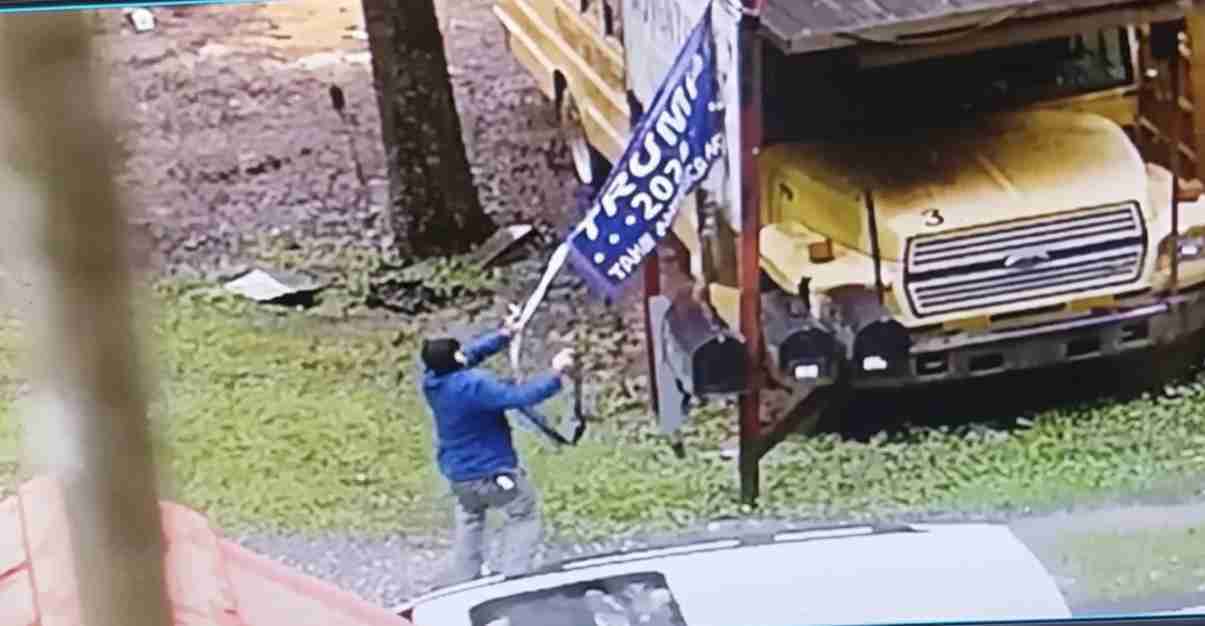
- Incident: CCTV shows a man remove a Trump banner, then an exchange of gunfire between the suspect and homeowner Mark Thomas.
- Charges: Multiple felonies include assault with a deadly weapon and discharging a firearm with intent to incite fear; possible prison time up to 17 years.
- Evidence: Security video and social media posts helped identify the suspect and prompted a manhunt.
Key information
- Date: Sept. 5, 2025. Location: Paddle Inn Rafting Company, Highway 19 West, Swain County, N.C. (CCTV captured the incident.)
- Suspect: Benjamin Michael Campbell, 38, an accountant; arrested Sept. 30 in Cobb County, Georgia, and extradited to Swain County.
- Victims/Property owners: Ardis and Mark Thomas, owners of the Paddle Inn Rafting Company. The Trump banner was displayed near their home and business.
- Charges: Assault with a deadly weapon with intent to kill or inflict serious injury; discharging a firearm with intent to incite fear; willful/wanton injury to personal property. Released on bond; additional charges possible.
What happened
Surveillance footage shows a man in a Jeep Cherokee stop on the two-lane highway outside the Thomas family property, back up, exit the vehicle wearing what Mark Thomas described as an “Antifa-looking mask,” and tear down a Trump banner near the family’s yard and business. The man then attempted to obscure his license plate and hide his identity.
After reviewing the footage, Mark Thomas — who lives and runs the family rafting business with his wife Ardis and describes himself as a gun-rights supporter and hunter — went out to confront the person he saw. According to local reports and law enforcement statements, Thomas fired two warning shots into the air after observing the banner being ripped down. The suspect returned fire, shooting several times in the direction of the homeowners. The exchange was captured on security cameras and later posted to social media.
“The encounter underscores the growing political divide — sometimes some people just snap,” Mark Thomas said, expressing shock and concern about the incident on his family property.
Investigation and arrest
Swain County Sheriff Brian Kirkland led the initial investigation. Authorities identified the suspect as Benjamin Michael Campbell, 38, and located him in Cobb County, Georgia. Campbell was arrested on Sept. 30 and extradited back to Swain County to face charges. Sheriff Kirkland told reporters that Campbell was released on bond and cautioned that investigators might pursue additional charges as the probe continues.
News reports describe Campbell as an accountant. Law enforcement officials said the suspect attempted to obscure his identity at the scene, prompting questions about whether the act was impulsive or planned — the mask and plate-obscuring raised investigators’ interest in possible premeditation.
Charges and legal issues
Campbell faces felony counts including assault with a deadly weapon with intent to kill or inflict serious injury, discharging a firearm with intent to incite fear, and willful/wanton injury to personal property. Those felonies carry significant penalties under North Carolina law; convictions on multiple counts could result in up to 17 years in prison.
Authorities have provided limited details about any plea negotiations or potential defenses. As the case moves through the court system, prosecutors may add or adjust charges based on additional evidence. The incident raises likely legal debates about self-defense claims, property rights, and the limits of confrontation over political symbols.
Community reaction and personal impact
On the Thomas property, the event left visible shock. Ardis Thomas said the act of tearing the banner seemed both impulsive and strangely calculated, given the suspect’s attempts to hide his face and plate. For the Thomases — a multi-generational, family-run rafting business — the incident prompted fear and caution about how they display political materials and run their operations.
Local residents noted the footage and arrest drew regional and national attention, amplifying concerns about similar confrontations. The episode has become a personal reminder to the family and neighbors that political symbols can escalate into dangerous encounters.
The role of video in the investigation
Security camera footage was central to reconstructing the incident: it shows the suspect’s Jeep, the approach to the banner, the removal of the sign, and the exchange of gunfire. The video posted widely online, leading to rapid public response and media coverage that pressured law enforcement to act quickly. Authorities urged the public not to draw legal conclusions from short clips and to let the investigation proceed through proper channels.
The surveillance video is available publicly and was cited in multiple reports; it both aided investigators and intensified public debate and speculation.
Political polarization: local incident, national mirror
Local media and commentators framed the shooting as a snapshot of broader political polarization nationwide, where campaign signs and flags have become flashpoints. Experts point to intense rhetoric, identity-based politics, and weakening civic ties as drivers of such clashes. Some view the removal of the banner as political protest; others see it as criminal vandalism that escalated to violence. For the Thomases, the line between protest and crime blurred, leaving a family business exposed.
Implications for Las Vegas, Nevada
- Economic impact: Las Vegas’s tourism-dependent economy could be sensitive to perceptions of political tension. Business owners displaying political signs may face copycat vandalism or disruptions that affect operations and visitor decisions.
- Political consequences: As a competitive urban center, Las Vegas may see such incidents used in campaigns to argue for public-safety measures or to highlight political extremism.
- Social effects: Diverse, tightly connected neighborhoods could feel pressure to promote civic norms and de‑escalation efforts to prevent similar confrontations.
- Cultural relevance: The clash challenges Las Vegas’s balance of expressive freedom and a safe, hospitable environment for residents and visitors.
- Practical steps for residents: Review local signage ordinances, improve lighting and camera coverage, communicate with neighbors, avoid direct confrontations, and report vandalism safely.
- Policy considerations: City leaders and law enforcement may evaluate whether current laws deter politically motivated vandalism and appropriately balance property rights, free expression, and public safety.
Reporting sources and documentation
- Washington Times
- WLOS (report)
- WPDE (report)
- WLOS coverage of vandalism and CCTV
- Surveillance video posted to YouTube
Reporting and civic responsibility
This report draws on local news coverage and police statements, including reporting by Washington Times, WLOS and WPDE, as well as a publicly posted security video. (Reporting by Times Media Service.)