Democrats push “robot tax” as Senate report warns AI could displace 100 million U.S. jobs
Sen. Bernie Sanders and Democrats are urging Congress to adopt a ‘robot tax’ after a Senate HELP Committee report warns AI and automation could displace 100 million U.S. jobs over the next decade, triggering debate over retraining and benefits.
- Major warning: A Senate HELP Committee analysis finds up to 100 million U.S. jobs could be at risk from AI and automation within ten years, with 15 of 20 workforce sectors highly vulnerable.
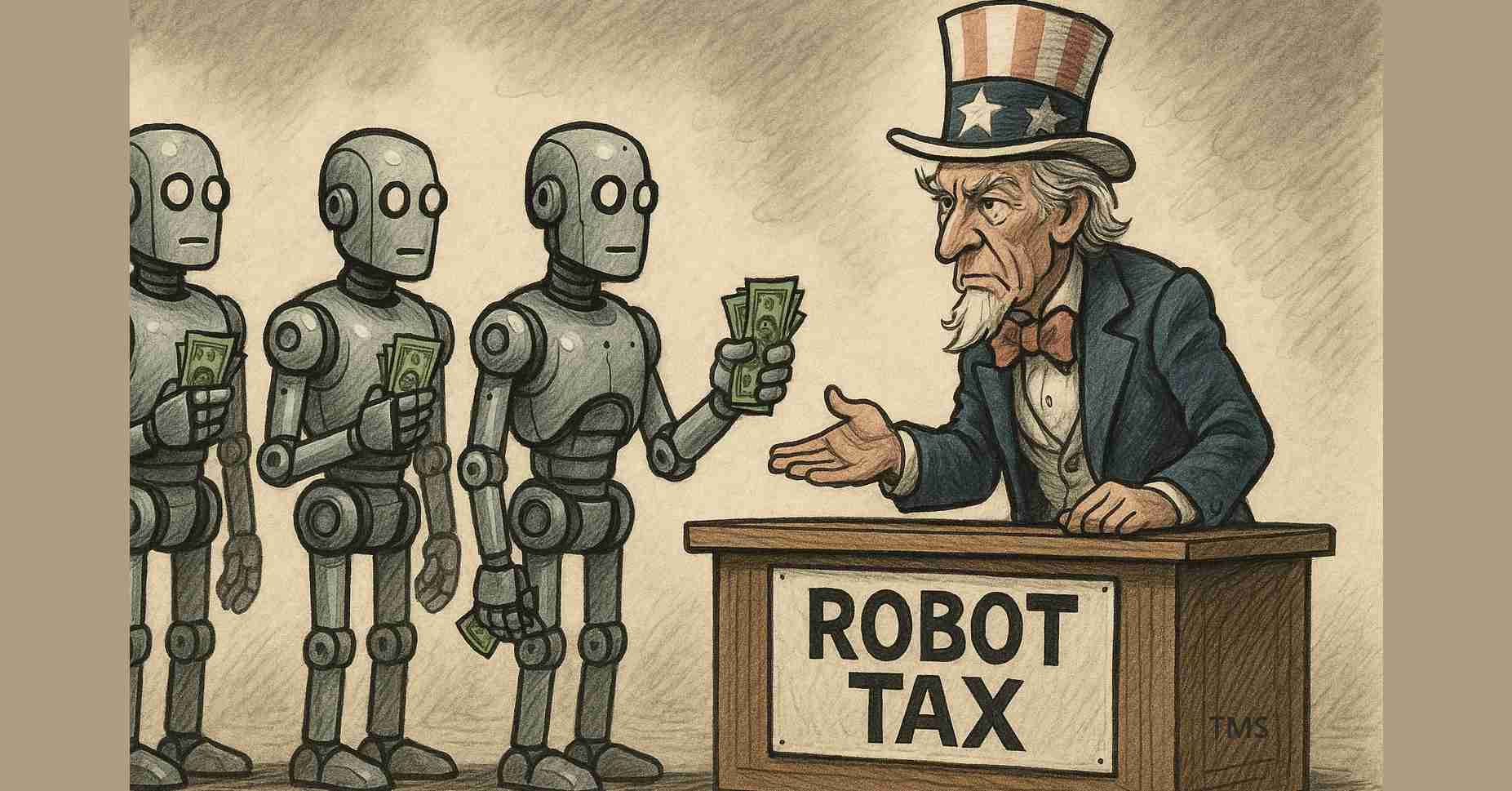
- Proposal: Democrats led by Sen. Bernie Sanders propose a robot tax on employers that replace human roles with machines, algorithms or AI to fund retraining and benefits.
- Fast-food risk: Fast food and counter workers face the steepest threat—an estimated 89% automation rate affecting more than 3 million jobs.
- Debate: Supporters say the tax shares gains and funds transitions; opponents warn it could stifle innovation, encourage offshoring, or be gamed by firms.
What is the “robot tax” being proposed?
Supporters describe the robot tax as a levy on employers for each human job replaced by automation or an AI system. The goal is to capture some gains from replacing labor with machines and direct revenue to reskilling, job placement, and income support for displaced workers. Reporting on the proposal references analysis in Mitrade and Mexc.
Why Democrats say a robot tax is needed
Lawmakers pushing the plan, including Sen. Bernie Sanders, argue the country faces an economic crossroads. They warn unchecked automation could allow firms to reap large profits while workers and communities bear the costs. Sanders and allies cite the HELP Committee analysis in coverage by The Daily Beast and Fox Business as evidence.
The HELP report’s sector-by-sector findings
The Senate analysis used a mix of established research and newer forecasting tools to estimate vulnerability by sector. It found that 15 of 20 major workforce sectors could lose a majority of jobs to automation. Notably, fast food and counter workers top the risk list with an estimated 89% automation rate—potentially eliminating more than 3 million jobs within ten years, as reported by Fox Business and Yahoo. Other occupations cited include customer service representatives, freight and material movers, and executive assistants; some analyses project nursing and truck driving could face losses as high as 40% and 47% respectively (Tech.co).
How the report was produced — and the role of AI
The report drew on established research and newer forecasting tools. Significantly, analysts used OpenAI’s ChatGPT to help model sector-specific impacts—an example of AI being used to study itself. That methodological choice has prompted questions from critics who note models depend heavily on assumptions and can over- or understate real-world effects (Yahoo).
Who supports and who opposes the robot tax
Supporters: Progressive Democrats and labor groups seeking protections for displaced workers back the idea, arguing companies profiting from automation should shoulder social costs. The concept echoes earlier public statements by figures like Bill Gates, cited in coverage by Mitrade and Mexc.
Opponents: Economists and tech advocates warn a robot tax could slow innovation, reduce investment, and harm competitiveness. Critics also say firms may relocate or reclassify automation to avoid levies, undermining policy goals; see analysis in Reason.
What the revenue would pay for
Lawmakers propose directing robot tax revenue to worker supports: retraining programs, job search assistance, and a transitional safety net. Backers argue targeted programs could reduce long-term unemployment and help communities adapt, while critics question whether funds would scale quickly enough to match potential job displacement (Mitrade; Mexc).
Practical questions lawmakers must answer
- How to legally define a “robotic” replacement: software, machine, or hybrid?
- How to measure jobs “lost” versus jobs transformed by automation?
- Would a tax prompt relocation, reclassification, or strategies to avoid levies?
These questions drive calls for detailed hearings and rigorous data before any tax becomes law (Fox Business; Reason).
The political landscape
National stakes: The proposal has drawn attention because it touches on fairness, technological progress, and the government’s role in managing economic change. Sanders and other Democrats frame the debate around shared prosperity and corporate responsibility (The Daily Beast; Fox News opinion), while Republicans and free-market advocates caution heavy-handed taxes could slow growth (Reason).
Implications for Las Vegas, Nevada
Las Vegas’s economy depends heavily on hospitality and service roles—sectors the HELP report flags as highly vulnerable. Local implications include:
- Economic impact: Casinos, hotels and restaurants could face major shifts in payroll and hiring if automation accelerates; the HELP estimate that fast food/counter jobs face an 89% automation risk is especially concerning (Fox Business; Yahoo).
- Jobs and retraining: A robot tax-funded program could support local retraining in hospitality tech, culinary automation integration, and customer experience roles; community colleges and workforce boards would be key partners (Mitrade).
- Political consequences: Nevada’s competitive politics mean the tax and AI job displacement will be campaign issues, with moderates weighing innovation concerns against worker protections (The Daily Beast; Reason).
- Social effects: Rapid job loss in service roles could increase demand for public services and strain families facing high housing costs; timely, local support funded by a robot tax could ease transitions (Mitrade).
- Cultural relevance: Las Vegas values face-to-face hospitality and entertainment; policies that balance automation with human-centered service could preserve the city’s cultural brand while helping workers adapt (Tech.co).
Reporting notes and sources
This article draws on reporting and the Senate HELP Committee analysis cited in multiple outlets covering the debate. Sources include:
“Journalists and policymakers in Nevada and Washington are now watching hearings and legislative steps closely. The next phase will test whether lawmakers can design a policy that protects workers without halting innovation or shifting jobs out of reach.”