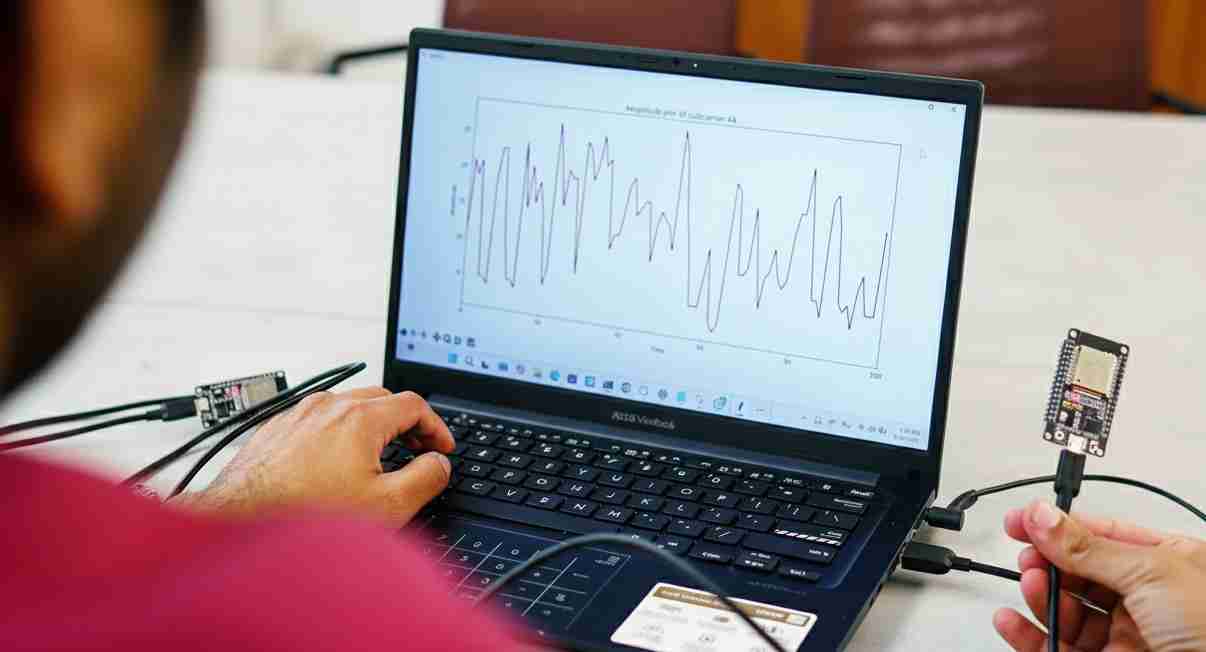
Wi‑Fi heartbeat monitor from UCSC can read your pulse without wearables — a breakthrough called Pulse‑Fi
Researchers at the University of California, Santa Cruz unveiled Pulse‑Fi, a system that reads heartbeats using standard Wi‑Fi signals without wearables, offering fast, affordable, contactless pulse monitoring powered by radio‑signal processing and machine learning in healthcare.
- Contactless monitoring: Pulse‑Fi uses off‑the‑shelf Wi‑Fi hardware to detect heartbeats without physical contact.
- Fast and accurate: The system can estimate heart rate to within about 0.5 beats per minute after a few seconds and works at distances up to ~10 feet.
- Low cost: Transmitters based on ESP32 chips can be built for under $10; Raspberry Pi setups improve accuracy while remaining inexpensive.
- Open research context: The project adds to RF vital‑sign sensing literature and was presented at IEEE DCOSS‑IoT 2025.
How Pulse‑Fi works
Wi‑Fi routers and simple radio chips emit radio frequency (RF) waves that interact with the human body. Tiny chest and vessel movements caused by each heartbeat produce minute variations in the received RF signal. Pulse‑Fi records those tiny changes at the receiver and feeds them into a machine model trained to extract heartbeat patterns from ambient noise. The team documented this process and the dataset in their UCSC release and conference materials.
The UCSC researchers built their own paired dataset because no public dataset existed for heartbeat effects on inexpensive Wi‑Fi chips. They synchronized standard pulse oximeters with ESP32 and Raspberry Pi hardware to capture ground truth beats while recording RF changes, enabling models that filter room noise, body orientation effects and small motions.
Performance and limits
In lab tests Pulse‑Fi estimated heart rate to within about 0.5 beats per minute after five seconds of data collection. Longer observations and higher‑end receivers (Raspberry Pi setups) increased stability. The technique performed at distances up to roughly 10 feet and did not require the subject to face the device, improving on some earlier radio‑based methods.
Researchers caution this is early work: accuracy may be affected by environmental factors such as competing wireless traffic, room layout, calibration, and subject movement. The team and reviewers note that clinical trials and further testing are required before hospital adoption. Privacy and ethics — including consent and data governance — are significant open issues.
Why this matters
Traditional remote heart monitoring typically requires wearables or clinical monitors that must be purchased, charged, and worn. Pulse‑Fi’s contactless sensing reduces friction and cost by using common commercial off‑the‑shelf Wi‑Fi components, potentially expanding continuous monitoring to low‑resource clinics, homes, and telemedicine programs.
Practical advantage: For older adults, patients with chronic conditions, and caregivers, a system that monitors vitals without a device on the body could increase adherence and reduce equipment cost.
Broader research context
Pulse‑Fi is part of a growing field extracting vital signs from ambient wireless signals, combining signal processing, machine learning and inexpensive hardware. Related academic work appears in venues such as the ACM digital library and the system was presented at IEEE DCOSS‑IoT 2025 with dataset and experimental details.
Hardware and cost
The system runs on low‑cost components. ESP32 microcontroller boards are widely available for roughly $5–$10 and can act as transmitters or receivers. Raspberry Pi devices sample richer Wi‑Fi data and can improve accuracy while keeping overall costs below many commercial pulse monitors.
Future directions
The UCSC team is extending Pulse‑Fi to detect respiration as well as pulse, which could enable sleep and respiratory monitoring (for example, early detection of sleep apnea or respiratory distress). They also aim to improve robustness across diverse room types and to handle multiple people in range concurrently.
Ethics and privacy questions
“A technology that reads physiological signals from ambient Wi‑Fi raises serious questions about consent, ownership of biometric data, and covert collection in public spaces.”
Key concerns include: who owns and controls biometric data, how it is stored and secured, and whether it could be collected without individuals’ knowledge in airports, casinos, hotels or other public venues. Privacy experts and regulators will need to develop rules that balance public benefit with individual rights.
Implications for Las Vegas, Nevada
Las Vegas is a tourism, hospitality and conventions hub. Low‑cost, contactless monitoring like Pulse‑Fi could be adopted by hotels, long‑term care facilities and event venues to monitor guests or residents’ health more easily. That may reduce response times in emergencies and lower costs.
Political and regulatory considerations: Nevada and Clark County leaders will need to weigh innovation against privacy and liability; local hospital systems may seek clinical trials and standards before clinical use. Socially, the technology could aid older adults and shift workers, but it also raises surveillance concerns in casinos and arenas that must be addressed via consent policies.
Practical applications for Las Vegas residents include home monitoring for chronic patients, outpatient trials by regional hospitals and UNLV‑affiliated clinics, and potential use by emergency responders for quick, contactless checks in crowded scenes.
Next steps for local stakeholders
- Convene health systems, the Nevada Division of Public and Behavioral Health, and privacy advocates to explore pilots and data rules.
- Design public education about benefits and risks to workers, residents and visitors.
- Pursue clinical trials, device standards and reimbursement pathways before clinical deployment.
Sources and further reading
- UCSC news release on Pulse‑Fi
- Tom’s Hardware coverage
- Earth.com piece on Pulse‑Fi
- Environmental News Network (ENN) summary
- Related academic literature on RF vital‑sign sensing (ACM)
Reporting: Santa Cruz (Times Media Service). Local analysis for Las Vegas stakeholders and officials.