Zuckerberg AI glasses demo fails in front of crowd as Meta Ray-Ban smart glasses struggle at Meta Connect
At Meta Connect 2025 in Orlando, CEO Mark Zuckerberg’s live demo of Meta’s AI-powered Ray‑Ban smart glasses malfunctioned onstage as server overload and software bugs — not just Wi‑Fi — caused two live demos to fail publicly.
- Two of three live demos — including the cooking assistant and a WhatsApp video call demo — malfunctioned onstage.
- Meta’s CTO said a surge from the Live AI feature activating many devices overwhelmed development servers.
- Meta later clarified the issues were server capacity and software bugs, and said fixes were deployed after the event.
What happened onstage
Meta staged a high-profile demo at Meta Connect 2025 to show Live AI features built into the next-generation Meta Ray‑Ban smart glasses. The glasses are billed as wearable AI that can process what the wearer sees and speak instructions aloud or display guidance in the wearer’s field of view.
One demo featured chef Jack Mancuso wearing the glasses while the AI guided him through a recipe. The system began correctly listing ingredients, but then made logical errors about whether steps had been taken — claiming base ingredients were combined when no action had occurred — showing the assistant was not following live context accurately (CNET, Futurism).
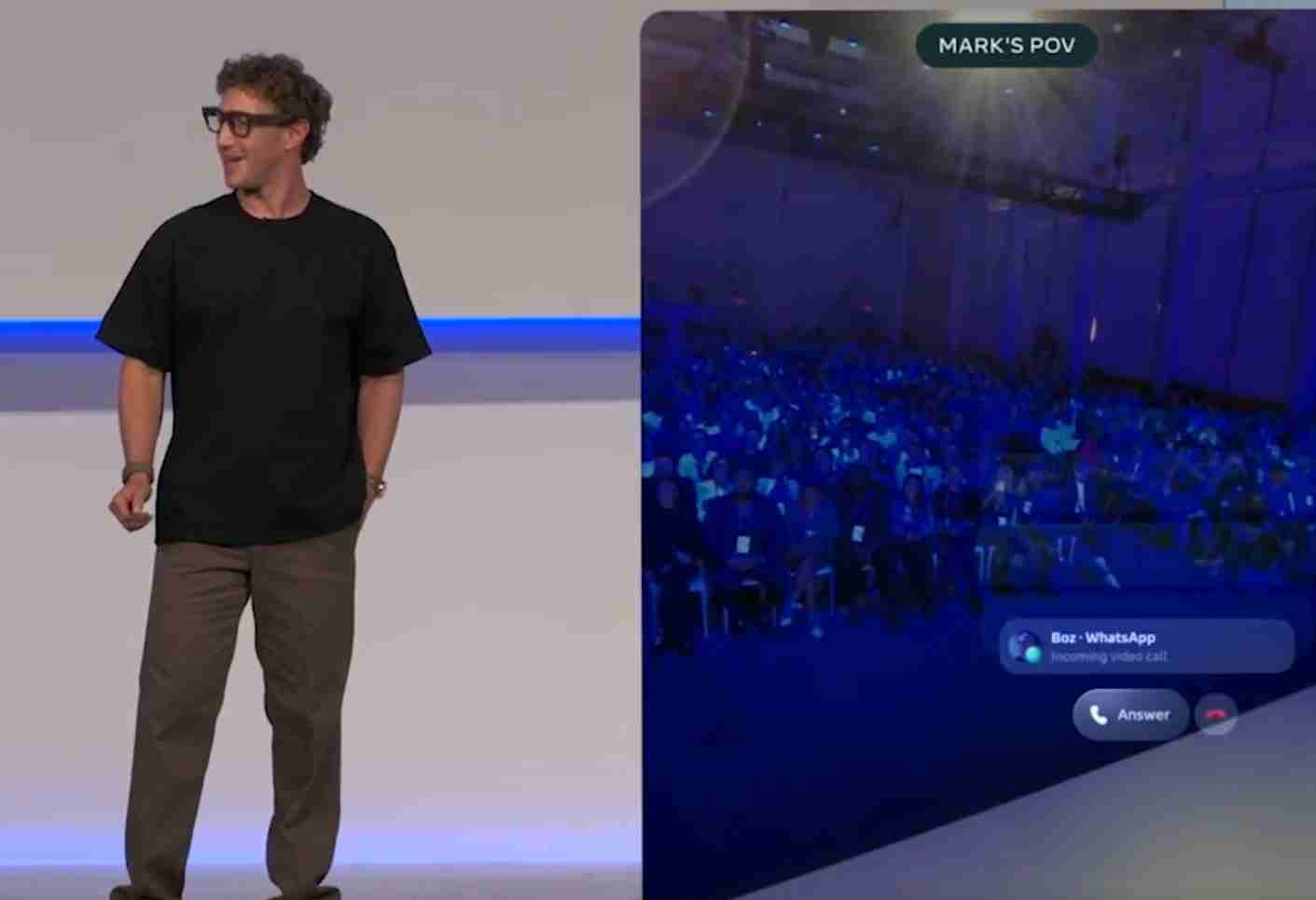
A second onstage demo intended to show WhatsApp video calling failed when the glasses’ display went dark as a call arrived; the interface had gone to sleep and onstage users had no visible option to answer. Meta later said that UI bug was discovered and patched after the event (CNET, TechCrunch).
Why Meta says the demos failed
Meta’s engineering leadership pushed back on the idea that poor venue Wi‑Fi alone caused the problems. CTO Andrew Bosworth explained that the Live AI feature inadvertently triggered on many Ray‑Ban devices in the room — potentially thousands given the venue’s capacity — creating a surge of simultaneous requests that overwhelmed development servers.
“A self-inflicted denial-of-service like event,” Bosworth said, noting that the spike in real-time vision processing requests exposed server and software limits.
Zuckerberg initially suggested unstable Wi‑Fi during the presentation, but Meta’s follow-up statements made clear that server capacity and software bugs were the primary causes and that critical fixes were deployed after engineers reviewed logs (CNET, TechCrunch).
Technical and human reactions
Video clips and audience reactions spread quickly across social platforms. Attendees described awkward silences, stares and muted laughter as the AI behaved unpredictably. Tech outlets used terms like “cringeworthy” to describe the onstage moments (Futurism, Meyka).
Industry analysts and engineers noted that live demos at scale are risky: demonstrations can expose edge cases and integration problems that do not appear in lab tests. Bosworth defended the live-demo approach, arguing public tests reveal real-world stressors that are hard to reproduce privately (TechCrunch).
The larger stakes for Meta
Meta has invested tens of billions into AI and mixed-reality wearables. The company positions devices like the Gen 2 Meta Ray‑Ban smart glasses — priced around $799 — as a long-term path to keep users in its ecosystem and open new revenue streams (Futurism).
The public failure highlighted the risk of cloud-dependent, real-time vision AI: any bottleneck in servers, networking or software logic can affect real-world reliability, exposing a “reality gap” between marketing promises and practical performance (Futurism, Meyka).
What Meta fixed and what remains
Meta reported that the specific bugs causing the WhatsApp UI to sleep and the cooking-demo logic errors were patched after engineers reviewed failure logs. Bosworth described the problems as correctable and tied to the stress of simultaneous device activation at the venue (TechCrunch, CNET).
However, observers caution that patching a few bugs doesn’t solve the broader scaling challenge: real-time vision AI must handle varied lighting, movement, occlusion and rapid interaction — variables that complicate consistent performance (Futurism).
Media coverage and public perception
News outlets published video clips and critical analysis almost immediately. Coverage mixed technical explanation with mockery; social platforms amplified the moment and shaped impressions beyond the tech community. Commentators framed the incident as a cautionary tale about overpromising in the AI era (Futurism, CNET, Fox News).
Implications for Las Vegas, Nevada
Economic impact: Las Vegas hosts many conventions and demo-driven events. A public stumble for a high-priced gadget like the $799 Ray‑Ban model could slow early consumer enthusiasm and affect local retailers, demo companies and experiential vendors.
Political consequences: Local officials who promote tech investment may face calls for cautious policies and clearer rules on wearable AI, especially around data handling and consumer transparency.
Social effects: Many Las Vegas workers in hospitality and entertainment could see job workflow changes if wearables become common; unions and employers may demand clearer guidelines before adoption.
Cultural relevance: In a city built on live spectacle, onstage failures resonate strongly and may shift interest toward practical, well-tested use cases rather than headline-grabbing demos.
Practical advice: Residents and local businesses should insist on robust testing for cloud-dependent tech in crowded venues. Event planners, hotels and casinos should evaluate network provisioning and backup plans before deploying live AI features.
Sources and further reading
- Futurism: Mark Zuckerberg AI glasses demo fails
- CNET: Bad luck for Zuckerberg
- TechCrunch: Meta CTO explains why smart-glasses demos failed
- Meyka: Zuckerberg’s AI glasses demo ends in embarrassing tech fail
- Fox News: AI newsletter on Zuckerberg’s demo fail
- Event video clips:
Reporting from Orlando.