Palantir CTO pushes back on Sanders, says AI fuels blue-collar productivity boom — not mass layoffs
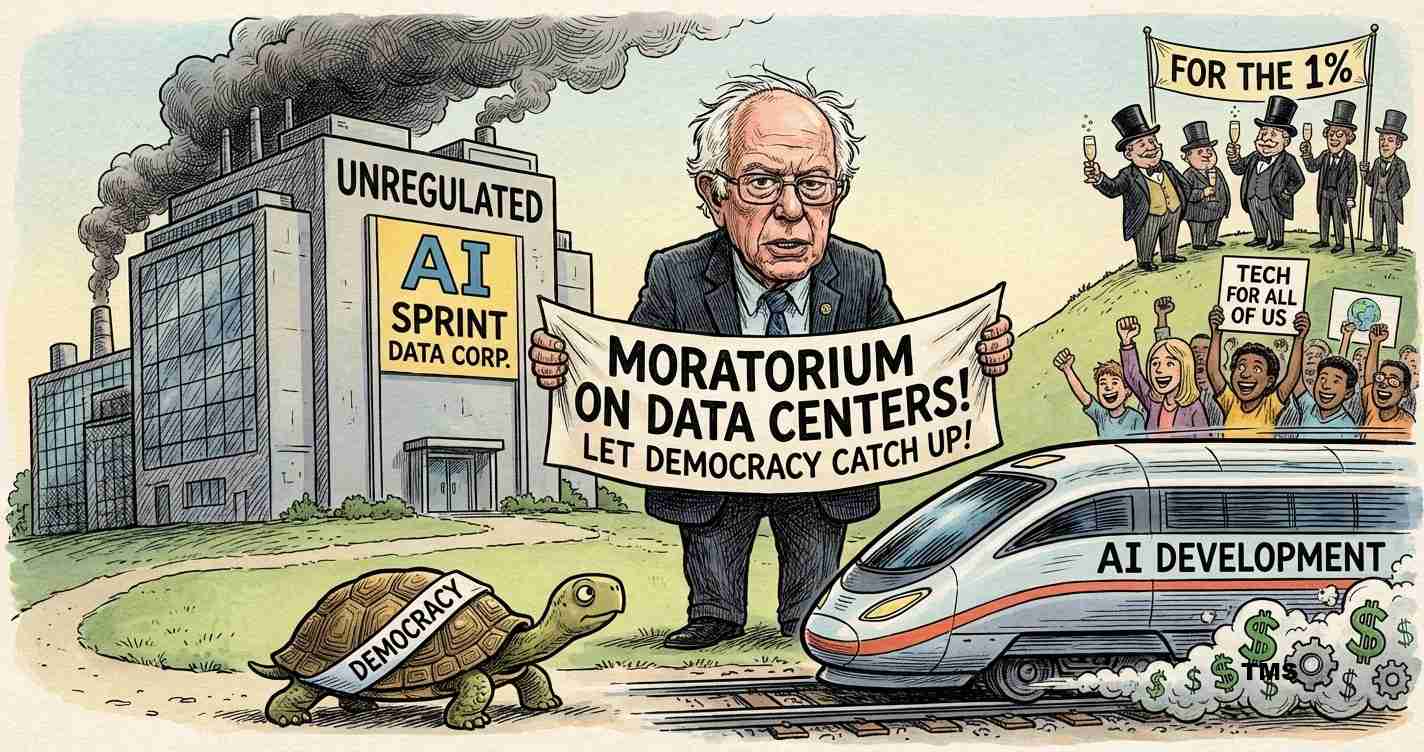
Palantir CTO Shyam Sankar pushed back on Sen. Bernie Sanders’ prediction of “massive unemployment,” saying AI is boosting blue-collar productivity and hiring in U.S. manufacturing and healthcare, disputing calls for a moratorium on new AI data centers.
Key takeaways
- Shyam Sankar says AI is “fueling a blue‑collar productivity boom,” shortening training and enabling employers to add shifts and hire more workers (Fox Business).
- Bernie Sanders warns AI and robotics could eliminate “millions of jobs” and has proposed a moratorium on constructing new data centers to slow deployment (Fox Business).
- Examples cited include accelerated training at Panasonic Energy in Nevada and AI tools that reduce paperwork in hospitals — evidence is anecdotal and broader labor-market study is needed.
Sankar’s claim: AI boosts blue-collar jobs and skills
Palantir Chief Technology Officer Shyam Sankar told Fox Business that near‑term AI gains are most pronounced on the front lines — in factories and hospitals — where systems can reduce paperwork, guide workers through complex tasks, and improve planning. Sankar argues those improvements make production more profitable, enabling firms to add shifts and hire more people.
Concrete examples Sankar cites
Sankar described several field examples he says show how AI can expand access to skilled work:
- Panasonic Energy, Nevada: AI-enabled training that converted former casino workers into battery technicians in about three months — compared with roughly three years of traditional apprenticeship (Fox Business).
- Manufacturing line management: AI tools that handle production planning and labor scheduling let foremen focus on running lines, potentially removing bottlenecks and supporting a third shift (Fox Business).
- Hospital and ICU care: Systems that surface patient context and reduce clerical burden allow nurses to spend more time on direct care, where time matters most (Fox Business).
Sankar’s broader argument: apply AI to real work
In his essay “Technology is the Problem”, Sankar contends the U.S. has over‑focused on building models and data centers (the “supply side”) and underinvested in integrating those tools into workflows (the “demand side”). When AI is embedded in daily operations, he says, it can raise wages and create opportunities rather than just displace labor.
Sanders’ warning and the AI moratorium push
Sen. Bernie Sanders, in a public video, warned that AI and robotics could eliminate “millions of jobs” and said people would lose incomes without protections. He announced plans to press for a moratorium on construction of new data centers that power large AI systems to “give democracy a chance to catch up” and ensure benefits are broadly shared (Fox Business).
“How will people survive if they lose their incomes?” — Sen. Bernie Sanders (public video)
Palantir’s incentives and market pitch
Palantir markets data‑integration and decision platforms to governments and industry and frames AI as a tool to empower frontline workers — nurses, technicians, maintenance crews — rather than solely replacing white‑collar jobs. Sankar’s public writing and investor summaries emphasize embedding tools in daily work to generate measurable economic value (Sankar essay; investor summary).
Tensions and unanswered questions
The exchange spotlights several open issues:
- Time horizon: Sankar points to current narrow-AI deployments; Sanders warns future robotics and more general AI could have broader job impacts.
- Distribution: Even if productivity rises, who captures the gains — workers, firms or shareholders? Sanders stresses gains often flow to capital.
- Evidence: Sankar’s examples are largely anecdotal and company-specific; broader labor-market studies are needed to measure net job creation or displacement (coverage summary).
- Governance: A proposed moratorium on data centers raises questions about energy policy, economic growth and who decides regulatory rules.
Implications for Las Vegas, Nevada
Las Vegas remains tourism- and hospitality-centered, but is also attracting manufacturing and logistics roles. The Panasonic Energy retraining example suggests a path for casino workers to transition into higher-paying roles in EV supply chains if short training windows and hiring follow. Local officials and labor leaders may diverge on the moratorium: some fear job loss from automation; others see retraining and attraction of factories as opportunities (Fox Business).
Social and cultural effects
Retraining hospitality workers into manufacturing roles could reduce job insecurity for Las Vegas families, but not every worker will be able or willing to switch paths. Investments in education, apprenticeships and on‑the‑job AI training will determine how widely these opportunities spread. Rapid automation in hospitality could also clash with the city’s service‑focused culture.
Practical advice for residents and policymakers
- Job seekers: Watch for training partnerships between manufacturers, community colleges and employers; targeted retraining can be effective (Panasonic example).
- Employers: Pilot AI tools to improve scheduling and reduce wasted labor hours, potentially expanding shifts and hiring.
- Policymakers: Any moratorium on data centers would affect local planning, energy policy and economic development; balance and public debate are necessary.
Reporting and sources
Key reporting and background for this article include the Fox Business interview and coverage of Sankar’s comments, Sankar’s essay “Technology is the Problem”, a summary piece at Moomoo, and an investor summary at MLQ.ai.