Waymo robotaxi reportedly drove off with passenger’s luggage at SJC, raising questions about trunk protocols and lost‑and‑found rules
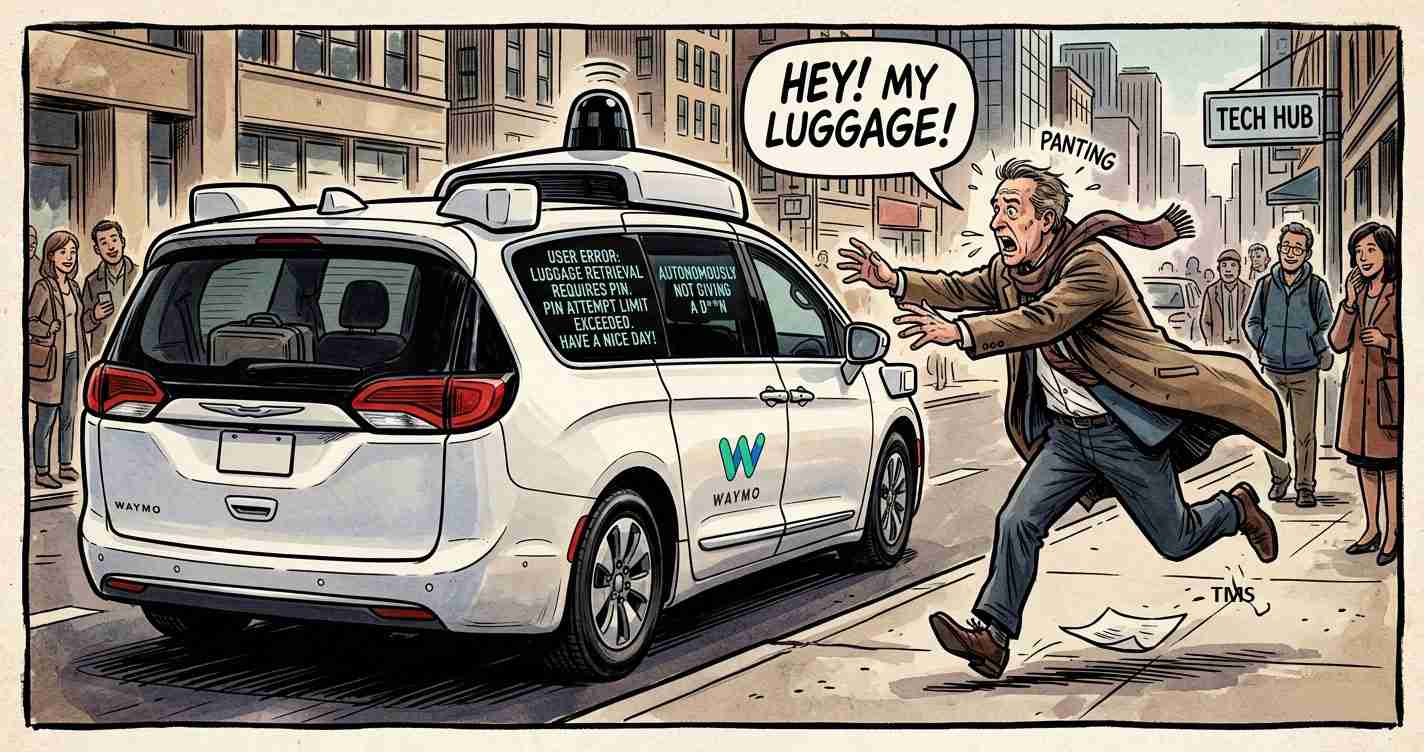
A Waymo robotaxi reportedly left passenger Di Jin’s luggage in its trunk at San José Mineta International Airport, then drove to a depot, raising questions about trunk‑release protocols, remote support and Waymo’s lost‑and‑found policies for airport trips.
- Passenger account: Di Jin of Sunnyvale says the trunk wouldn’t open and the unmanned Jaguar I‑PACE departed with his suitcase.
- Company response: Waymo later said the bag was secured at a depot and agreed to cover shipping after initial offers.
- Policy angle: Waymo help pages outline trunk controls and limited lost‑and‑found guarantees, raising concerns about gaps when no human driver is present.
What was reported about the ride
Trip details: Rider Di Jin of Sunnyvale, on his first Waymo trip, rode from Sunnyvale to San José Mineta International Airport (SJC). He says the drive itself was smooth, but problems began at the curb when he could not access his bag.
Jin reports he pressed the physical trunk release above the rear license plate and used the app’s “Open trunk” control, but the trunk did not respond. After exiting, the unmanned Jaguar I‑PACE left the pickup point and proceeded to a depot, leaving Jin stranded curbside without clothes and work notes.
Unable to flag a driver, Jin said he contacted Waymo customer service. He was told the vehicle had already gone to a depot and could not be redirected in real time. Waymo later emailed that the luggage had been secured at a Waymo facility. Initially, Waymo reportedly offered free rides to retrieve the bag or to ship it at Jin’s cost; after pushback, the company agreed to pay shipping.
“I tried the trunk release and the app, but the trunk didn’t open and the car drove away,” the rider said in accounts shared with technology commentators.
How Waymo says trunks and lost items work
According to Waymo help pages, riders can open trunks by pressing the physical release above the license plate, tapping Open trunk in the Waymo One app, or waiting for the vehicle to fully stop and end the trip so the trunk opens automatically. Waymo warns the trunk may not open if a rider exits before the vehicle has officially pulled over and the trip ends.
Waymo’s lost‑and‑found guidance says support will try to reunite riders with left items but “cannot guarantee” items will be found, delivered immediately, returned undamaged or reimbursed for value. The company also states it is not responsible for items left behind once a trip ends.
Source notes and verification
This account is based on a rider’s report shared with technology commentators and Waymo’s public help material. A search of major national outlets did not find independent confirmation from organizations such as Associated Press, Reuters, The New York Times or BBC. Local Bay Area reporting documents Waymo’s airport expansion but does not corroborate this specific luggage incident.
Relevant source material referenced in reports includes NBC Bay Area coverage on Waymo airport operations, an Example Waymo airport service video (Phoenix), and a Demonstration of another company’s curbside robotaxi at SJC. Waymo’s site is available at Waymo help pages.
Why this matters: traveler trust and practical limits of robotaxis
The incident highlights a tension in autonomous mobility: passengers expect efficiency and safety but also the human safety net for real‑time problems. At airports — where schedules, luggage and business materials matter — trunk or retrieval failures can cause significant disruption.
- No immediate human intervention: With no driver on board, a passenger cannot physically stop the vehicle or ask the driver to retrieve items.
- Reliance on remote support: Riders depend on app controls and support agents who may not be able to reverse a vehicle’s route once it has returned to a depot.
- Policy gaps: Stated lost‑and‑found limits and non‑liability for items left after trip end can leave riders responsible for arranging returns.
Industry context and safety record
Waymo reports millions of autonomous miles and argues its systems reduce risk relative to human drivers. Airport rollouts require investments in mapping, curbside management and depot logistics to support high‑volume trips, but quirks in features like trunk behavior tied to trip status can still produce travel disruptions.
There is little public data on how often items are left in robotaxis or trunk failures occur. Regulators such as the California Department of Motor Vehicles oversee permits for autonomous vehicles but do not appear to mandate specific policies for lost items or trunk operations.
Implications for Las Vegas, Nevada
Economic impact
- Tourism and conventions: Smooth arrivals and departures are critical; luggage incidents could affect visitor satisfaction if robotaxis expand to Harry Reid International (formerly McCarran) and Strip pickup points.
- Hotel and ride‑service revenue: Perception of risk around luggage or timing could shift demand toward hotels, shuttles or traditional services, influencing local transportation markets.
Political consequences
- Local regulators: Officials in Las Vegas and Nevada may face pressure to review curbside rules and passenger protections for autonomous vehicles.
- Policy debates: Lawmakers balancing innovation and consumer protection could push for clearer requirements on trunk functions, oversight or insurance for lost items.
Social effects and cultural relevance
- Traveler anxiety: Frequent business travelers and convention attendees may be wary of using robotaxis for airport trips involving checked luggage or tight connections.
- Hospitality expectations: Las Vegas’s emphasis on immediate service could clash with systems that require extra steps to retrieve luggage.
- Branding risks: High‑profile mishaps at airports can circulate on social media and shape perceptions among planners and visitors.
Practical applications for travelers in Las Vegas
- Confirm trunk‑opening methods and whether hotel staff (valets or bell services) can assist at the curb before using an autonomous ride for airport travel.
- Keep essentials in a carry‑on personal item rather than placing critical items in a trunk that might be inaccessible if a trip ends unexpectedly.
- Photograph the vehicle — license plate and vehicle ID — before exiting, and confirm trip end in the app only after you retrieve items.
- Report problems immediately through the app and follow up in writing to create a record for recovery or reimbursement requests.
Source links for reference
- Waymo help pages
- NBC Bay Area coverage on Waymo airport operations
- Example Waymo airport service video (Phoenix)
- Demonstration of another company’s curbside robotaxi at SJC
Reporting notes
This article preserves the passenger’s account as reported through technology channels and Waymo’s public pages. Major national outlets had not independently corroborated this specific incident at the time of reporting. Waymo did not provide a comment about this particular case for those reports.