From Ivanpah’s glow and the birds: Inside the solar plant at the center of a green-energy fight
Ivanpah Solar Electric Generating System in California’s Mojave Desert has been both a landmark and a lightning rod — producing utility-scale solar power while drawing scrutiny over bird deaths, natural-gas use, costs and plans for partial closure.
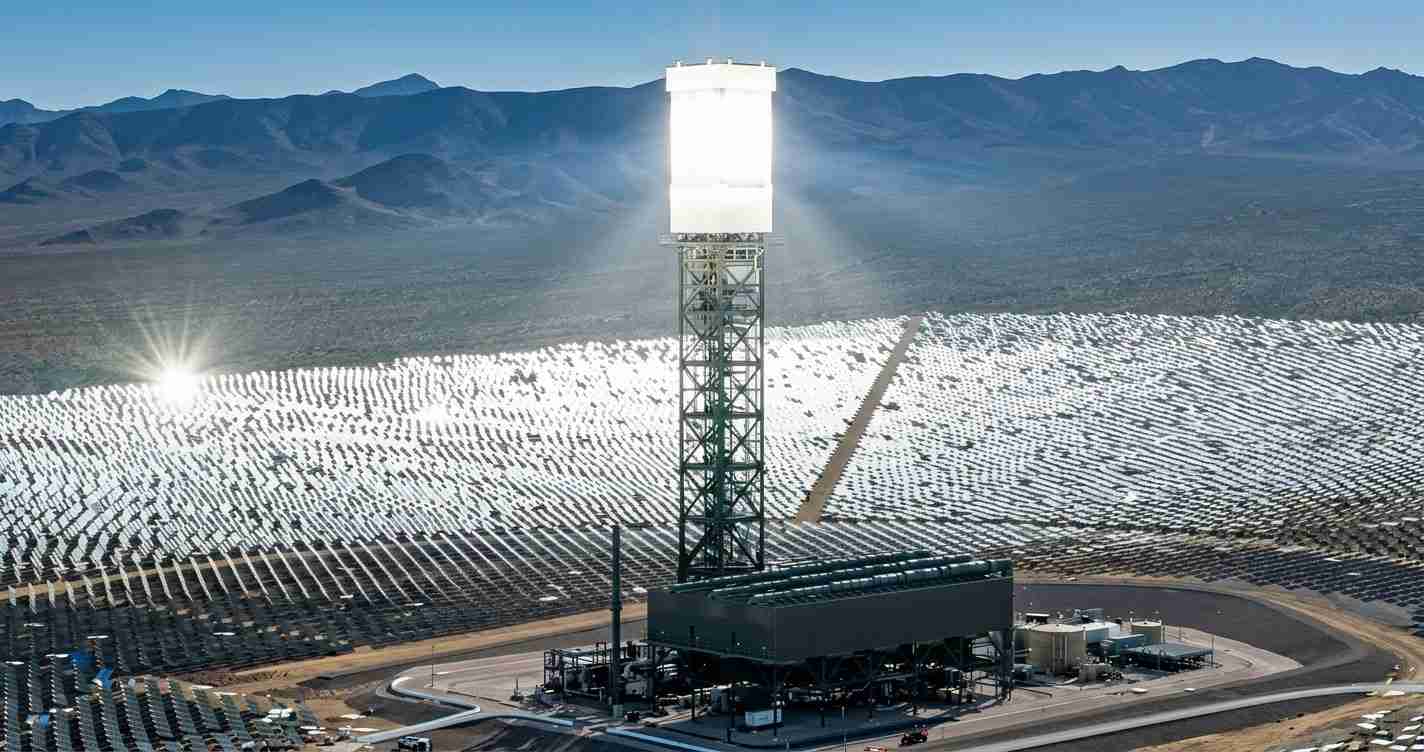
- Massive, centralized solar thermal plant with 173,500 heliostats concentrating sunlight onto three 450-foot towers.
- Wildlife toll: thousands of documented bird fatalities linked to concentrated beams of sunlight (solar flux).
- Natural gas backup: daily startup and stabilization use produces substantial CO2 emissions, complicating clean-energy claims.
- Economic and regulatory tug-of-war: high costs and federal support versus grid reliability concerns have led to plans for partial decommissioning.
Key information
- Name: Ivanpah Solar Electric Generating System (sometimes called Ivanpah Solar Power Facility).
- Location: Mojave Desert near the California–Nevada border, on roughly 3,500 acres.
- Technology: ~173,500 heliostats (software-controlled mirrors) reflecting sunlight to three 450-foot towers using BrightSource Energy’s power-tower approach; project summary at Bechtel and overview at Wikipedia.
- Capacity: About 386–392 megawatts; originally designed to produce up to about 940,000 MWh a year at target output (Wikipedia).
- Controversies: Documented bird deaths from solar flux, reliance on natural gas for startup, high operating costs, and large federal subsidies including loan guarantees and a Treasury grant (Wikipedia, Energy Department).
How Ivanpah works
Ivanpah uses a field of mirrors called heliostats. Each mirror tracks the sun and focuses light up to receivers atop three tall towers. The receivers heat water into steam, and that steam turns turbines to make electricity. The system uses BrightSource Energy’s Luz Power Tower 550 design and reaches very high temperatures in the receivers (Wikipedia).
Commercial operation began in 2014, when Ivanpah opened as the largest concentrating-solar power plant at the time; the Department of Energy wrote about the opening in a systems article (DOE).
Wildlife impacts and Ivanpah bird mortality
Researchers and monitoring reports have documented thousands of bird deaths linked to the plant. Bright, hot towers attract insects; birds feed on those insects and sometimes fly through concentrated beams of sunlight (a phenomenon called solar flux), which can injure or kill them in flight (Wikipedia).
“The issue has made Ivanpah a focal point in debates about wildlife impacts from large solar thermal installations.”
Operators and regulators report monitoring and mitigation efforts. Critics counter that the scale of losses — given the Mojave Desert’s role as bird habitat and migration corridor — is not trivial, and conservation groups, researchers and agencies continue study and scrutiny (agency reviews and literature).
Natural gas use and emissions
Despite being a solar facility, Ivanpah uses natural gas to start each day and to stabilize operations when sunlight shifts. That backup use produces tens of thousands of metric tons of CO2 annually — a point operators call a startup necessity, while critics say it undercuts claims the facility is fully “clean”.
This natural-gas dependency and related emissions are central to how policymakers and analysts measure the full environmental footprint of renewable projects.
Public funding and costs
Ivanpah was built with sizable public support: the Department of Energy provided roughly $1.6 billion in loan guarantees (Energy Department), and the U.S. Department of the Treasury provided a $539 million grant that covered roughly 30% of construction costs (Wikipedia).
The project was developed by a partnership including NRG Energy, Google and BrightSource Energy, with construction led by Bechtel. Even with federal assistance, Ivanpah’s electricity has been costly compared with newer solar-plus-storage options, driving calls to scale back or close the facility.
Regulatory actions and the path to partial decommissioning
Plans have shifted over time. The plant was at one point slated to close in 2026, but California regulators later reversed an initial shutdown decision, citing the plant’s role in grid reliability. In January 2025, owners announced that two units tied to Pacific Gas & Electric contracts (Units 1 and 3) are planned for closure beginning in 2026, pending approval by the California Public Utilities Commission; the remaining unit, under Southern California Edison, has been subject to separate buyout talks (Environment & Energy Leader).
Federal officials in multiple administrations have at times supported shutting the facility due to cost concerns and the availability of cheaper alternatives, while California regulators balance environmental protection with grid needs (Wikipedia).
Performance and output
Ivanpah’s early years showed it needed time to reach design output: in its first full year, the plant produced less than half of its advertised annual output. Performance improved over time and moved closer to target by 2017, but the plant’s contracted obligations and variable output shaped long-term economics (Wikipedia; AmecoSolar).
Why Ivanpah matters now
Ivanpah is a case study at the crossroads of debates over wildlife impacts, how to count emissions from systems that use fossil-fuel backup, and how public money should support energy transitions. The plant’s high profile influences how regulators and communities weigh environmental protection against reliability and cost.
Implications for Las Vegas, Nevada
- Economic and grid ties: Las Vegas sits in the broader Southwest power market and could feel downstream effects if Ivanpah units close; power contracts and capacity planning in Southern Nevada may be affected (Wikipedia).
- Environmental concerns: Bird and insect impacts at Ivanpah are part of a regional wildlife story; conservation groups in Nevada may watch California regulatory choices as precedent (DOE).
- Jobs and local economy: Partial decommissioning could affect operating staff, suppliers and nearby businesses that serve plant employees (Bechtel).
- Policy lessons: Las Vegas leaders may use Ivanpah as an example when evaluating future renewable builds, wildlife protections and cost controls (Energy Department).
Sources and reporting notes
Primary public sources used for this reporting include the Ivanpah entry on Wikipedia, Department of Energy pages (EDF overview; DOE systems article), Bechtel’s project summary, reporting on unit closures at Environment & Energy Leader, and archival operational notes at AmecoSolar.
Additional monitoring and federal research reports on bird mortality and solar flux are cited in agency reviews and scientific literature summarized in public records (see Wikipedia citations).
Regulators, operators and conservation groups continue to debate how best to weigh Ivanpah’s benefits and harms. Pending decisions by California regulators and utility buyers will determine whether the facility shrinks, changes operations, or moves toward a partial shutdown.