Big Bear Lake eaglets officially named Sandy and Luna after community vote, honoring longtime director Sandy Steers
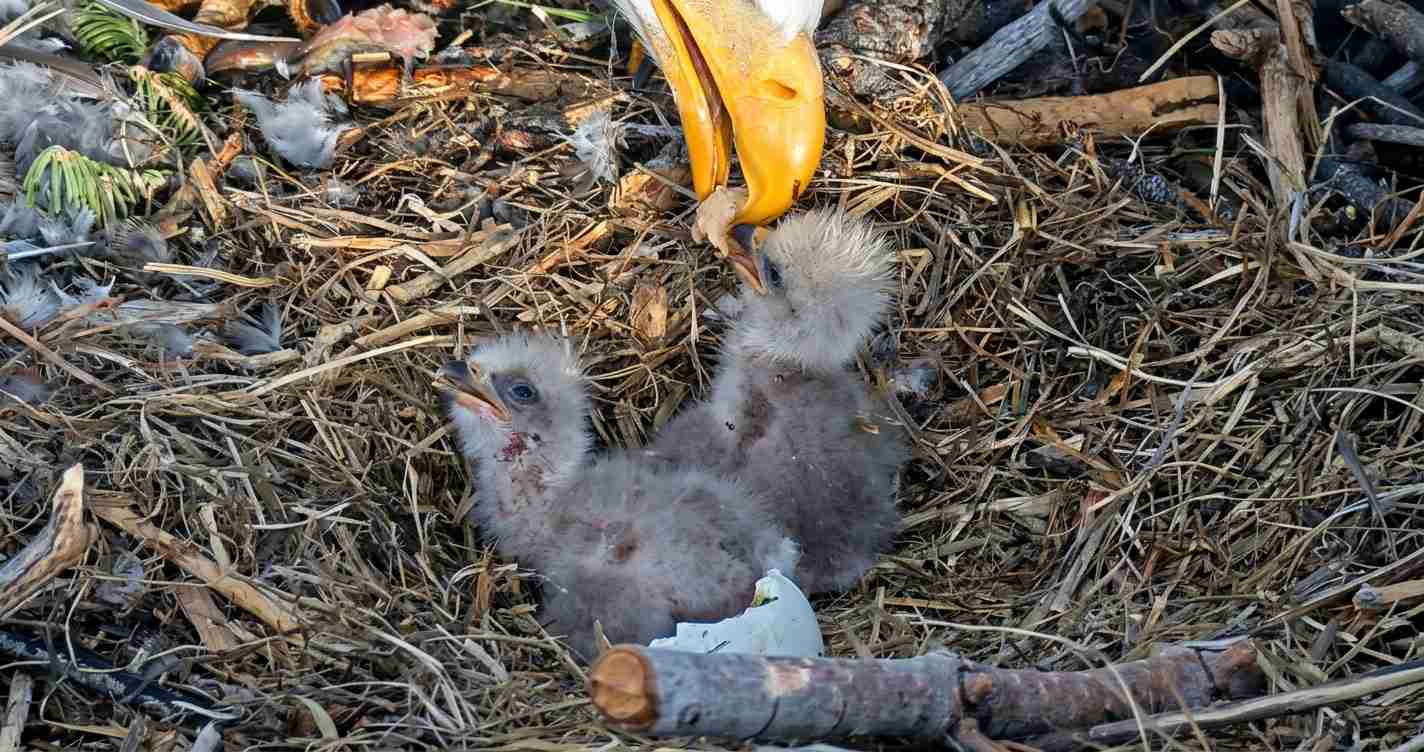
Big Bear Lake’s two new eaglets, hatched April 4–5, 2026, have been officially named Sandy and Luna after a community voting campaign led by Friends of Big Bear Valley, honoring longtime director Sandy Steers and engaging local students.
- Names chosen: Chick 1 (April 4) is Sandy; Chick 2 (April 5) is Luna.
- Community process: Nearly 63,915 submissions narrowed to 30 finalists; third-grade students cast the deciding votes.
- Tribute: Sandy honors FOBBV executive director Sandy Steers, who launched the nest cam in 2015 and died in February 2026.
- Follow live: Watch the 24-hour nest cam on the Friends of Big Bear Valley YouTube channel.
How the names were chosen
Friends of Big Bear Valley (FOBBV) opened a public naming campaign that drew 63,915 submissions nationwide. Organizers filtered the pool to 30 gender-neutral finalists, then printed ballots for area third-grade classrooms where students were studying bald eagles.
The students voted: Sandy received 30 student votes and Luna received 25. Runners-up included Star, Chip and Phoenix. The finalist list was chosen at random from public entries collected during a fundraiser that supports nest-cam operations and valley programs.
Sources: ABC7: Big Bear eaglets officially have names — Sandy and Luna, LAist: Sandy and Luna — how the names were chosen and what they mean, Popular Science: Jackie and Shadow chick names, process and history.
A tribute to Sandy Steers
The name Sandy was selected in part to honor Sandy Steers, longtime FOBBV executive director who launched the Jackie and Shadow nest cam in 2015 and died in February 2026 after a battle with cancer. FOBBV said she “would be honored” by the tribute while noting she “would not have wanted us to outright name one of the eaglets Sandy.”
FOBBV acknowledged Steers “would not have wanted us to outright name one of the eaglets Sandy,” but said she would be “honored that you and the students went through the process and named one of the 2026 eaglets after her.”
FOBBV also reported that Sandy was the most popular public submission with 3,706 entries. The nest-cam program has evolved into a global live feed that funds rescue efforts and classroom programs in the valley.
Sources: ABC7, Popular Science, 6ABC, LAist.
Telling the youngsters apart
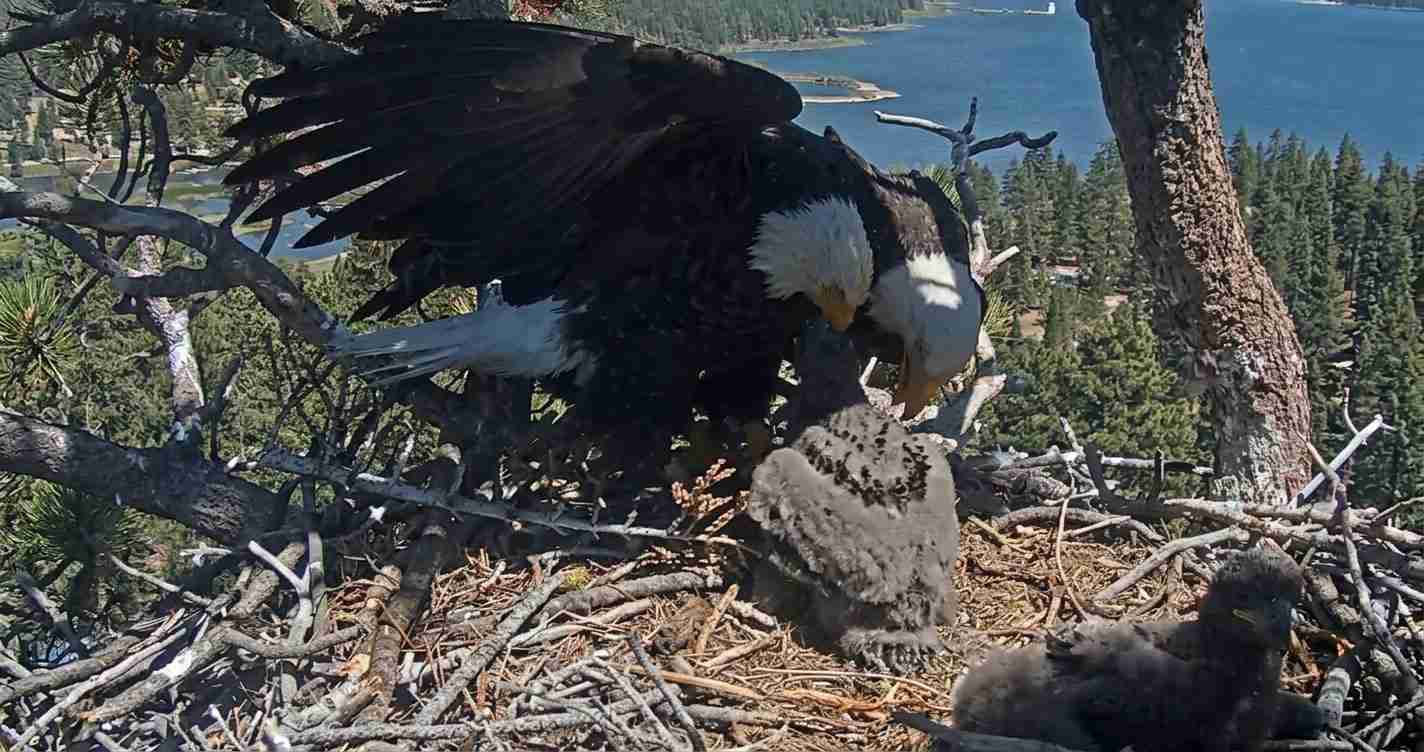
At nearly one month old the chicks weigh about 3 pounds each, growing from roughly 2 ounces at hatching to a rapid 3 pounds in under a month — a normal raptor growth rate. Observers note subtle differences:
- Sandy (Chick 1): slightly larger, more prominent head and neck, a slight curve at the beak gape, and generally more submissive.
- Luna (Chick 2): smaller but more assertive and aggressive during feedings.
FOBBV staff report bonding between siblings and a decline in loud “bonking” (pecking and nudging used to compete for food) as they settle; sexes remain undetermined early on.
Why the naming matters
Naming campaigns do more than assign labels. They deepen community ties to wildlife monitoring, fund nonprofit operations, and provide practical classroom lessons in biology and civic participation.
Education: Teachers can use the nest cam for real-time lessons on growth charts, feeding behavior, and life cycles. Fundraising: The program supports habitat protection and rescue work across the valley.
How to follow Jackie and Shadow
Watch the 24-hour nest cam on the Friends of Big Bear Valley YouTube channel to see feedings, sibling interactions and parental care in real time. FOBBV encourages donations and participation in naming fundraisers that maintain the cam and support valley programs.
Implications for Las Vegas, Nevada
The Big Bear naming program offers a model for regional conservation outreach with potential impacts for Las Vegas-area organizations, schools and policymakers.
Economic impact
- Tourism: Regional interest can drive day trips and weekend stays to Big Bear Valley, boosting hotels, restaurants and outdoor tour operators.
- Fundraising: Small nonprofits can use livestream naming campaigns to engage national donors and raise funds.
Political consequences
- Conservation awareness: Classroom-to-voter pipelines can increase public support for habitat protection and balanced land-use policies.
- Cross-jurisdiction collaboration: The program illustrates how environmental outreach can bridge state lines between California and Nevada.
Social effects
- Classroom learning: Simple voting projects teach life cycles, data collection and civic participation.
- Online community: Livestreams build shared interest among urban viewers who may be far from wild habitat.
Cultural relevance
- Bringing wildlife narratives into everyday life reinforces the value of green space and family-focused learning.
- Tributes to conservation leaders help nonprofits build institutional memory and local pride.
Practical applications for residents
- Education programs: Las Vegas teachers can integrate the nest cam into lessons on biology, math and civics.
- Volunteer and donation strategies: Adopt livestream and naming-campaign models to increase small-dollar giving and volunteerism.
- Wellness and leisure: Live wildlife cams offer daily, low-cost nature access for urban residents.
Sources and further reading
- ABC7: Big Bear eaglets officially have names — Sandy and Luna
- LAist: Sandy and Luna — how the names were chosen and what they mean
- Popular Science: Jackie and Shadow chick names, process and history
- VVNG: Local coverage of naming and student vote
- 6ABC: Reporting on the tribute to Sandy Steers
- Watch the live cam: Friends of Big Bear Valley YouTube channel
Reporting includes material from ABC7, LAist, Popular Science, VVNG and 6ABC.