Beloved Big Bear bald eagles Jackie and Shadow welcome two eaglets after dramatic nesting season
Big Bear bald-eagle pair Jackie and Shadow hatched two eaglets this weekend — the first late Saturday and the second Sunday morning — after a fraught nesting season that included a raven raid and a re-laid clutch monitored by FOBBV.
Key takeaways
- Two eaglets hatched: first chick fully hatched about 9:30 p.m. Saturday, second hatched just before 9 a.m. Sunday, livestreamed by Friends of Big Bear Valley.
- Earlier loss and re-laying: Jackie lost two eggs after a raven raid, then laid a replacement clutch on Feb. 24 and Feb. 27, 2026.
- Public engagement: The nest camera (installed 2018) and continuous livestream have drawn thousands of viewers and provided real-time observational data.
- Regional significance: The event highlights conservation, educational opportunities, and potential tourism interest for nearby regions including Las Vegas.
Hatching timeline and what viewers saw
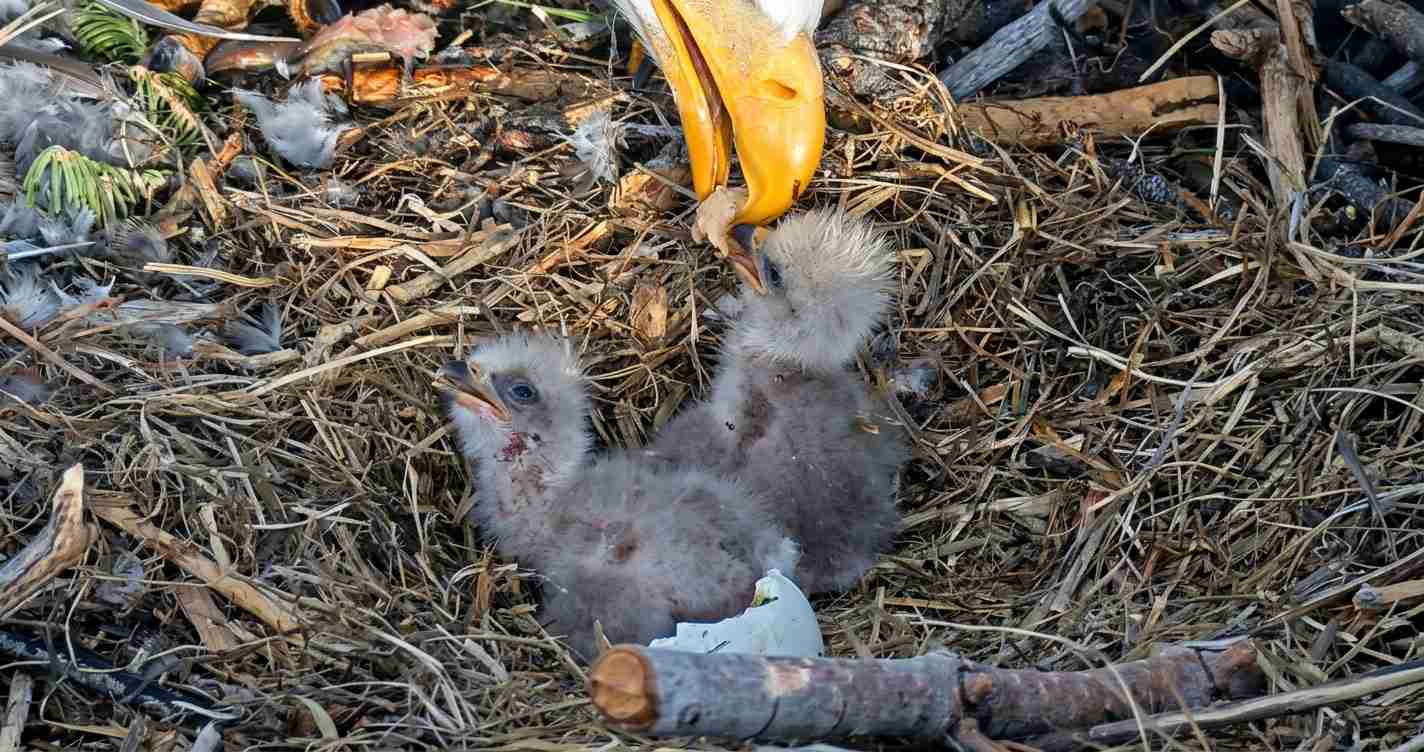
The weekend’s hatches unfolded under round-the-clock observation. An external pip appeared on the first egg on Friday, with high-pitched chirps audible on the nest microphone. FOBBV cautioned that a chick is not considered hatched until completely free of the shell; true to that warning the first chick’s head emerged Saturday night and the bird was declared fully hatched at about 9:30 p.m.
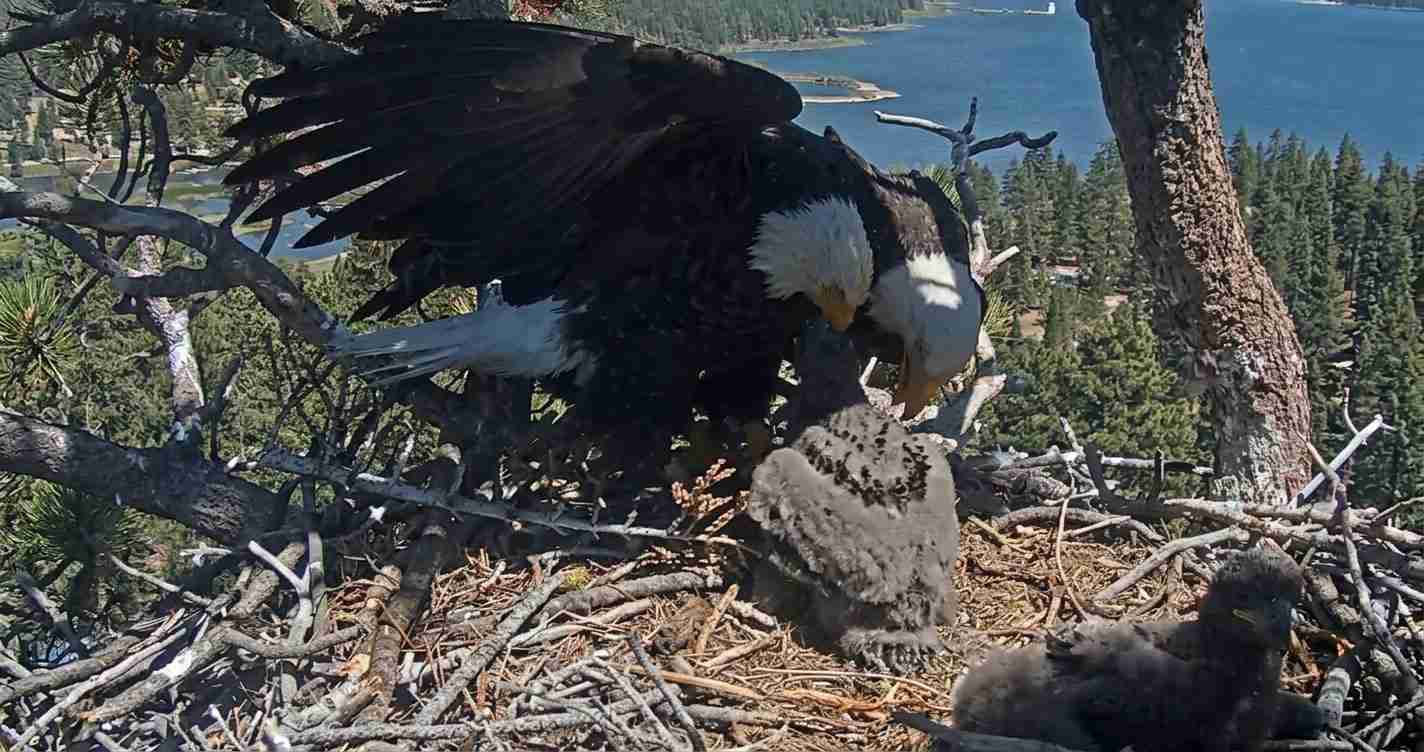
The second egg began pipping Saturday and required roughly 12 hours before the eaglet freed itself from the shell the following morning. Viewers then watched a parent tuck the tiny birds under its wings at about 9 a.m. Sunday to provide warmth during their first daylight hours.
Sources: FoxLA, Friends of Big Bear Valley.
What a “pip” means and early growth
FOBBV explains a “pip” as the moment a chick breaks the internal membrane and takes its first breath. After pipping a chick may take 24–48 hours to fully hatch. Once hatched, eaglets grow rapidly; observers note young birds can reach about three feet tall in just over two months with parental care.
Nesting history and the raven raid
The successful hatches follow a troubling earlier incident: Jackie’s initial clutch contained four eggs, but two were destroyed during a raven raid while the adults were away. After that loss Jackie laid a second clutch (Feb. 24 and Feb. 27, 2026) that produced the two newly hatched chicks. The episode underscores how even established raptors remain vulnerable to opportunistic predators such as ravens.
Reporting: Los Angeles Times, ABC7.
Jackie and Shadow’s history and the role of livestreaming
Since installation of the nest camera in 2018, Jackie and Shadow have become local celebrities after occupying an abandoned nest and raising young multiple seasons (notably 2019, 2022 and 2025). The camera provides the public with real-time access to courtship, egg-laying, hunting, feeding and brooding behaviors and has fostered a large, engaged community of amateur naturalists and conservation supporters.
More: Friends of Big Bear Valley, Wikipedia.
Recent nest activity and parental behavior
In the days leading up to the hatches, Shadow was observed bringing fish to Jackie and guarding the nest area against intruders; he also defended the nest from an identified hawk. After the chicks hatched both adults remained close, alternating brooding duties and covering the chicks to regulate temperature and provide protection during their fragile first days.
Coverage: Los Angeles Times, FoxLA.
Conservation and community interest
Jackie and Shadow’s story extends beyond a single nest: their popularity helps highlight habitat protection, human disturbance near nests, and predator dynamics. FOBBV and other groups leverage the livestream to educate viewers about wildlife protection and responsible recreation, while scientists note that interest in charismatic species can catalyze broader environmental engagement.
The livestream also serves as a source of observational data on breeding timing, prey delivery and nest defense behavior that can inform managers and researchers.
Implications for Las Vegas, Nevada
Economic and tourism: Wildlife stories from nearby Southern California can boost regional nature tourism; Las Vegas operators could offer day-trip or educational packages to Big Bear Lake for birdwatchers and families.
Education and outreach: Schools, museums and nature centers can use the livestream as material for lessons on life cycles, ecosystems and human impacts, and explore partnerships with California conservation groups for cross-state programming.
Regional cooperation: Shared concerns—habitat connectivity, predator-prey dynamics, and human disturbance—suggest value in collaboration between Nevada and Southern California conservation organizations.
Public engagement: The FOBBV livestream exemplifies how community-led interest around charismatic wildlife can translate into volunteerism, civic pride and educational programming.
Sources and reporting notes
This report draws on monitoring and statements from the Friends of Big Bear Valley livestream and regional reporting. Key sources and background:
- Friends of Big Bear Valley (nest livestream and updates)
- FoxLA (pipping and hatching coverage)
- ABC7 (clutch timeline and local reporting)
- Los Angeles Times (background and nest raid reporting)
- Jackie and Shadow — Wikipedia (supplemental background)
- Big Bear visitor resources
- Related video coverage
(Reporting notes: Times Media Service drew on the FOBBV livestream observations and public reporting by regional outlets.)
“A chick is not considered hatched until it is completely free of the eggshell.” — Friends of Big Bear Valley (livestream guidance)