Deadly collision at LaGuardia: Air Canada Express jet strikes Port Authority fire truck during landing; pilots killed, dozens injured
A fatal runway collision at New York’s LaGuardia Airport on March 22, 2026, involved an Air Canada Express CRJ‑900 (Flight 4686) striking a Port Authority fire truck during landing, killing both pilots and injuring dozens, officials said.
Key takeaways
- Aircraft and flight: Air Canada Express CRJ‑900 operated by Jazz Aviation, Flight 4686 (also reported as AC8646) with 72 passengers and 4 crew on board.
- Casualties: Both pilots were killed; more than 39 passengers, crew and two firefighters hospitalized, with at least 32 people released by Monday evening.
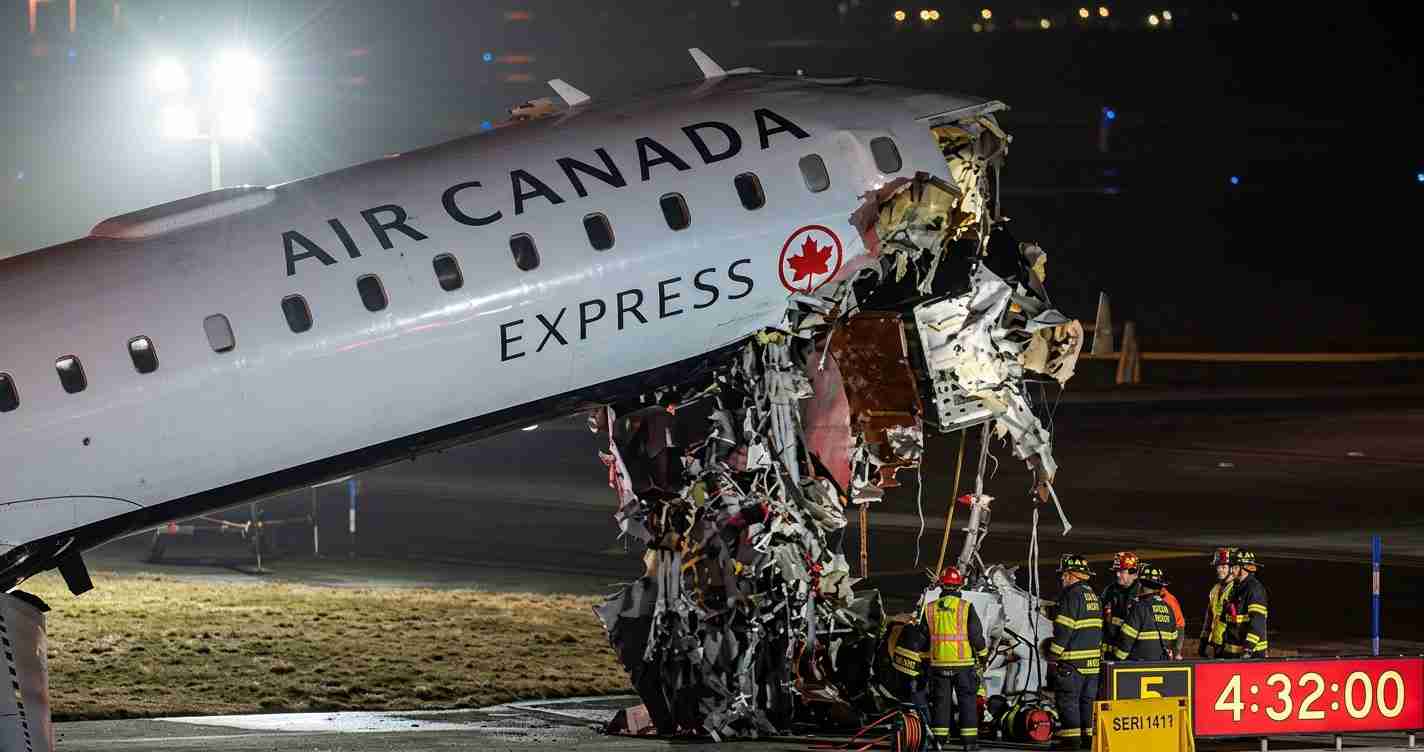
- Collision details: Jet struck Port Authority Truck 1 on Runway 4 during landing at about 11:45 p.m.; the plane’s nose was ripped off and the CVR was recovered intact.
- Investigation: NTSB is leading the probe, recovered an undamaged cockpit voice recorder and is analyzing the flight data recorder, surveillance video and ATC audio.
Main content
What happened
Early accounts indicate the Jazz Aviation‑operated CRJ‑900 was landing on Runway 4 after a flight from Montreal when it struck a Port Authority fire truck that had been responding to an unrelated field report. Air traffic control transmissions captured urgent commands — “Truck 1, stop, stop, stop,” — immediately before impact, according to replayed radio traffic. The collision sheared off the aircraft’s nose. Reported impact speeds vary; one tracking service estimated about 24 mph while other sources cited higher figures. (Source: Fox News live updates on the LaGuardia crash, ABC News coverage and official statements, Business Insider reporting on the incident.)
Casualties and injuries
Jazz Aviation released a preliminary passenger manifest indicating 72 travelers and four crew, including the captain, first officer and two flight attendants. The captain and first officer were killed; Air Canada and authorities handled family notifications and have not publicly released identities. More than three dozen people — passengers, crew and two Port Authority firefighters — were taken to hospitals, with Port Authority Executive Director Kathryn Garcia noting some sustained serious injuries. By Monday evening, at least 32 people had been released from care. (Sources: Fox News live updates on the LaGuardia crash, ABC News coverage and official statements.)
Investigation under way
The National Transportation Safety Board (NTSB) is leading the investigation. Chair Jennifer Homendy said the cockpit voice recorder (CVR) was recovered intact and transported to NTSB labs in Washington, D.C. Investigators cut an access hole in the aircraft roof with Port Authority and emergency teams to retrieve recorders. Work on the flight data recorder (FDR) is ongoing and is expected to clarify positions and speeds in the moments before impact. The NTSB is reviewing surveillance video, air traffic control audio and airport surface detection system replays; wreckage documentation will take days because the debris field is extensive. (Source: Fox News live updates on the LaGuardia crash.)
Why investigators are focused on runway incursion and timing
Preliminary reporting notes the fire truck was responding to a separate report — an odor detection on the field — when it entered the runway environment. Runway incursions remain a known hazard in aviation safety. Investigators will examine controller instructions, the timing and authorization of the fire truck dispatch, vehicle routing and lighting, procedural adherence, and potential communication breakdowns. The FDR and video replays should show precise locations and relative speeds of both the aircraft and the truck before impact; the FAA will participate and interview the LaGuardia controller who was on duty that night. (Sources: Fox News live updates on the LaGuardia crash, Business Insider reporting, Jerusalem Post summary of FAA and safety context.)
Airport operations and ripple effects
The FAA issued a ground stop and closed LaGuardia into Monday afternoon, suspending flights and stranding passengers while crews documented debris scattered across runways and taxiways. LaGuardia’s constrained layout amplified disruption: multiple runways and taxiways were tied up by the crash and investigation, forcing airlines to reroute flights and impose delays and cancellations. Travelers were advised to check with carriers and expect continued disruptions as debris removal and documentation proceed. (Source: ABC News coverage and official statements.)
Source material and reporting
This account compiles preliminary reports and official statements from the NTSB, the Port Authority, Jazz Aviation and federal agencies, as reported by multiple outlets. Early live reporting captured controller transmissions, initial medical tallies and actions by emergency crews. Authorities caution that the investigation is active; details such as pilot identities and final injury tallies remain subject to confirmation.
Implications for Las Vegas, Nevada
Economic impact
Las Vegas — a major travel hub dependent on reliable air service — can feel ripple effects from significant disruptions at New York-area airports. Westbound connections through LaGuardia may be delayed or cancelled, producing short-term revenue losses for hotels, shows and conventions and complicating business travel. Local travel agents and tour operators should monitor carrier notices and advise clients on contingency plans. Practical planning includes flexible rebooking policies and awareness of alternate routing via other gateways.
Political and regulatory consequences
A high-profile event of this kind typically prompts scrutiny from state and federal officials. Nevada’s congressional delegation and state transportation leaders may press the FAA on causes and corrective measures. Potential national policy changes could include clearer rules for emergency vehicle movements on active runways, enhanced surface monitoring technology, and tightened coordination among airport operators and rescue teams — all items that would affect how Las Vegas area airports manage emergency responses.
Social effects
Frequent travelers between Las Vegas and New York may feel heightened concern about runway safety and emergency protocols. Families and passengers will likely seek clearer communication from airlines about safety procedures and contingency planning. Local community groups and frequent‑flyer networks will look for transparent updates and commitments to apply lessons from the LaGuardia investigation.
Cultural relevance
Las Vegas’ tourism-first culture prizes resilience and continuity. Still, safety scares can dent consumer confidence; local media and civic leaders may call for visible safety reviews and public updates to reassure visitors and residents that air travel to and from Las Vegas remains safe.
Practical applications for travelers and emergency responders
- Travelers: If you have flights connecting through New York, check airline notices, consider alternate routings, keep contact details current and review rebooking policies.
- Local airports & responders: Review emergency vehicle dispatch protocols, runway incursion prevention measures and training drills; coordinate with FAA and airport operations to mirror any NTSB recommendations.
Ongoing questions and what to watch for
Key investigation questions include how the fire truck entered an active runway, whether communications or procedures failed, and the roles of equipment or human factors. The FDR and video replays may clarify positions and speeds; NTSB has warned that wreckage documentation will take days and that further findings will be released as analysis proceeds. (Source: Fox News live updates on the LaGuardia crash.)
Sources and further reading
- Fox News live updates on the LaGuardia crash
- ABC News coverage and official statements
- Business Insider reporting on the incident and airport closure
- NDTV live updates
- Jerusalem Post summary of FAA and safety context
Reporting compiled from Times Media Service and major news outlets; NTSB and Port Authority statements as cited.