7-ton meteor lights up Northeast Ohio sky, fragments over Valley City and sends sonic booms across the region
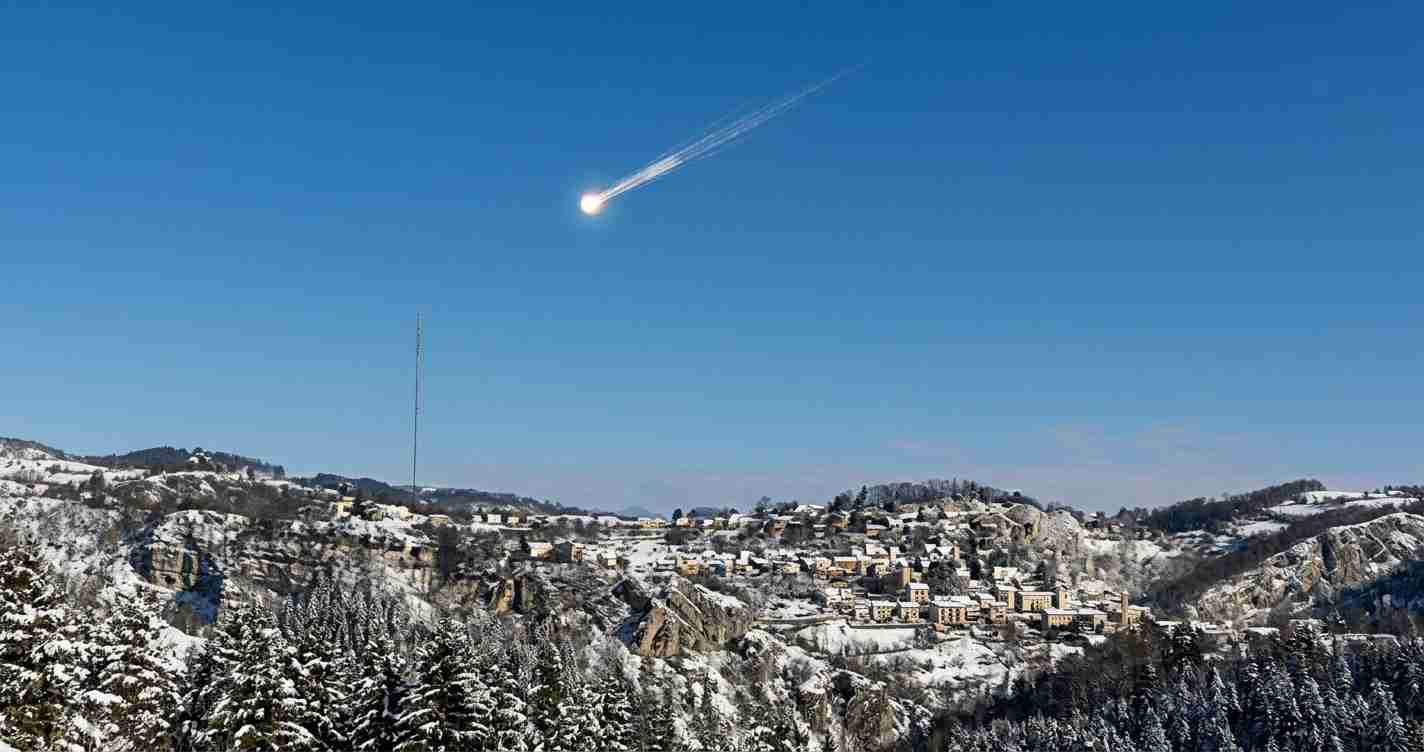
Northeast Ohio experienced a dramatic celestial event on March 17, 2026, when a 7-ton meteor streaked across the sky, producing a brilliant daylight fireball visible across ten states and a powerful sonic boom that stunned residents across the region.
Key takeaways
- Event: A roughly 6-foot, 7-ton asteroid entered the atmosphere near Lake Erie about 8:57–8:59 a.m. ET on March 17, 2026, producing a bright daylight fireball and fragmenting over Valley City, Ohio.
- Energy & effects: NASA estimated the breakup released energy equivalent to ~250 tons of TNT, creating a pressure wave and multiple sonic booms felt/heard across the Ohio Valley.
- Visibility & impact: Seen across at least 10 states and parts of Ontario; no confirmed injuries or structural damage reported after initial checks.
- Ongoing response: NASA and regional agencies posted trajectories and encouraged the public to report possible meteorite finds to local authorities and researchers.
Key information
What happened: A small asteroid roughly 6 feet across and weighing about 7 tons entered Earth’s atmosphere just before 9 a.m. ET on March 17, 2026. It produced a bright daylight fireball, fragmented high over Valley City, Ohio, and generated loud booms heard across parts of the Ohio Valley. (Sources: NASA, NWS, CBS News, Los Angeles Times)
When and where: The event was first seen above Lake Erie near Lorain and moved southeast, traveling about 34 miles through the upper atmosphere before breaking apart about 30 miles above Valley City. The sighting was reported at about 8:57–8:59 a.m. ET. (Sources: Signal Cleveland, CBS News, LA Times)
Size and energy: NASA said the object was nearly 6 feet in diameter, weighed about seven tons, and unleashed energy equivalent to about 250 tons of TNT when it fragmented, creating a pressure wave that reached the ground. (Sources: LA Times, CBS News)
Visibility and reach: The bright daylight fireball was seen shortly before 9 a.m. ET by eyewitnesses across at least 10 states — Delaware, Indiana, Illinois, Kentucky, Maryland, Michigan, New York, Ohio, Pennsylvania — and the District of Columbia, as well as parts of Ontario, Canada. The American Meteor Society and NASA received reports spanning a wide region. (Sources: CBS News, LA Times)
Damage: Local and county officials reported no immediate reports of property damage or injuries. Lorain County Emergency Management issued alerts as a precaution. (Sources: Signal Cleveland, CBS News)
How scientists tracked the Valley City Ohio meteor
Early accounts and agency data let researchers piece together the meteor’s path. Video of the streak was captured by an employee at the National Weather Service office in Pittsburgh and shared by the NWS Cleveland office. NASA’s Meteoroid Environments Office analyzed reports and posted an updated trajectory by midafternoon on March 17. A geostationary lightning mapper also recorded the event as a brief green flash over Cleveland — a sign of the intense light emissions from the fireball. (Sources: Signal Cleveland, CBS News)
NASA’s initial analysis indicates the object entered at a high altitude — first seen about 50 miles above Lake Erie — and moved at roughly 40,000 miles per hour as it descended and heated through the atmosphere. That speed, combined with its mass, caused the powerful air-pressure effects when the object broke apart. (Sources: Signal Cleveland, LA Times, CBS News)
Why people heard sonic booms
When the meteor fragmented, it released energy comparable to a small conventional explosion. NASA estimated the breakup produced about 250 tons of TNT in energy. That energy created a pressure wave that traveled downward and outward, producing the explosive booms people described as house-shaking bangs or rattling windows.
“Because meteors travel much faster than sound, the sonic signatures differ from a single fighter-jet boom; observers reported multiple successive booms as air piled up along the meteoroid’s flight path.”
Experts note most meteor-sized objects burn up or fragment high in the atmosphere. NASA and meteor scientists say fewer than 5% of the original mass of objects smaller than a football field generally reach the ground as recoverable meteorites. In this case, fragments are believed to have continued southward after fragmentation and may have produced meteorites in the area of Medina County, though no confirmed recoveries were reported as of the afternoon of March 17. (Sources: Signal Cleveland, LA Times)
Eyewitness accounts and local response
Residents across Northeast Ohio, western Pennsylvania and nearby states reported a startling bright streak and loud booms. Social media and local news outlets were flooded with videos of the daylight fireball, and emergency managers fielded calls about the unusual noise. A National Weather Service employee in Pittsburgh captured clear video of the streak, which helped officials confirm the event and its timing. (Sources: Signal Cleveland, CBS News)
Local emergency officials, including Lorain County Emergency Management, said alerts were sent out and that initial checks found no structural damage or injuries. Agencies encouraged residents who believed they had found meteor fragments to report them to local authorities so experts could evaluate finds safely. (Sources: Signal Cleveland)
Scientific context — how rare was this sighting?
Meteors enter Earth’s atmosphere routinely, but daytime fireballs bright enough to be seen across multiple states and loud enough to cause ground-level booms are rare. Scientists quoted in reporting called the Valley City event unusual and noteworthy. Experts including NASA’s Bill Cooke, astronomer Carl Hergenrother and Great Lakes Science Center’s JonDarr Bradshaw described the sight as a rare daytime fireball with an audible boom — an event many people may see only once in their lifetime. (Sources: Signal Cleveland, LA Times)
This meteor joins a cluster of recent sightings in the region, including mid-February fireballs captured on doorbell cameras and another near March 15. Scientists say the frequency of reports often rises when people are alert and sharing video — but documented daytime fireballs like this remain uncommon. (Sources: CBS News, Signal Cleveland)
What officials and scientists are doing now
After the event, NASA continued analysis and posted an updated trajectory around 2:17 p.m. ET on March 17, allowing regional officials and researchers to focus searches for possible meteorite fragments in areas south of Valley City, near Medina County. Local agencies and university researchers may coordinate searches if finds are reported.
Safety note: Officials stressed caution: meteorites can be hot, sharp or contaminated, and should be handled by trained personnel and reported through proper channels. Agencies asked the public to photograph finds in place and contact local authorities or museum/geology departments before moving objects. (Sources: Signal Cleveland, CBS News, LA Times)
Sources and updates
This account is based on agency reports and news coverage, including the National Weather Service video and NASA trajectory updates. For further reading and source details, see:
Implications for Las Vegas, Nevada
Economic impact
The meteor event itself has no direct economic effect on Las Vegas. However, dramatic, well-documented cosmic events draw national attention and can increase visitor interest in science museums, planetariums and public programs. Institutions like the Nevada State Museum, local planetariums, and university science departments could see upticks in visitor questions or attendance for astronomy-related events and exhibits.
Political consequences
A single meteor does not change policy in Nevada, but high-profile natural phenomena often spur local officials and the public to ask about emergency preparedness and communication systems. City and county emergency managers may use the event as a reminder to review alert systems and public guidance on unusual atmospheric events.
Social effects
For an urban moderate audience in Las Vegas, the meteor story underscores interest in evidence-based science and civic calm. Local media might run explanatory pieces, interviews with university astronomers, and guidance on how to report meteor finds. Community groups and schools can use the event to spark science programs that engage families and students.
Cultural relevance
Las Vegas has a strong culture of public spectacle and curiosity. The Valley City Ohio meteor — captured on camera and widely shared — fits that cultural interest. It offers a teachable moment to promote public science literacy, celebrate wonder about the universe, and steer excitement toward reputable sources and local educational offerings.
Practical applications for residents
- Las Vegas residents do not need to take any safety action related to this meteor.
- Keep emergency alert contacts and local official channels handy for unusual events.
- Use credible sources — NASA, National Weather Service, state and county emergency management — for information.
- If you find an unusual rock that might be a meteorite, do not touch it with bare hands; photograph it in place and contact local museums or university geology departments for guidance.
Local institutions and civic leaders in Las Vegas can turn public curiosity into stronger community engagement with science. Partnering with schools, museums and local media to explain what meteors are, how often they occur, and why most burn up harmlessly would meet the interest of an urban, moderate audience seeking clear, practical answers.
Reporting compiled from NWS, NASA and regional news coverage. See source links above for agency updates and videos.