Magnetar birth observed: Astronomers catch the engine behind superluminous supernovae, confirming a 16-year-old theory
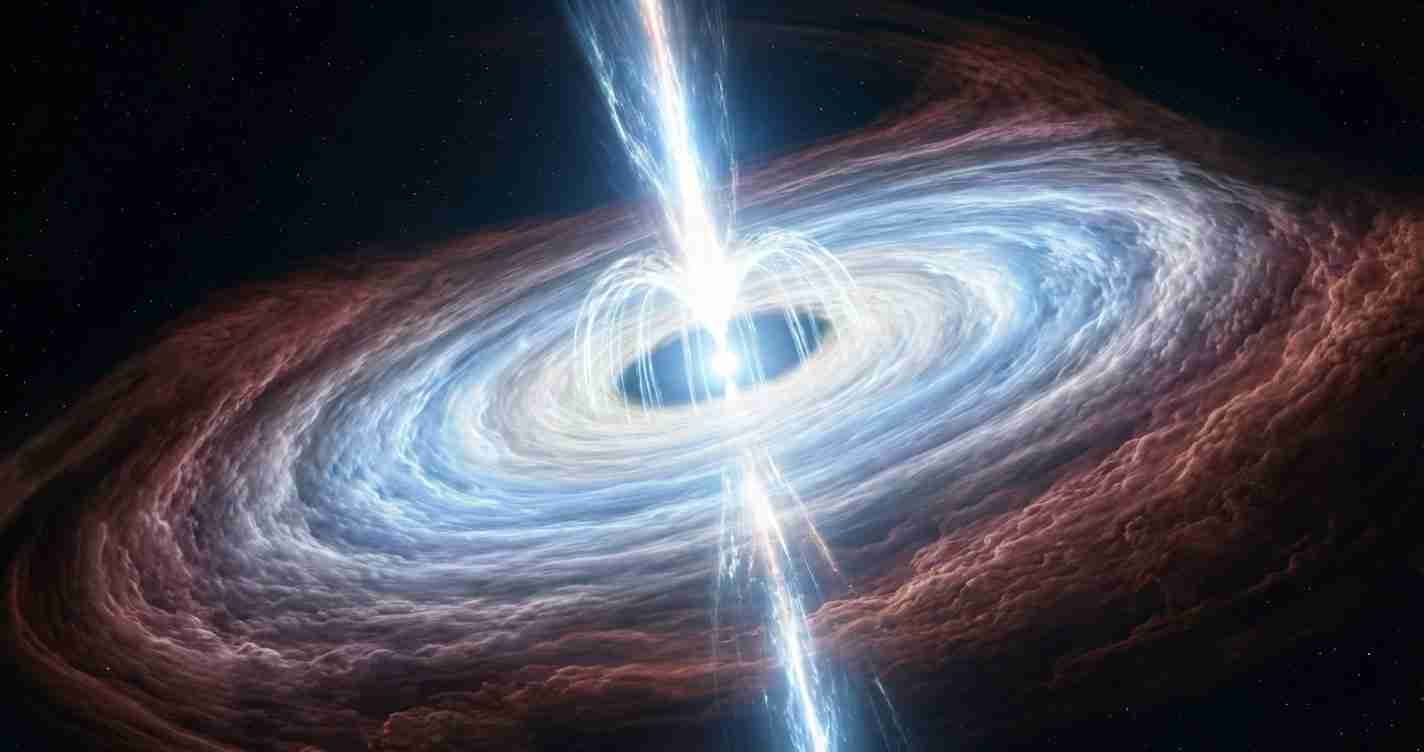
Astronomers directly observed a newborn magnetar powering supernova SN 2024afav a billion light‑years away, confirming theories that magnetars fuel superluminous supernovae and validating models proposed by researchers over the past 16 years, including work by Dan Kasen and Stan Woosley.
Key takeaways
- First direct observation: A newborn magnetar linked to superluminous supernova SN 2024afav.
- Relativistic “chirp” detected: A subtle, rising change in the light curve matches predictions from general relativity.
- Measured properties: Spin period ~4.2 milliseconds; magnetic field ~300 trillion times Earth’s.
- Theory confirmed: Observations match predictions first made by Dan Kasen (2010) and earlier suggestions by Stan Woosley; results published in Nature (March 11).
Main story
What scientists saw
Graduate student Joseph Farah of UC Santa Barbara and researchers at Las Cumbres Observatory analyzed light from supernova SN 2024afav, first discovered in December 2024. Their analysis revealed a clear, model‑matching pattern: a newborn neutron star spinning extremely fast while carrying a huge magnetic field.
The team detected a subtle, rising “chirp” in the supernova’s brightness over time — a telltale signature predicted when a compact, spinning object forms and interacts with explosion debris under Einstein’s general relativity. As UC Berkeley astronomy professor Alex Filippenko said, this is “a stunning visual demonstration of Einstein’s theory of general relativity in action.” The discovery appears in Nature, where the authors show how the light curve matches models of a magnetar powering a superluminous supernova.
Why this matters: Superluminous supernovae explained
Superluminous supernovae, first noticed in the early 2000s, are orders of magnitude brighter and longer‑lasting than typical supernovae. For years astronomers debated causes: extreme stellar mass or a central engine. The new observation provides strong evidence that, at least for some events, a newborn magnetar injects energy into expanding debris, keeping the explosion bright for extended periods.
A fast‑spinning magnetar loses rotational energy; its enormous magnetic field accelerates charged particles that heat the ejecta, sustaining luminosity. The measured spin (~4.2 ms) and magnetic strength (~300 trillion × Earth’s field) align with prior magnetar models, supporting the mechanism first quantified by Dan Kasen in 2010 and anticipated by Stan Woosley.
How the chirp points to a newborn magnetar
The detected “chirp” is the critical new evidence. The light‑curve change arises as the newly formed neutron star’s rotation and magnetic field interact with the exploding star’s debris in a way that depends on relativistic physics. As the magnetar spins and its field evolves, the energy deposited into the ejecta changes predictably, producing the observed rising signature — a signal theoretical models predicted but had not been clearly observed until now.
Who led the work
Joseph Farah (UC Santa Barbara) led data analysis of SN 2024afav, supported by observations from the Las Cumbres Observatory network. UC Berkeley researchers connected the observational data to magnetar theory, building on earlier theoretical work by Dan Kasen and contributions from colleagues including Alex Filippenko. The team’s peer‑reviewed paper was published on March 11 in Nature.
Broader scientific significance
This result settles a long‑running question about the power source of at least some superluminous supernovae and provides an observational template for identifying other magnetar‑powered explosions. That will help astronomers study magnetar formation rates, refine simulations of stellar collapse and neutron‑star birth, and explore connections to other phenomena such as fast radio bursts, which many researchers suspect originate from magnetars.
Moreover, matching observed spin and magnetic strength to models gives a real‑world test of general relativity in extreme environments, extending Einstein’s theory to energies and scales far beyond laboratory reach.
Implications for Las Vegas, Nevada
Economic impact: The discovery is unlikely to change Las Vegas’s economy directly in the short term, but it can boost regional science investment and tourism tied to science education. Museums, planetariums and outreach programs can leverage this high‑profile result to attract visitors and funding.
Political consequences: For urban, moderate voters in Las Vegas, the finding underscores the value of funding public science and university research; elected officials may cite it to support STEM spending.
Social effects: Astronomy inspires students and families; educators and community groups can use the discovery to promote science literacy and diversify interest in science careers.
Cultural relevance & practical applications: The dramatic nature of a newborn magnetar fits Las Vegas’s appetite for spectacle. Local institutions — UNLV, community colleges, planetariums — can host talks, update curricula, seek grants, and create exhibits that make the science accessible to residents and visitors.
Reporting and sources
Primary reporting and further reading:
- UC Berkeley Lab and news coverage
- UC Berkeley News release
- Smithsonian Magazine summary
- National Today coverage
The new observation of SN 2024afav — the magnetar birth that powers a superluminous supernova — opens a fresh window on how the most extreme stellar explosions work and gives local institutions a rich story to engage students, voters and visitors in science driven by Einstein’s general relativity.