
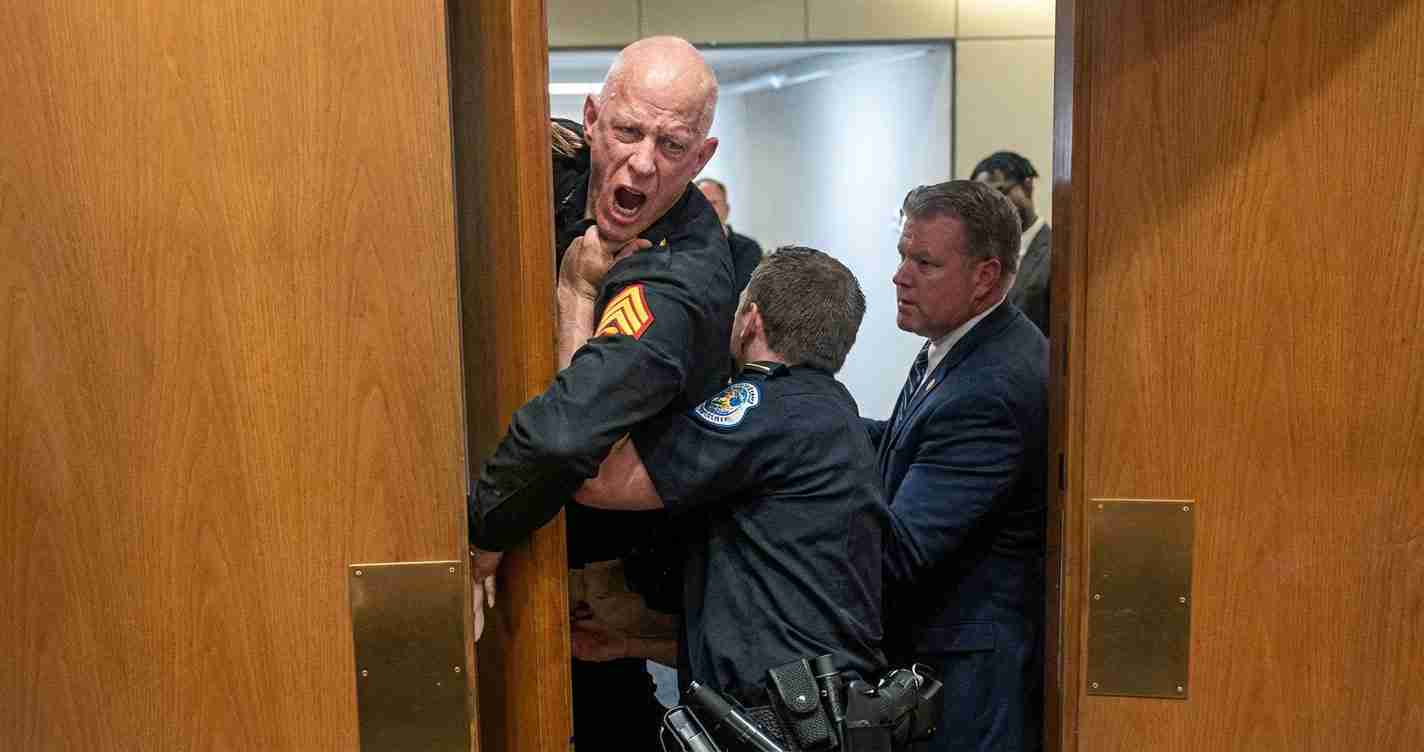
Chaos at Senate hearing: Sen. Tim Sheehy helps remove protester as video shows possible injury to Green Party candidate
A Green Party U.S. Senate candidate disrupted a Senate Armed Services Subcommittee hearing, triggering a physical removal that injured officers and prompted Montana Sen. Tim Sheehy to step in; video of the scuffle shows a possibly broken arm.
- Disruption and removal: Brian McGinnis interrupted a Senate hearing and was forcefully removed by Capitol Police, resulting in injuries to three officers.
- Sen. Sheehy intervened: Video shows Sen. Tim Sheehy assisting officers at the doorway as McGinnis resisted.
- Possible injury: A loud cracking sound is audible in footage and McGinnis later said his arm was broken; no official medical confirmation has been released.
- Criminal charges: McGinnis faces counts including assault on an officer, resisting arrest and related demonstration offences.
Main report
Context: The disturbance occurred during a Senate Armed Services Subcommittee hearing on the Current Readiness of the Joint Force. Witness video captured an escalating confrontation after a protest interruption.
What happened in the hearing
Video shows Brian McGinnis, a Marine Corps veteran and Green Party candidate, stand and shout opposition to sending U.S. troops to fight for Israel. Capitol Police moved quickly to remove him; two officers initially attempted to escort him out.
As officers led McGinnis toward the exit, he grabbed the door and wedged his arm between the door and the frame. The struggle intensified at the doorway where several people pushed to get him to release his hold. During that push, a loud cracking sound is audible in the footage.
A short clip of the incident has circulated online; the video of the hearing and removal shows the protest, the removal and the audible cracking sound.
Sen. Tim Sheehy’s intervention
Video shows Montana Republican Sen. Tim Sheehy, a former Navy SEAL, stepping in at the doorway to assist Capitol Police as McGinnis resisted. Sheehy later issued a statement characterizing the man as “an unhinged protester” who was “fighting back.” He said he “decided to help out and deescalate the situation” and added: this gentleman came to the Capitol looking for a confrontation, and he got one. I hope he gets the help he needs without causing further violence.
Discussion point: Sheehy’s intervention and military background have sparked debate about the appropriate role for lawmakers during active security operations, with some security experts warning that untrained involvement can complicate crowd-control efforts.
Charges and official statements
Capitol Police released a statement saying the man “violently resisted and fought our officers’ attempts to remove him from the room,” and that he “put everyone in a dangerous position.” Authorities said three officers were treated for injuries and that McGinnis was also treated by medical personnel.
McGinnis faces multiple counts, including three counts of assault on a police officer, three counts of resisting arrest, and a charge of crowding, obstructing and incommoding related to an unlawful demonstration inside a congressional building. Capitol Police emphasized that protests are not allowed inside congressional buildings and noted designated areas on Capitol Grounds for demonstrations.
Who is Brian McGinnis?
Brian McGinnis identifies as a Marine Corps veteran, firefighter and father. He is listed as a Green Party candidate for U.S. Senate in North Carolina; his campaign page frames his campaign around concerns that both major parties prioritize donors over working-class people.
In a video posted hours after the hearing, McGinnis described the event as a “final appeal” and said his arm had been broken during the forcible removal. To date, no independent medical confirmation has been publicly released to verify the extent or timing of any injury.
What remains unclear
- Medical confirmation: The audible cracking and McGinnis’s claim raise questions; there is no official medical report publicly available confirming a broken arm.
- Full timeline and footage: Short clips do not capture all angles—investigators will need body-worn camera and surveillance footage plus witness statements to establish a complete timeline.
- Role of elected officials: The episode raises policy questions about when and whether lawmakers should physically assist law enforcement during disturbances in public hearings.
Source notes and available footage
Video of the incident was posted as a YouTube short and shows the protest, removal, the door struggle and the audible cracking sound. See the video of the hearing and removal.
McGinnis’s biography and campaign background are available on the Green Party site; see his campaign page. Statements cited in reporting were issued by Sen. Sheehy and Capitol Police and were included in public briefings and press releases.
Legal next steps
McGinnis faces several criminal counts tied to the incident. The D.C. criminal process will determine charges and evidence review; prosecutors are expected to examine body-camera footage and medical reports. If McGinnis mounts a defense, attorneys may challenge intent, timing or medical causation of any injury and may raise protest-related defenses as part of strategy.
Implications for Las Vegas, Nevada
Local veterans community: Las Vegas’s large veterans population may react strongly to a nationally noticed incident involving a veteran-protester, driving debate about support services and treatment of veterans who engage in political action.
Political and civic effects: The episode may influence how local campaigns and events prepare for disruptions, affect perceptions of outsider candidates like third-party challengers, and spur reviews of security procedures for indoor public meetings.
Policing and civic participation: Residents and local leaders may press for clarity on force used during protests and for policies balancing free expression with safety at public forums.
Reporting and public records to watch
Journalists and the public should look for release of body-worn camera footage, any medical records or hospital statements if McGinnis seeks care publicly, and any formal reviews by Senate security or Capitol Police oversight offices. Local Nevada officials may issue statements linking the episode to regional politics and security planning.
Sources
- Video of the incident
- Brian McGinnis campaign page
- Statements from Capitol Police and Sen. Tim Sheehy reported in public briefings, press releases and media reports.



