21 House Republicans Break With Trump, Johnson to Oppose $1.2 Trillion Spending Bill
Twenty-one House Republicans voted against a $1.2 trillion spending bill backed by President Trump and Speaker Mike Johnson, arguing it failed to adequately secure key GOP priorities like election integrity and full-year Homeland Security funding.
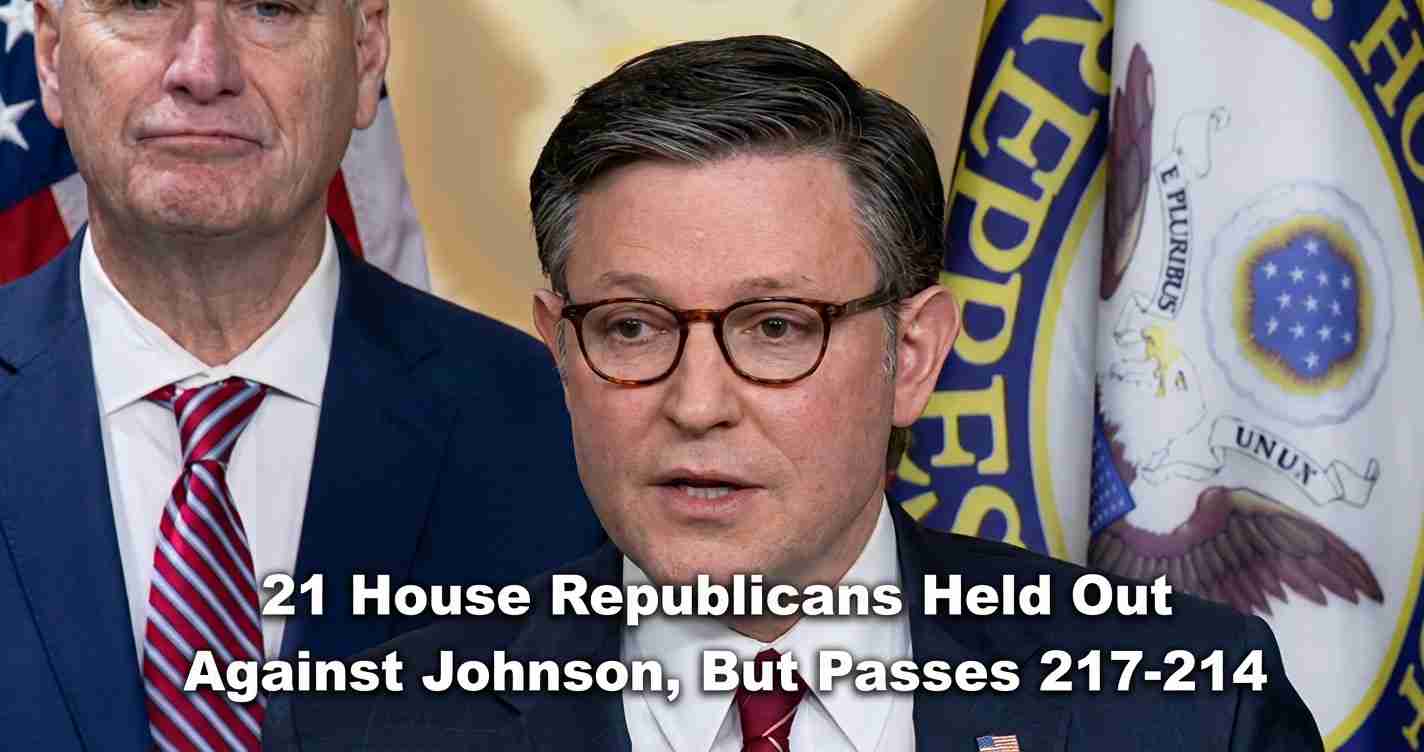
- Close vote: The bill passed the House 217-214 and proceeded to the president’s desk; dissent highlighted fragile unity within the GOP (Fox News).
- Core objections: Critics cited missing election-integrity measures, only short-term DHS funding, and inclusion of Democratic earmarks (Fox News).
- Local impact: Nevada and Las Vegas could feel effects on HUD, Transportation, health and education programs if short-term fixes continue.
- Political signal: The dissent underscores a strategic rift between governing compromises and conservative policy priorities.
Main story
Who voted against the measure
The 21 House Republicans who opposed the $1.2 trillion package were: Andy Biggs (R-Ariz.), Lauren Boebert (R-Colo.), Josh Brecheen (R-Okla.), Tim Burchett (R-Tenn.), Eric Burlison (R-Mo.), Kat Cammack (R-Fla.), Eli Crane (R-Ariz.), Byron Donalds (R-Fla.), Randy Fine (R-Fla.), Brandon Gill (R-Texas), Anna Paulina Luna (R-Fla.), Thomas Massie (R-Ky.), Cory Mills (R-Fla.), Andy Ogles (R-Tenn.), Scott Perry (R-Pa.), Chip Roy (R-Texas), David Schweikert (R-Ariz.), Keith Self (R-Texas), Victoria Spartz (R-Ind.), Greg Steube (R-Fla.), and William Timmons (R-S.C.). Their votes highlighted fissures within the Republican conference as leaders navigate governing with a narrow majority (Fox News).
Why they opposed the bill
Lawmakers who opposed the measure raised three principal complaints. Their objections centered on election integrity, DHS funding, and the inclusion of Democratic earmarks, each framed as a failure to advance conservative priorities (Fox News).
Election integrity
Rep. Thomas Massie (R-Ky.) and other conservatives said the package omitted the Safeguard American Voter Eligibility (SAVE) Act, which would require photo ID for voter registration in federal elections. Supporters argued the SAVE Act was a top conservative priority and that its absence left core GOP concerns unaddressed (Fox News).
“The bill failed to deliver on election-security priorities,” said dissenting members, emphasizing the need for the SAVE Act.
Homeland Security funding
A major point of contention was that the bill provided only a short-term, two-week continuing resolution for the Department of Homeland Security rather than a full-year appropriation. Critics — including Rep. Eric Burlison (R-Mo.) and Rep. Lauren Boebert (R-Colo.) — warned this gamble could leave border and immigration issues unresolved and urged full funding “at Trump levels” to strengthen border security (Fox News).
Earmarks and negotiating power
Some Republicans objected to the inclusion of earmarks requested by House Democrats, arguing such concessions signaled a failure to leverage the House majority. Rep. Tim Burchett (R-Tenn.) said the conference should be negotiating “from power” to secure conservative goals (Fox News).
Bill contents and context
The $1.2 trillion package funds a broad range of federal agencies, including the Departments of Defense, Education, Transportation, Housing and Urban Development, and Health and Human Services. Presented as a stopgap to avert a government shutdown, the measure keeps critical services operating while negotiations continue (Fox News).
Earlier friction came after an initial House passage in January and Senate pushback from Democrats concerned about protections for Immigration and Customs Enforcement (ICE) following confrontations in Minnesota. Those disputes influenced the compromise that left DHS with short-term funding in the final package (Fox News).
How the split matters inside the GOP
The vote illuminates tension between lawmakers pressing for tangible policy victories and leaders prioritizing governance and shutdown avoidance. President Trump and Speaker Mike Johnson supported the package, but a vocal faction insisted it did not deliver promised conservative outcomes. The 217-214 tally demonstrated how a small bloc can influence Republican strategy going forward (Fox News).
Implications for Las Vegas, Nevada
Economic impact: Federal appropriations for HUD and the Department of Transportation can affect local infrastructure and affordable housing projects in Las Vegas. Short-term DHS funding may create uncertainty for programs that rely on steady multi-year federal support, even though Nevada is not a border state (Fox News).
Political consequences: The split may shape voter perceptions in Nevada, where moderates and independents value stable services and public-safety outcomes. The rift could energize both conservative activists seeking tougher measures and moderates prioritizing predictable governance.
Social effects: Funding for Health and Human Services and Education included in the bill affects families and service providers in Las Vegas. Repeated short-term extensions risk delays to Medicaid-related services, education grants, and other programs that assume year-long appropriations.
Cultural relevance: Election-integrity debates resonate in Nevada and could prompt legal and political battles if federal ID requirements for voter registration are pursued. Urban voters weigh secure elections against maintaining accessible voting processes.
Practical applications: For residents, the immediate effects are mostly indirect: infrastructure and housing projects may proceed, but agencies reliant on multi-year certainty—such as workforce training and health initiatives—should plan for possible funding gaps or shifting grant priorities.
Sources and reporting notes
This article draws on the Times Media Service account of the House vote and lawmaker statements, with source coverage from Fox News. That reporting lists the 21 GOP members who opposed the bill and documents their stated objections, including calls for the SAVE Act, concerns about short-term DHS funding, and complaints over earmarks and negotiating leverage.
The split among House Republicans reflects a larger strategic debate: prioritize conservative policy wins or accept short-term compromises to keep the government operating. For Las Vegas and other urban centers, the stakes are federal funds for housing, transportation, health and education programs that affect everyday life; local leaders will monitor federal timelines as negotiations continue in Washington (Fox News).